
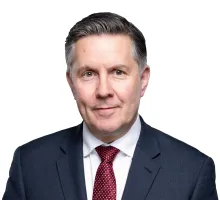
HAMISH MACDONALD, HOST: Now, some good news this morning. Australia's first purpose-built children's cancer centre will open today in Randwick. The Minderoo Children's Cancer Centre will allow kids and families to access a range of treatments and appointments under the same roof. The Federal Health Minister, Mark Butler, is here in Sydney today to open the facility. Very good morning to you.
MARK BUTLER, MINISTER FOR HEALTH AND AGEING, MINISTER FOR
DISABILITY AND THE NDIS: Good morning, Hamish.
MACDONALD: What makes this particular centre unique?
BUTLER: It's comprehensive. It's the comprehensive children's cancer centre. Your listeners will be familiar with the Chris O'Brien Lifehouse out at RPA, which is also a comprehensive cancer centre, in that it brings researchers, teachers from the local university, in that case Sydney Uni, in this case, University of New South Wales, and also clinicians working together with patients right at the centre and in this case, we're dealing with kids and their families. We're reminded today, it's only 50 years ago or so, when I was a little one, that cancer diagnosis for a child was essentially a death sentence. There was essentially a zero survival rate for children with cancer. And we've come an enormous way in the last five decades, but we've still got a way to go to get to where we want to be, which is zero fatalities, not zero survival.
This comprehensive children cancer centre is really not just a terrific resource for New South Wales but it's supporting the kids' hospitals right around the country, including the one in my state of South Australia to profile the cancer of every child who receives a diagnosis and in a precise way, match them with a treatment that already has doubled the survival rate for kids with high-risk cancers. It's seen around the world as really one of the leaders globally in making that next advance from a survival rate of about 80 per cent to eliminating fatalities for kids with cancer.
MACDONALD: This sort of parallel with the Chris O'Brien Lifehouse comes up quite frequently, I find, in conversations where people say: look, this is the model that works, particularly when it comes to complex health treatment. Why isn't it the model for all of these things? It's just so costly. What’s the holdback?
BUTLER: Cancer is obviously a particular challenge in the health space. It's not just the Lifehouse out at RPA. Peter MacCallum Centre down at Melbourne is a similar model, and we're starting to roll them out in Adelaide, Perth and Brisbane as well. But this is the first one for kids. This terrific mum spoke at the event that I just finished with Andrew Forrest and the New South Wales Government and many others as well and she said at some point, as they were sitting around the bedside with their eight-year-old, who'd received a diagnosis of very aggressive brain cancer, that some researchers from this ZERO Project came and sat with them and started talking to them. And she said to her husband, why have we got researchers here? And then it became crystal clear that those researchers working right alongside the clinicians were involved in an exercise to profile the molecular character of this brain cancer, work out its precise nature, and through the use of big data and all of this stuff, frankly, I sometimes have difficulty understanding -
MACDONALD: You're not meant to say that, Health Minister. You're meant to nod knowingly and approvingly.
BUTLER: I know it works, and I know it needs the support of government, Hamish, and it's getting that support of both levels of government. Because in a way that genuinely does lead the world, the clinicians and researchers here have built a model that profiles the molecular character of these cancers and then matches them with a treatment that actually delivers a huge result. And that's why every kid’s hospital is now networked into what's happening down at Randwick. Every child diagnosed with cancer, whether they're in my community, the western suburbs of Adelaide or up in Brisbane or in regional Australia, that molecular test is sent to this resource in Randwick and matched with a treatment, if at all possible. And it's saving lives and it's meaning that these kids are able to look forward to getting through school, graduating and building their own, contributing a life here in Australia.
MACDONALD: So I notice Louis Chesler, who's the centre co-director, she said in The Herald that the facility could lead to pharmaceutical giants wanting to produce new drugs in Australia. Is that because of that connectivity that you're talking about?
BUTLER: That's right. They're already talking to the centre about bringing new therapies to Australia because this genuinely, and we often say this, this genuinely is recognised as world leading. Other countries that do this stuff really well are coming to Australia to see this amazing facility down at Randwick that's been years in the building, the new hospital down there with the Children's Cancer Institute and the Kids’ Cancer Centre, all working together with the support of the university. People are coming, pharmaceutical companies, other cancer centres from around the world, to work out what the secret sauce is that is delivering these amazing survival rates.
MACDONALD: A question for you from Nick in Putney. He says, this seems like a double up on the spend from government. We have a great facility at the Children's Hospital at Westmead. Why not continue to build and support the state facilities?
BUTLER: This is a state facility. It's the kids' hospital at Randwick. In a city as big as Sydney, you've got two kids' hospitals. We only have one in Adelaide, given that we're a city of one and a half million. But the cancer centre was really put in probably four decades ago down at Randwick, the Children's Cancer Institute there. It's seen as the nation's leader in that. And that's why at a Commonwealth level we invested the money to set up this Zero Cancer Project to do this molecular profiling and treatment matching.
Every kids' hospital, Westmead is networked into it, the Women's and Kids in Adelaide, the Brisbane Children's Hospital, all of them are networked into what is now a national capability. And so building on that through the terrific new children's hospital that's been opened down at Randwick as well is really part of that project, making sure that teachers and students from the university next door are working with the clinicians in the hospital and the researchers at the institute. So that for families like Tanya, I talked about, the mum, and her son, is really, they don't really know who is coming to talk to them, whether they're a researcher or a teacher or a clinician, doesn't matter because they're working as a team.
MACDONALD: We've heard on the news this morning that a new national taskforce has been announced to reduce the number of aged care patients left languishing in public hospitals. Listeners to this station will hear frequently from the state's health minister and from you, and there's a lot of kind of blame shifting going on over recent months around this issue of bed blocking. People particularly don't like that term. Does this mean that you are sort of patching up your differences and going to find a fix on this?
BUTLER: I don't want to overstate the degree to which there have been differences. I think we've both recognised, not just us and New South Wales, but the Commonwealth and all of the states recognise this as a challenge in our hospital system and in our aged care system. The establishment of this taskforce, which is co-chaired by the head of my department and the head of New South Wales Health, I think is going to help us understand the precise sort of nature of that challenge because it's not simple, it's complex. Some of these patients, for example, have high-level dementia, which is difficult to place in standard aged care facilities, which is why I announced over the last couple of weeks new investment in specialist dementia centres, building on a model that was, frankly, started here in Sydney by Hammond Care many years ago.
This taskforce will help get to the bottom of this challenge. It is a big challenge, particularly here in New South Wales where the numbers are higher than we see in other states. But it's also not simple. You and I have talked about the importance of states and local councils leaning in to the very big challenge we have as a country of building new aged care facilities. We've got to open one every three days on average for the next 20 years to deal with the demand in right now, the ageing of the baby boomer generation.
MACDONALD: Open a new residential aged care facility every three days?
BUTLER: Every three days for 20 years. That is the scale of this challenge. This is 2026.
MACDONALD: But that's not, I mean, you don't mean that in practicality, do you? Because you want people to stay at home and you're delivering home care packages. You don't want that many new centres, do you?
BUTLER: No, and that accounts for the growth in home care. I mean, that just gives you a sense of the scale of the challenge involved in the ageing of the baby boomer generation. The key metric for aged care is when you really hit your 80s. You do your maths; 2026 is the 80th birthday of those first baby boomers. After all the soldiers returned home, having babies in 1946, and ‘47, and ‘48, literally the number of people needing aged care, whether it's at home in the first instance or potentially in residential facilities, is literally skyrocketing right now.
MACDONALD: Understood. I did want to play you a bit of Craig from Penrith who called in to Breakfast this morning and spoke to Craig Reucassel. He's the father of a child with autism who's been waiting in the Nepean Hospital's emergency department for five days. This is essentially one of these bed blocking scenarios. So it doesn't relate to aged care. It relates to holdups as well in the NDIS and obviously this is pertinent given what you've announced in relation to the NDIS.
[Excerpt]
CRAIG, CALLER: There's obviously safety concerns. So he's taken to the hospital, even though police are involved, they say it's mental health, he needs to go to the hospital. Hospital says, well, it's autism, so that's a disability, so that doesn't come under us. But NDIS don't have anything for people like that because it's a safety concern, so he needs to be at the hospital. When myself, my wife say we don't feel safe picking him up because he'll be literally- like, talking to us going into great detail about what he wants to do, mentioning things that have happened in Bondi, saying it's going to be like that in front of the medical staff, they're at the same time ringing us, demanding us we come and pick him up. It gets to the point where they'll call Child Protection Services to report us because we won't pick him up.
[End of excerpt]
MACDONALD: So that's Craig from Penrith this morning. I suppose it points to the fact that all of these decisions you're making may ultimately just put more pressure on the hospital system.
BUTLER: I don't know the precise nature of that case. It sounds incredibly complex and obviously extraordinarily distressing for the parents. We have for the NDIS an agency which is much better placed to coordinate the circumstances of NDIS participants stuck in hospitals than aged care, which is delivered by thousands of different providers. We've been having some significant success in moving NDIS participants out of hospitals really when they're clinically able to move out because we've got that central point of coordination. I don't really know the circumstances of this particular case. If I was able to get hold of it, I'd certainly be talking to the agency to see what we could do there. But obviously that's complex, and where there are complex cases, those people are going to stay on the NDIS and receive the sort of wraparound supports the scheme delivers.
MACDONALD: We do need to get to the news. Sorry to cut you off there. We really appreciate it. Good to talk.
BUTLER: Thanks, Hamish.
Media event date:
Date published:
Media type:
Transcript
Audience:
General public
Minister: