
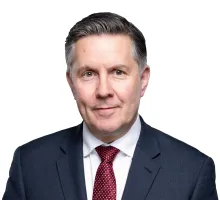
HAMISH MACDONALD, HOST: First off, though, I wanted to talk to you about specialist fees. A trip to any medical specialist can be pretty expensive. We know this. The Health Minister, Mark Butler, though, says specialist fees are now out of control. Those are his words. He says it's becoming a barbecue stopper. He's pledging to fix it. I'd love to know your experience, though, with medical specialists. Has the cost turned you off seeking an expert for medical advice? Have you delayed or put off having a procedure because you can't afford the out-of-pocket costs? 1-300-222-702 is the number. Mark Butler is here this morning. Good morning to you, Minister.
MARK BUTLER, MINISTER FOR HEALTH AND AGEING, MINISTER FOR
DISABILITY AND THE NDIS: Morning, Hamish.
MACDONALD: When did they become out of control, these costs?
BUTLER: Well, it's been a relatively slow burn over the last several years, but we've seen a big spike in the period since COVID in non-GP specialist fees. Your listeners might remember me talking a lot about GP gap fees in our first term of Parliament. We spent a lot of time and energy and, frankly, quite a bit of taxpayer money in trying to address that. But in the background, specialist fees continued to climb quite dramatically. And this is obviously a big cost of living pressure for people. But we're also seeing in the research now more and more people choosing not to see a specialist or have a procedure done because of the cost. So it's now an access to care barrier as well.
MACDONALD: So what is a reasonable cost? What sorts of fees are being charged?
BUTLER: Well, the difference really between what we were confronting in general practice and the rest of the medical profession is this. In general practice there were gap fees starting to emerge when you went to see a GP, but within a relatively narrow band - might be $30 or $40, $50. So we've tried to address that bulk billing rates are climbing again, probably faster than we expected when we introduced the new incentives we did last year. So non-GP specialists, it's much more variable. So take some of the latest data I had, which might even be out of date.
For a colonoscopy in Sydney, many, many people will be charged effectively nothing, so maybe either nothing or $20. The average is $280, but many people are being charged more than $700 with no rhyme, no reason to the difference between those charges. There's no quality difference between the specialist who is giving you that colonoscopy and more worryingly people are often not informed about that cost until they rock up for the procedure. So there's a lot of bill shock happening where people are referred to a particular specialist, they don't really know what fee they're being charged. They might only be told the day before the procedure when they've booked leave and made arrangements.
MACDONALD: So is there a framework or are there guidelines that we as consumers, patients, you might even call us within the health system, can refer to if we're interacting with a specialist where we could say, look, I can see that this sort of procedure should cost me around about X. Is your pricing structure in line with that?
BUTLER: Well, there are two issues, Hamish. One is knowledge and transparency. And so what we said last year was that we were going to start publishing every fee that every specialist charges on a website called the Medical Cost Finder. Greg Hunt set this thing up with the hope that specialists would voluntarily upload their fees so that patients could search it and work out if you had a colonoscopy or were getting a knee procedure in a particular region of Sydney, for example, they could compare and contrast.
But what we found a few years on is that out of some tens of thousands of specialists, literally only a few dozen published their fees. So we decided to mandate it. So part of it's about transparency and what the profession calls informed financial consent. So before you go under the knife or you rock up to the hospital, you know what you're going to be charged. That's one issue which we're trying to address through this legislation that's currently actually being debated in the Parliament so that we would publish everyone's fees.
Then there are the fees themselves and that's really becoming much more of a problem. It's all well and good to have the fees published but if they're effectively so high that big parts of the population simply cannot afford to get procedures done then Government has to act and that's what I've said to the AMA and that's what I've said to all of the colleges of specialists as well. We can't sit back as a Government and see people simply not accessing the care that they because of cost.
So all options are on the table as far as I'm concerned. We've got a parliamentary inquiry that's just about to kick off also to help us explore the options and I think talking to the presidents of all of the colleges, so the College of Surgeons, the College of Anaesthetists and all the rest of them, I think they understand as well that something's got to change. There are too many outliers in the profession who are charging, frankly, outrageous amounts of money for common medical procedures.
MACDONALD: It's 21 minutes to nine. On 702 Mornings, Mark Butler is the Federal Health Minister. We'd love to hear from you on this this morning. 1-300-222-702 is the number. The Grattan Institute last year said the government should strip Medicare rebates from specialists who charge excessive fees. Is that something you're considering?
BUTLER: That would certainly be an option on the table. I mean, we need to be careful not to do that in a way that effectively you see part of the profession opt out of Medicare so that all they're doing is charging out-of-pocket fees with no ability to get government support there. That would not be in the interest of patients. Now, if there was good market competition and good regulation, you could prevent that. But there are also some parts of the country where there's just not enough competition, frankly, in the system because colleges control the number of new specialists coming into the system as well.
So yes, that's on the table. Yes, that was a good report from the Grattan Institute but we'd really have to kick the tyres on all of those proposals to make sure that there weren't some perverse consequences that weren't in the interest of patients.
MACDONALD: We've got Steve here from the Southern Highlands. Good morning to you, Steve.
CALLER STEVE: How are you? How are you doing?
MACDONALD: You've got a knee replacement coming up, I think.
CALLER STEVE: I've got a total knee replacement coming up in about three weeks' time. My out-of-pockets- and I'm in the top health cover, my out-of-pockets are nearly $8000.
MACDONALD: Wow. And can you afford that?
CALLER STEVE: [Laughs] Not on top of the elbow operation that I've got to have at the end of the year as well, no.
MACDONALD: Yeah, right.
CALLER STEVE: I mean, I'm not a self-funded retiree by any stretch of the imagination.
MACDONALD: And did you go into this knowing that you'd be facing those sorts of costs?
CALLER STEVE: Look, before Christmas last year, I had a massive accident where I fell over and I damaged nearly every bone in my body. And I broke my kneecap and I tore my, what's that little cartilage thing, the meniscus. And I damaged an already replaced metal elbow. So I've got to have them all replaced again. You know, and it's just a frightening expense, I can tell you.
MACDONALD: Yeah, it sounds like- I mean, Minister, this- I'm not sure if this falls precisely in line with the specialist fees that you're talking about. This is surgery costs. But, I mean, this is the situation so many Australians are finding themselves in. They don't know what to expect and then it hits when they're most in need.
BUTLER: Well, unfortunately, this is precisely the story I'm talking about and I hear it time and time again. I mean, your insurance will cover your hospital costs, but it's the out of pockets that the surgeon an the anaesthetist might be charging that really, really bites and leaves people like that caller having to balance up, well, do I try and find $8000 or do I simply put up with the pain? And these are choices that we shouldn't make- you know, have to make in Australia with the great healthcare system we have. That's really what we have to overcome. And there is also a role here for state governments and their hospital systems to lean in a bit on this. I mean, part of this is the elective surgery waiting lists that we have in public hospital systems that I appreciate are difficult to wind back.
But also in terms of just seeing specialists, so not necessarily a procedure, but a consultation, outpatient clinics for public hospitals are often quite difficult to get into as well. So people like your caller just then often don't feel like they've got a choice but to get private health insurance and get a private procedure done, even if it costs several thousand dollars.
MACDONALD: Ian is here. Good morning to you, Ian. What is it you wanted to add to this conversation?
CALLER IAN: Yeah, hi, Hamish. I'm a little bit confused about what the Minister is trying to portray here. It's not a- you know, the access to private surgery, you know, it's not just a choice whether you pay a huge amount of money or whether you don't. You've got the choice of whether you want to go private or whether you want to go public in the first place. And quite often, in most cases, the consultant will outline what out-of-pocket expenses you're going to be facing before you actually go to theatre. And the other thing that I find a little bit strange is that while the government is winding back rebates on private health insurance that would allow the elderly that are accessing colonoscopies and other surgical procedures, we're complaining that the cost of getting into that specialist is too much. If you're worried about access to specialists, don't wind back the private health insurance rebate.
MACDONALD: Minister, does he make a fair point about that?
BUTLER: No, he doesn't. I mean, the first point he made one I made just before Ian's call, which is that we do need some genuine choice here between being treated in the public system or being seen in a consultation in the public system on the one hand, or the choice that people make to take out private health insurance. I mean, private hospitals do probably close to 70 per cent of all elective surgery in Australia. So it is an incredibly important part of that part of the system. And by elective surgery, I mean anything that doesn't have to be done within 24 hours.
In terms of private health insurance, I mean, that really is the funder of the system and it covers those hospital costs. what I'm talking about here is private fees being charged. I'm not sure what Ian does, but private fees being charged by non-GP specialists in a private market sense. They're not covered by private health insurance. Never have been.
MACDONALD: I suppose the point Ian is making is that it squeezes- it's making people make a choice about whether they have the insurance or not, and they may be more exposed to these excessive charges.
BUTLER: Well, I mean, private health insurance, if you can afford it, is a very good return for older Australians. For every dollar that private health insurance costs older Australians, on average, they get $3 back because that's the part of your life when you're generally requiring more health support. So if you can afford it, it's a good return for older Australians. But this is not really what we're talking about. We’re talking about fees that are charged by medical specialists over and above what the private health insurance would ever and has ever covered.
MACDONALD: I've got people asking on the text line whether there are upper limits to the fees that they can charge. I know you're saying that transparency is key, but why isn't there some sort of some guardrails in place around this?
BUTLER: Yeah, and that's- well, the answer is no, there are not upper limits. And that will be something that we explore. I think I said to the Sydney Morning Herald in an interview earlier this week that there have long been these views that constitutional limitations exist to stop the government from setting a ceiling on a medical fee. That goes back to a debate back in the 1940s when there was a referendum over whether the Commonwealth could introduce schemes like Medicare and the Pharmaceutical Benefits Scheme. And the constitutional provision there has been argued mainly by medical colleges to prevent the Commonwealth from being able to do something like that.
Now, we want to test the boundaries of that because we think we're getting to a point where a minority of specialists are charging fees that are so outrageous that the only way we might be able to deal with them is regulation.
MACDONALD: It's 14 minutes to nine. The Federal Health Minister, Mark Butler, is here. I'm going to take one more call because we've got a full switchboard of calls on this. It's clearly tapping into something that people care about deeply. Andrew's called in from Campbelltown, a recently retired paediatrician, and I should flag Andrew, you're Andrew McDonald, former state Labor MP for Macquarie Fields as well. What is it you want to raise?
CALLER ANDREW: In Campbelltown all the local paediatricians are no longer bulk billing, and speaking to all of them they would all be able- would love to be able to but the rebate just won't cut it. They literally cannot afford to bulk bill with expenses of medical insurance and rent and secretaries and all that sort of stuff.
MACDONALD: Do you acknowledge, though, that there isn't the level of transparency that maybe patients are owed?
CALLER ANDREW: If they could do one thing and force every doctor to publicly disclose their fees to everybody before they made the appointment, that would be great. Even as a referring doctor, you don't know how much the person you're referring to charges.
MACDONALD: Minister, just on the rebate and what it does to their sort of business model, do you accept any of that?
BUTLER: Yes, I do. Andrew's right. The freezing of the rebate over the previous decade did impose a lot of pressure on medical businesses, whether they were GPs or specialists. We've started to increase them in a much fairer way, I think, reflecting the cost pressures. And as your listeners know, we've put a lot of money into bulk billing for general practice. So I do accept there's been that pressure over the last 10 or 15 years, but that doesn't explain the wild variability between those specialists, whether it's paediatricians in Western Sydney who might charge relatively modest out-of-pocket costs and some other specialists who frankly charge hundreds and hundreds for a consult, let alone thousands and thousands for a procedure. So trying to get some better rhyme and reason to this is at least the first thing we have to do.
MACDONALD: Before we let you go, Minister Mark Butler, I did want to ask you about something else. Pauline Hanson has billed taxpayers more than $13,000 for two trips in October that included fundraising events and attendance at an event connected to Gina Rinehart. Now, obviously, this of taxpayer-funded travel and allowances has come up before. Scrutiny's been on ministers in your government. In this instance, is this a fair use of taxpayers' money?
BUTLER: Well, that's really for One Nation to explain and to ensure that they're following all of the relevant laws around reporting and transparency. But what it does really remind us is of the very close relationship between One Nation and big mining companies. We've seen that play out in the way in which One Nation has voted in the parliament, when the parliament has been deciding whether to back mining workers in their communities or to back big mining companies. And every time, One Nation has backed the big mining companies like Gina Rinehart. I do just want to be clear with listeners, though, because I guess when ministers have been out defending the likes of Anika Wells, they've made the point these things are within the rules. Is it your view that this was within the rules?
BUTLER: Well, look, I haven't looked at it closely enough to know that, and certainly we're trying to change the rules to stop the sort of very big donations and impose ceilings, and that's been a very important reform from our point of view to give much greater confidence from the public about the way in which donations operate.
So whether or not this is in the rules is for One Nation to explain. I haven't looked at it closely enough. I've seen the media reports. But what it does remind us, again, is that even though One Nation tries to portray itself as the party of the average man and woman in the street, time and time again, they back big mining companies like Gina Rinehart's.
MACDONALD: Mark Butler, we really appreciate your time. Thank you very much for answering so many of our callers' questions. We appreciate it.
BUTLER: Thanks Hamish.
MACDONALD: That's the Federal Health Minister there, Mark Butler.