
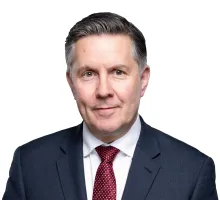
CRAIG ZONCA, HOST: Health Ministers from around the country, they are meeting today in Brisbane. The Federal Health Minister is Mark Butler. Minister, good morning to you.
MARK BUTLER, MINISTER FOR HEALTH AND AGEING, MINISTER FOR DISABILITY AND THE NDIS: Morning, Craig. That's the nicest introduction from the choir I've had to an interview for a while, I can tell you.
ZONCA: Well, then I have to ask, are you here in in Brisbane as Santa or the Grinch?
BUTLER: I'm here as a constructive negotiating partner, neither here to sort of give gifts or take gifts, but to strike a deal that's in the best interests of not just Queenslanders, but people across the country. I think we're making good progress. There'll be political colour around some of the commentary, but we had a good meeting last night as health ministers that Tim Nicholls hosted. We've got just heading up to another meeting today. Our job really is to narrow the points of difference that exist between us, not just about hospitals and aged care, but also about the future of the NDIS, and get those points of difference down to a manageable list that then the premiers and the Prime Minister and chief ministers can hopefully reach an agreement on before Christmas.
ZONCA: Well, that time is very much ticking on that. So there won't be a deal by the end of today?
BUTLER: There won't be a deal by the end of today. Health ministers don't have authority, for example, to negotiate some of the remaining issues around disability reform. But what we do have the authority to do is to narrow those points of difference down. As I say, the Prime Minister who wrote to premiers earlier this week, I think the Queensland Government revealed that yesterday or the day before, they can come together, if they're willing, before Christmas, before the end of the year, and finalise those remaining outstanding issues. And they'll be big issues. They'll be big dollars and a couple of other big issues that it is appropriate that the heads of government finally come together and resolve once and for all. Because I think we all want to get an agreement, these are really important social programs for the country, and we want to make sure they work for Australians over the coming five years.
ZONCA: Well, let's talk about those aged care places. So more than 3,000 aged care patients stuck in hospitals around the country, a 25 per cent increase in just a few months. That's the data out today. Nine-hundred of those elderly Aussies are here in Queensland public hospitals. Aged care is a federal responsibility. What are you going to do about it?
BUTLER: First of all, those numbers have been provided to the media. I haven't got them yet, other than reading the media reports, so I haven't been able to look over them. But I do know that there is a significant number of older patients, doesn't really matter whether it's 3,000 or a bit less, who are finding it hard to get out of hospital into aged care. I've very honest about that. Our aged care system has not been building the supply of new beds that, frankly, we need for a big increase in demand.
The baby boomers, my dad was born after his dad came back from war in 1945. There's a lot of them turning 80 this year and next year and the year after. 80 is really the key point for entry into aged care and we're not building enough new beds right now. That's why we passed new laws in the Commonwealth Parliament that would make it more profitable, more investable, if you like, for those providers to build those new beds.
But they're not doing it quickly enough. I've made that clear to them. We do need to sit down with state governments and work out sort of interim arrangements to be able to move older patients out of hospitals when that's medically appropriate into something that provides them with the appropriate level of care while we wait for those beds to be built. I think we'll have some good discussions about that today. We're already providing significant funding to state governments to do some of those things, particularly, for example, for patients who have very high dementia needs. But there's more we can do there, I think.
ZONCA: Yeah, Okay. Does that mean more money? Because I want to give you a couple of examples here. In Queensland Parliament this week, it was revealed a patient by the name of Denise McCauley had been rejected from over 190 aged care homes and told she would have to wait years. Surely that's not good enough.
BUTLER: I agree. There are more cases around the country of people being rejected from facilities than we used to see, I have to say that. That's why we're funding some programs for people who might have particular needs, particular complex needs, which might be around their level of dementia, but might be some medical, physical needs that aren't able to be properly and appropriately cared for in a standard aged care facility. We're funding those programs. Those facilities are opening.
But the offer that we made to the states earlier this week includes about $2 billion in additional funding to expand those programs to take that pressure off hospital systems and provide better care for older people who are caught in this position of being ready to be released from hospital. Perhaps they didn't need to go to hospital in the first place, and being provided with care outside of the hospital that is appropriate and, frankly, what they deserve.
ZONCA: Yeah, well, there's a patient I see here on the data that I've been provided with from Queensland Health, a patient in Rockhampton has been stranded for 1,044 days in hospital. That's almost three years waiting for a residential aged care bed. You acknowledge that it's not happening fast enough, these aged care places. So it is putting a massive drain on public hospitals. In Queensland, effectively, those are stranded are the equivalent of one our biggest hospitals, the Royal Brisbane and Women's Hospital. That's an astonishing number of people who are taking up hospital beds at a time that we're hearing about bed block being a key issue that doctors and nurses are complaining about.
BUTLER: I agree. We've got to work together more to allow people to move through the hospital system. The patient case you mentioned in Rockhampton, that's a very extreme case and I'd want to know the circumstances of that. That's an extraordinarily long time for someone to be caught in hospital, even if it is in a regional community that might be struggling with aged care supply. But we do have to do more. We're providing support for state governments to try and relieve pressure at the front door, if you like, of the hospital systems. And you'll see that in the emergency department data that was released this week that show that presentations to emergency departments across the country for the first time in as long as I can remember at least are flat, they're not increasing, and that's largely because the number of the less serious presentations to EDs has actually declined quite markedly because we're funding urgent care clinics where people can go and get, for example, care for their kid who's fallen off a skateboard and broken their arm instead of having to go to a crowded emergency department.
There's not just one solution to deal with the surging demand that some parts of the hospital system are experiencing. We're sitting down with state governments in a constructive way in spite of all of the media hyperbole you will see politicians engage in. That's just part of the system if you like. Behind the scenes there's actually very constructive discussions going on because we recognise there is, it's not just the hospital system, our entire health and social care system is under very significant pressure. Because of some of those demographic changes we talked about, some of it's still an overhang from COVID that is impacting parts of the healthcare system. And we're going to make sure that re-gear it over the coming few years to reflect quite a significant change in our population.
ZONCA: Well, the Queensland Government says it just wants what was agreed at National Cabinet back in 2023. Are you walking back from that or will that be the final dollar figure we get to?
BUTLER: Under the old agreements that state governments signed on to with previous governments, they would have got about an additional $12 billion over the coming five years. We've offered so far $33 billion, $33 billion, not $12 billion, and $2 billion additional funds on top of that to deal with these longer stay older patients. We've put a very generous offer on the table.
Ultimately, premiers and chief ministers and the Prime Minister, I hope, will come together over the coming days and see whether they can really land a figure that works for all of us. I want to stress this is not just a hospitals negotiation. We're also focused on some very important issues about getting the NDIS back on track and particularly ensuring that it works for parents of young kids aged under nine who might be experiencing developmental issues. There's quite a complexity to these negotiations, but we are narrowing it down to a very manageable list of issues which ultimately the heads of government need to come together and try to resolve before the end of the year
ZONCA: Well, let's hope that can happen, Mark Butler. Thanks so much for your time.
BUTLER: Thank you, mate.
ZONCA: The Federal Health Minister, Mark Butler, in town today for that meeting of health ministers from right across the country.
Media event date:
Date published:
Media type:
Transcript
Audience:
General public
Minister: