
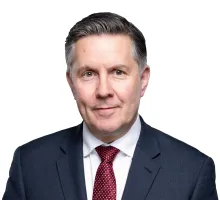
STEWART BRASH, HOST: As I said, we have Federal Health Minister Mark Butler in town. He was here for the official opening of the new Congress Health Hub on Gap Road. Now, that happened in sort of more of a private ceremony without the media, given of course the ongoing search for Sharon Granites and out of respect to the family. Subsequently, up until now, we haven't had a chance to catch up with the Federal Health Minister, who's been in town for a little while. So, Mark Butler, good morning to you.
MARK BUTLER, MINISTER FOR HEALTH AND AGEING, MINISTER FOR DISABILITY AND THE NDIS: Good morning.
BRASH: Hey, can I go to some good news, which we don't often have in this town, and certainly at this time. An announcement by the WHO, the World Health Organization, that trachoma, endemic in Australia has now been- what's the right term? Has been eliminated?
BUTLER: The WHO, the World Health Organization, made this announcement yesterday afternoon while I was actually at Congress that trachoma has been eliminated as a public health concern. Now, to be technical about it…
BRASH: What does that mean?
BUTLER: … that means trachoma rates across the population have dropped below a particular threshold. That means that they are not seen as a public health concern endemic to Australia anymore. To be very clear, that does not mean we have eliminated trachoma. There are parts of Australia, including Central Australia, where trachoma rates continue to exist above that threshold. So if Central Australia were…
BRASH: So there's still work to be done?
BUTLER: Yes, absolutely. If Central Australia were a country- not sure whether Central Australia has any plans to make that case…
BRASH: To secede. No.
BUTLER: To secede, but it would still be a public health concern here. But with that heavy qualification, we shouldn't underestimate the scale of that achievement. And it's an achievement that has been heavily driven by the community-controlled health sector. John Boffa, for example, here, the medical director at Congress, is part of our national reference group. You'll see the same leaders from other parts of the community, particularly remote communities across the top end, who've really driven this. So a great achievement. A little more to do, though, but also something that those community leaders and the work of ACCHOs really should reflect upon. It was a great achievement.
BRASH: Yeah, but what's yet to be done? And in regards to Central Australia, remote Australia, if we're still above that average, what can be done and what is being done to bring it down so we can say it has been eliminated from all of the country?
BUTLER: To continue the work that really has been in place for some time in this region and in others across the Top End. I've been talking to community leaders,even before I came to Alice, but while I've been here, including some doctors last night, the concern they have today is diphtheria, and really a reminder for people to check whether they're up to date with their boosters, which we now think is about five years. So if you haven't had a booster in five years, talk to your health professional. I know having talked to a couple of doctors here, including one from the hospital last night, they are very worried about the case numbers here and in other parts, some parts of northern Western Australia as well.
BRASH: I think a quadrupling since the start of last year in the NT. And yeah, I know primary health carers and providers on the ground are very concerned about that. So the CHO was very concerned when we spoke to him yesterday. Can we go to what is obviously in front of mind for most people is the disappearance and the continuing search for Sharon Granites. Not a great time to come to town. How do you reflect on that, you've turned up in town and you see the town is pulling together but still trying to find this young girl?
BUTLER: Yes, pulling together amazingly. But you can feel the sense of shock and worry. Everyone's heart is in their mouth. They're feeling so deeply for the family and for this little girl. And I wanted to communicate a couple of things that I've been at, that this is not just something that the community in Central Australia and Alice are feeling. This is reverberating right through the country. People right across Australia are watching this story closely, hoping and praying for a good outcome and that this little girl can be found safely. But it really just does shake you to the core, this sort of story, and we hope for the best. We thank the volunteers, the extraordinary number of volunteers. I know Malarndirri McCarthy and Marion Scrymgour have been out there giving them some fruit, having a talk to them yesterday. They told me there's a huge number from a variety of backgrounds, people just putting their shoulder to the wheel, doing anything they can to find this girl.
BRASH: Yeah, and this morning we heard from our reporter on the ground saying that numbers at the briefing had doubled on yesterday's numbers, so people still coming out. We hope for some good news. Good point from one of our listeners says, why can't we get the AFP and the Army? Look, I know the AFP are helping on the drone search, I understand, but is there an argument that if we want to cover more ground, is there some federal assistance we can get? And would you support, say, bringing in- I mean, I know NORFORCE is there, but can we expand and get more people on the ground?
BUTLER: The way this operates is that the local government, the NT Government, the NT Police, would make a request. I'm not aware that a request has been made. Usually when those requests are made, they're often in instances of natural disasters. We look at them very, very favourably. I think I heard a report that NT Police had put out a call for assistance from SA Police and some other states over the last 24 hours. The whole country is hurting and hoping and praying at this story. And I'm sure if there were a request, we'd look at it very, very favourably.
BRASH: Yeah, and that's a very good point made by Sally. Thanks, Sally, for that one. Let's also talk about- let's look at the major reason you're here. We're seeing openings of clinics and refurbished clinics, Santa Teresa, Mutitjulu, and, of course, the Congress Health Hub. And the key thing about that is what difference are they actually going to make to the health of Centralian Aboriginal people? Aboriginal people in Central Australia, what difference are these developments going to make?
BUTLER: You need a place to go to receive health care. And I think we reflected yesterday at the Congress Health Hub, at the more than 50 year history of Congress. If it wasn't the first community-controlled service, it was the second. It was either Congress or Redfern in Sydney. But once you get to 50s - I feel this very intimately as someone in my 50s as well - your infrastructure starts to creak a little bit. And so really the success reflects the fact that we do have some ageing infrastructure in the Aboriginal community-controlled sector, which is why we've been putting funds into renewal. So you need a place to go and we need good, high quality services for people to be able to visit that are going to last another 50 years. That's really what we've been doing here, down near the river, but also at Mutitjulu and Santa Teresa and in other parts of the country as well.
BRASH: Key question, staffing. The workforce issues for remote Australia are legendary. Getting people to come here and stay here, people who say, well, I can get a job as a GP or as a health worker in another part of regional Australia, get as well paid, and I don't have to live remote. There's been the reputational issues around Alice Springs and the safety, community safety issues. So surely it's great to have great facilities, but you've got to staff them. What's going to happen on that front?
BUTLER: I was about to say buildings are important, but not much good if you don't have terrific health professionals working in them.
BRASH: How do we get more workforce? How do we keep workforce?
BUTLER: There have to be a few approaches. You need to train more of your locals. So when you're talking about doctors, this year is the first year the Northern Territory has had a medical school, training Territorians to become doctors in Darwin and hopefully staying in the Northern Territory and flowing from Darwin down through the whole jurisdiction. We're also making it easier for overseas trained doctors to come to Australia. They used to have to wait a long time, they used to have to pay very high fees to relevant colleges. We now have, particularly from countries where we have high confidence in their training, places like the UK and New Zealand and Ireland, GPs and some other specialists can get here quickly, cheaply and get on the ground. And that's not into Sydney and Melbourne. That's into regional communities, regional centres and remote communities as well.
I did talk to some people yesterday who said that those numbers were not as high in the territory as they were in other parts of regional Australia. So I want to have a look at that. I want to talk to the NT Health Minister about that, about ways in which we could work to ensure that.
BRASH: We need more incentives.
BUTLER: There are significant incentives to work at a place like Alice, but why are people not coming to the territory in the same numbers they might be coming to regional New South Wales or regional Queensland is something we want to explore. Partly, that's about marketing yourself over, for example, to, let's be blunt about it, the National Health Service over in the UK, where there are a lot of doctors and health professionals who are interested in coming to practise in Australia. We pay well. The weather's pretty good. It's a good healthcare system, which is why we're getting so many coming over here.
BRASH: But we're remote.
BUTLER: Yes.
BRASH: … and people see Central Australia, see the Territory in a certain light, and they say, actually, I want an easier life because it can seem quite tough. And it is tough. I mean, the environment is tough. You're dealing with some of the toughest- in terms of the burden of disease on the population, is probably the highest in the country. So the challenges can be a turn-off.
BUTLER: They are. And so we've tried to do some of these things. We're training more of our local medical graduates as GPs. We've got a medical school in the Territory for the first time. We've got this new streamlined pathway for overseas trained doctors. But if it doesn't start to shift the dial really in Central Australia, we'll want to sit down with Steven Edgington and look at what else we have to do.
Yesterday, he and I also announced a new program that's not in Central Australia, but is in Katherine and the Big Rivers. That is, again, a cooperation between ourselves and NTG. It's something we've been doing in other jurisdictions now where trainee GPs, so medical graduates who are doing their training as general practitioners, can get employed by the local state, in this case, territory government, and have that employment while they do their training. That gives them good leave entitlements, parental leave, if during their five years of training they want to have a kid. It really is a big incentive for people to take on that type of training. Now, we're doing that in Katherine and Big Rivers.
BRASH: When's it coming down here?
BUTLER: Well, that's really a matter for the NTG, but also the local community has got to buy into it. I mean, there are some issues, frankly, with employment by the NTG against community control, which is a particular issue in the Territory compared, for example, to Tasmania.
BRASH: Yeah.
BUTLER: But I'm sure there's a way we can square that circle.
BRASH: Well, let's just talk about something. I had quite a good conversation with the head of the Australian College of GPs here in the NT, Dr Sam Hurd, and Dr Michael Wright, the Royal Australian College of GPs National President. And I said, if you got to speak to the Federal Health Minister, what would you want to ask him?
[Excerpt]
MICHAEL WRIGHT, NATIONAL PRESIDENT, RACGP: Look, I think it is about we are seeing some benefits in increasing the workforce, and that's good. And if you fund general practice to do these things, including the bulk billing incentives you do get results but the next step is dealing with this chronic and complex care making sure that practices can afford to keep their doors open and afford to provide the full range of care that the community needs.
[End of excerpt]
BRASH: Now, that went on to discuss- and Sam Hurd has talked about this in the past that in remote areas, private GP practices struggle because of the complex nature of people coming to see them, because of the overheads are much higher and he's calling for, say- and he used the figure of a hundred thousand dollars, a subsidy to private GP practices to keep the doors open. Two have been on the market here, one has been sold, but one is still in the market I understand. And he said it would be similar to what the remote or what pharmacies get as a subsidy. Will you support subsidising private GP practices to keep the doors open?
BUTLER: I haven't had that proposal put to me.
BRASH: You've not heard that one before?
BUTLER: No. They may have put it to my department. I can't say they haven't done that. But I haven't seen that proposal for rural general practices. What we've been trying to do to boost the viability of rural general practices other than what we've just talked about in terms of the supply of doctors, is largely through the bulk billing incentive. And the bulk billing incentive changes have been way, way better for rural general practices than the practices in the cities because they're quite high loadings for a place like Alice.
BRASH: Yeah. But we still have very high overheads.
BUTLER: High overheads. But the increase in income from the bulk billing changes we've made over the last few years, including late last year, have really transformed the viability and increased the salary of general practices.
BRASH: What do the numbers show? What has been the increase? What has been the change? Because I know there's been a good increase in bulk billing in Darwin. What about in Alice Springs and in the remote and regional areas?
BUTLER: Yes, in Alice there has been as well. In remote and regional areas, it was pretty high already because most people had a concession card. And the rates for concession card bulk billing in the NT are close to 100 per cent. They're 97 per cent,
the highest in the country. Now, the bulk billing rate for the NT is the highest in the country. It wasn't five months ago, it was third after New South Wales and Vic. The increases in bulk billing have been jaw-dropping here, over 20 per cent.
BRASH: In the private GP practices?
BUTLER: Yes. This is all private GP practices.
BRASH: Yeah.
BUTLER: For people who don't have a concession card, their bulk billing rate has increased by more than 20 per cent in a few months. The bulk billing rate across the population for the NT is now 90 per cent. That's where we want the rest of the country to be by the end of the decade, the NT has got that already.
BRASH: In light of that, you don't think there needs to be a direct subsidy paid to those private GPs?
BUTLER: We want to have a look at the numbers. Really what that means is that for someone like you and me who don't have a concession card, going in for a standard consult with a GP here in Alice, for example, they might have got a bit over $40 for that consult. They'll get way more than twice that now.
BRASH: OK.
BUTLER: So, it's a very big increase in their income. Obviously, that depends on the mix of concession card patients and non-concession card patients. But we tripled the payment they got for concession card payments in 2023. Billions and billions invested in general practice over the last few years, which is part of the reason why Michael Wright would say, I think, there are so many more medical graduates choosing general practice now
than there were five years ago, which was something that really worried me five years ago.
BRASH: Just send them here, Minister, but that's a different conversation. Can I also ask you something, which I- in the last few weeks we've heard from the Urupantja Health Service. Now, they're up in Utopia along the Plenty Highway. We've been hearing that the service delivery has been questionable, that staff levels are down and there's also governance issues. Now, mostly, they're federally funded. What have you heard?
BUTLER: We heard a lot of that as well and there was a very abrupt closure of the service. You're right, my department funds the vast bulk of those operations and we lean in pretty heavily. There have been a number of contacts between my department and the service, including a meeting earlier this week. I'm told the service is fully up and running again. That's my advice.
The longer term future requires a bit more discussion. We need to make sure that the service is viable, it's stable, it's still got the support of the community. If there are some of the issues you talked about, that we work through them and make sure they are resolved. The immediate challenge in my view is to make sure services are still there for people who need them, who are sick. And I'm told that does exist. But my department is leaning in quite heavily to make sure there's a viable future for it.
BRASH: Does the department have issues over the governance and over management at the health centre? And have they investigated that?
BUTLER: I don't want to go into the detail of those discussions. But you're right to say this has been swirling around. And so we need to get to the bottom of it.
BRASH: Has that been officially investigated?
BUTLER: Well, again, we're not at that point yet. We're really at the exploratory point, making sure there's continuity of service and that we are getting to the bottom of exactly what drove that quite abrupt change in service in the first place and how we build a viable service for the future.
BRASH: But service is back and open?
BUTLER: That's my advice.
BRASH: Okay. Minister, thank you so much for joining us.
BUTLER: My pleasure.
BRASH: Mark Butler, Federal Health Minister.
Media event date:
Date published:
Media type:
Transcript
Audience:
General public
Minister: