
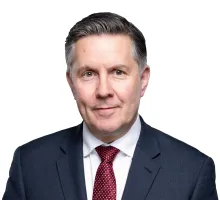
GRAEME GOODINGS, HOST: My pleasure to welcome to the studio Health Minister Mark Butler. Minister, good morning to you.
MARK BUTLER, MINISTER FOR HEALTH AND AGEING, MINISTER FOR DISABILITY AND THE NDIS: Thank you, Graeme.
GOODINGS: Thanks for sharing your time with us today. Last week, the Federal Government agreed to pay an extra $25 billion into public hospitals. It's ending the standoff that's been long running with the states. What is that going to mean for state health?
BUTLER: More support for the hardworking doctors and nurses and other health professionals who work in our 750 public hospitals around the country. We know they're pressure. The population is getting older. There's more chronic disease. There's still a legacy of COVID, although that's starting to taper off. Public hospitals are busier than they ever have been, and we see that right around the world, certainly right around Australia. The Commonwealth Government is doing its bit to support state governments, which, after all, actually operate the public hospitals. On top of everything else we're doing to strengthen Medicare and try to take pressure off the public hospital system with Urgent Care Clinics and more bulk billing and things like that.
GOODINGS: What about housing for the aged, those in aged care? I mean, that is putting a huge burden on public hospitals and ramping and the like. What are you going to do about that?
BUTLER: We need to build more aged care beds. There's no question about that. We made some very big changes to the aged care system at the end of 2024, which we hope will lead to more investment. We're seeing an increase in investment in building new aged care facilities, but I've got to be frank with you, it's not happening as fast as I would like. Given the population numbers, we really need to be opening a new aged care facility every three days for the next 20 years. I mean, boggles the mind, really.
GOODINGS: Say that again – how many do we need to open?
BUTLER: We need to open a new aged care facility every three days for the next 20 years. And I'll give you a sense of why. When I was last Aged Care Minister 15 years ago, about 15,000 Australians turned 80 every year. Next year, it will be 90,000. And when you think about it, that's really no surprise because 80 years ago was 1946, when both of my grandfathers were coming home from war, so many others besides, and we saw the beginning of the very, very big baby boom. Demand for aged care services really is skyrocketing right now because we are in the midst of the first of the baby boomers turning 80.
It's placing pressure right across the system. I know it's placing pressure on hospitals. We’re increasing the number of Home Care Packages because at the end of the day, people want to stay in their own home for as long as possible. But we're not seeing enough aged care beds built. We're talking to them very closely. We've made some big changes to encourage investment, responding really to their request about what would drive further investment. But building these things is not easy. You've got to get through council planning. You've got to get banks lending money to these operators. Of all of the things in my portfolio, of Health and Disability and Aged Care, this is probably the thing I'm most focused on – how do we build enough aged care to meet that target? A new facility every three days somewhere in the country opening, and we're not doing that right now.
GOODINGS: We have Health Minister Mark Butler in the studio. I'm inviting your calls. The Minister is pleased to take them. John at Ascot Park, you have a question for the Minister.
CALLER: Mr Albanese mentioned at the last election that the Medicare card would be all I would need to visit the doctor. Now, I've been to three different places, pathology, my GP, and a specialist, and unfortunately, I've had to present more than a Medicare card. Can you please explain why that is?
BUTLER: Our focus really was getting those bulk billing rates up for visits to the GP. Let me talk about visiting your GP. The first thing we did a few years ago was to triple the payment that GPs get for bulk billing pensioners and concession card holders and kids, and that started to turn that bulk billing rate for those Australians around very quickly. And we're now seeing bulk billing rates comfortably above 90 per cent for those Australians. But if you don't have a concession card, and that cuts out at about $40,000 a year income for a single, so a lot of people who don't have a concession card are by no means wealthy, their bulk billing rates had continued to slide. On 1 November, only a few months ago, for the first time ever, we started paying GPs to bulk bill people who didn't have a concession card. I's relatively early days, but already we've seen a big increase in the number of general practices choosing to go 100 per cent bulk billing, 1,300 additional general practises around the country so far in a few months. That number's increasing every single day. It's more than doubled here in South Australia.
CALLER: Sorry to interrupt, but I'm particularly referring to pathology where I didn't pay any gap whatsoever previously, and now I am paying a gap for blood tests, the ECGs, and things like that.
BUTLER: I'd love to have some more detail about that, because bulk billing rates for pathology are still over 99 per cent. If you're paying a gap fee for a pathology test, if it's on the Medicare schedule, if it's a Medicare-allowed pathology test, it's very rare for you to have to pay a gap. I'd be really interested to get some more detail about that. Pathology test gap fees are very rare if it's a test that's endorsed by the Medicare schedule. But certainly, for GPs, we're trying to get those bulk billing rates up, and they are going up.
For specialists though, we have a real problem. Out-of-pocket costs for non-GP specialists, particularly for some of those procedures you might get in the hospitals, they're skyrocketing. We did some work yesterday in the parliament about that, which has got a fair bit of media. That really is my next priority. Starting to see bulk billing rates go up again for GPs.
GOODINGS: What percentage would you like to see of GPs bulk billing?
BUTLER: I'd like to see 90 per cent. We've said by the end of the decade we want it back up to 90 per cent. We've got that for pensioners and concession cardholders and kids. But for people who don't have one of those cards, bulk billing has been in freefall for about five or six years. The rebate was frozen for years. Doctors' incomes were effectively frozen, so it's probably no surprise they stopped bulk billing as much. We've increased their rebate and their income dramatically, but with the expectation that they bulk bill.
GOODINGS: Maxine, you have a question for the Minister.
CALLER MAXINE: I'd just like to ask you about injections in the eye for macular degeneration. I've been having them for quite a few years now. I have them in both eyes. And when I first started, it was $400 for each eye and not much back from Medicare. Bupa, my private fund, they don't cover eye. They don't think it could be done in a hospital. Over the last 18 months, Medicare, I don't know how, whether they've supported the private funds, I've been able to have it done in the hospital, which only cost me $250, my excess fee. This finishes in the end of June this year. I'd like to know, have you got any idea what's going on? When I first started, we were on two pensions. My husband just passed away, so I'll be paying nearly $800 for one pension, and I'm 84 years old. Have you got any idea what's going to happen?
BUTLER: On these eye injections, I received a recommendation, early last year or maybe even late the year before, that they should not be supported in ordinary circumstances. They should not be supported to be done within hospitals because they can be done outside of hospitals. That caused a lot of alarm in the community. A lot of people were getting their injections done for macular degeneration in a private hospital usually. As a result of the concern and the feedback I got, I decided to put pause on that. I didn't accept that advice. I said, I want another 12 months of work done about that. I want better clinical advice. I want some advice about what it's going to mean for people's hip pocket. I'm going to consider that very closely before we look at that again before 30 June. AI really sent it back to the experts and said I'm not going to have a situation where people are going to be paying out-of-pocket costs, big or increased out-of-pocket costs for what is an absolutely vital service for them. I haven’t made a decision about that yet. I haven’t got the advice back. But it would’ve happened last July if I hadn’t pushed pause.
GOODINGS: We have Mark Butler, Health Minister, in the studio. Travis, you have a question.
CALLER TRAVIS: I'd just like to make a quick statement and then ask two questions. My question's about addictive drugs. If we want to stop people smoking tobacco, why don't we ban the importation of tobacco products into this country as we do with illegal drugs that are addictive?
BUTLER: Really because they're legal. They're obviously unhealthy. But for many, many decades, just as a number of other drugs, alcohol, for example, have been accepted as legal in this country, so has tobacco. From a Health Minister's perspective, obviously, we want to see everyone stop smoking. I mean, it's a deadly, deadly product to use. It's still the biggest preventable killer of Australians, even though we've got those rates down dramatically. No government really has considered the possibility of making it illegal, although it obviously is illegal, to purchase cigarettes if you're underage.
But we do have a real challenge in the country right now. Many other countries are facing this as well. The whole world is being flooded with illegal product.
GOODINGS: We are losing that battle, though, aren't we? Let's face it.
BUTLER: We're not having a good time with that battle right now, I have to say. It really has just exploded over the last several years, not just in Australia, in other countries as well. The problem is it's not just a health challenge, although from my perspective it is, it's also a massive crime challenge because this market is controlled by a couple of very big, serious, organised crime gangs who are using the revenue they're getting from people buying illicit cigarettes through local retailer. They're using that revenue to bankroll all of their other awful criminal activities – drug trafficking, sex trafficking, cybercrimes and the rest. I think our law enforcement agencies, our Federal ones, but also state policing agencies recognise this is not just a health challenge, the flood of illicit cigarettes. It's become one of our very significant criminal challenges.
GOODINGS: I think what confounds many people is that how is it that there are so many retail outlets around the nation that are openly selling illegal cigarettes? And they get shut down and another one pops up somewhere else. Surely our law enforcement can overcome this.
BUTLER: When I travel around the country, when I talk to other states and territories, I encourage them to look here to South Australia. South Australia, everyone accepts that all of the non-government experts and, frankly, other states recognise they've been leading the way here. The penalties that the state government put in place to allow shops to be shut down, to be able to go after landlords who, with impunity, were continuing to lease out their premises to retailers who are clearly flouting the law and effectively providing an income source for outlaw motorcycle gangs, they are leading the way here. We're seeing many shops shut down and landlords being account for what's happening in their properties.
And other states are copying South Australia, I'm really pleased to say, particularly the big states were well behind the eight ball on this. It really has got away from them in other jurisdictions, in a way much more so than Adelaide. But I think it's now a big focus of all state governments.
GOODINGS: Let's take another call. Jan, go ahead.
CALLER, JAN: You're familiar with the care plans that are provided by GPs for old age pensioners to go to the podiatrist and that sort of thing I take it?
BUTLER: Yes, very much.
CALLER, JAN: Okay. Can you please tell me why the GP gets a Medicare rebate for providing that service to us?
BUTLER: Yes, of course.
CALLER, JAN: Why have you changed it to only six monthly now instead of 12-monthly? And that means that the GP is getting two Medicare rebates instead of one. Can you give me an answer to that, please?
BUTLER: There have been a couple of changes to the essentially chronic disease management plans. That doesn't ring a bell with me. I have to take that offline and if you want a response to that very specific query, I'll have to get back to you. But we have looked at those systems because they're just so important. As you say, the plan is issued by the GP. That entitles the patient to a number of allied health support visits, might be a podiatrist, might be a diabetes educator or someone like that. We know how central, how important this part of the system is for older Australians, but also for some younger Australians who are struggling with chronic disease.
GOODINGS: We have Health Minister Mark Butler in the studio. If you have any questions, now is the time to ring. Minister, I want to talk about organ donation. And I know here in South Australia we've set the standard where on your driver's licence you can opt in or opt out of organ donation. Any thought of that being a national situation?
BUTLER: It's something we talk to other states about. Just working back a bit, because I set up, when I was a Junior Minister for Health about 15 years ago, the national organ donation system called Donate Life. There is a national register. I encourage all your listeners, if you want to register on that, we'd be grateful for that. South Australia has always been seen as the leader in organ donation in the country. We had the driver's licence system. Some other states had it as well and got rid of it, which I think has been a terrible backward step. But really, what was different here is there was a culture in the hospitals to encourage honest, frank and often difficult discussions with family members who had just lost a loved one in a car accident or a heart attack or something like that, whether they would be willing to consider their deceased loved one donating some of their organs. And it was always a very, very important part of how the South Australian hospital system worked. It wasn't such a big part of how the Sydney hospitals worked, or the Melbourne hospitals worked. 15 years ago, South Australia had twice the rate of organ donation as the big states. And we were seen as a leader up at world's best practice.
We introduced a system that tried to drive that hospital culture in a different way. We employed donation nurses in hospitals who would be able to have that very sensitive discussion with loved ones who just lost a family member or a partner, and that has lifted organ donation rates considerably. They dropped off in COVID, like many things did, but they've started to come back up again. I'd love the other states to introduce driver's licence systems. We talk to them about it quite a lot. It's not the whole answer, but it is a very important part of the answer.
Can I make one last plug? Australians generally have been overwhelmingly supportive of organ donation. Every piece of research says that 90 per cent of Australians support organ donation, but only about 60 per cent say yes when they're asked the question about whether they would consent to their loved one donating an organ if they've just passed away. And the critical factor there is having the discussion. The people who say no tend not to know what their loved one would have wanted. If they know their wife, their mom, their child wanted to be an organ donor, they'll say yes. If they don't know, they tend to say no. It's just one of those things. I know we don't talk about death a lot in this country, but whether it's about palliative care, end-of-life care, organ donation, at the end of the day, honest conversations within families are critically important. Partly it means you're making the right decision, the decision that would reflect your loved one's wishes. But we know also from research that doing what you think your loved one wanted, whether that's end-of-life care or organ donation, really improves the grieving process. It makes the grieving process much less distressing. It's always distressing, obviously, but we know where people aren't quite sure whether their loved one wanted additional treatment or wanted to donate their organs, they generally have longer and deeper periods of distress.
GOODINGS: Let's go to Burnside. Julie, you have a question.
CALLER, JULIE: Getting back to the aged care conundrum with no facilities and lack of facilities, I've been nursing my mother at home for six years and that was because her decline happened at the beginning of COVID, and there's nowhere I was going to in aged care. Now, I didn't expect to still be here, but I am. Now, my mother is bedridden and I require carers morning and night. Her aged care costs under the new system have now blown out to 40 per cent from this time last year out of her pocket. I'm an only child. I don't have family support, so I had to give up work 18 months ago to do this. Now, most of that generation didn't have superannuation, and if it wasn't for their savings, they were studious that generation, but I can tell you we're going through it fast now.
The other problem is that as a principal carer and only carer and only family member, I'm only eligible to get $70 a week. And I've had to give up work, which means I'm out of the workforce and I'm not eligible for the age pension yet. A living carer's wage for thousands of people that would choose to do this, and I know it's not for everybody because it's a tough job, would give a great release to the aged care system because there would be people out there prepared to do this, but they have to work. And me stopping working has been a significant penalty, but that would go a long way to helping and saving the government thousands by giving carers a decent wage.
BUTLER: Thanks for sharing your personal story. I hear these stories a hell of a lot. A lot of people want to look after their mums, their dads, their partners at home. They see it as very much part of their family responsibility and we would like to support those people like you, Julie, as much as possible. There are, as you probably know, carers payments that are available through our social services system subject to certain conditions. I don't quite know your personal circumstances obviously, but I hope that you've been talking to Services Australia to see whether there's any chance you would qualify for that. That's about the same rate as the age pension for people who have pretty much full-time caring responsibilities.
We also have made sure that although we do want a system where people can make a reasonable contribution to the costs of their aged care, where they have the means to do so, that there is a cap on that. We don't want people running down all of their savings and certainly all of their estate. We've put in place a cap, a yearly cap and a lifetime cap. If people do require aged care services for many years, they hit the cap and then after that, the Government picks up the entire bill. But I really appreciate you sharing your circumstances, Julie, and just reminding me how much more we need to do to support families and obviously older Australians themselves who are receiving care.
GOODINGS: Annie, you have a question.
CALLER, ANNIE: For the last 12 months, I have had surgery on my cancer spot – out of pocket, something shocking. I had one on Wednesday and I still haven't even got any money from Medicare on that for $270.
BUTLER: We really encourage clinics now to use effectively a real-time Medicare system so that people's payments should be put into their bank account very quickly. I don't know what practice you're using, but certainly we encourage that because we know that this can impact people's bank accounts really seriously. Again, I'm not sure who's doing the surgery. Sometimes GPs do this and probably charge lower costs than others. But if you're seeing a non-GP specialist, and you may well want to and need to do that, I go back to my early comments. We're very concerned about the out-of-pocket costs that non-GP specialists are paying. There's a lot of media about it over the course of this morning, that it is running for people who need ongoing care to tens and tens of thousands of dollars. Having spent as much energy as I did over the last few years trying to turn around bulk billing rates for GP visits, my focus over the next while is going to be on specialist fees because it has just got out of control.
GOODINGS: We should be able to squeeze in one more call. Pete, go ahead.
CALLER, PETE: You guys are pushing for everyone to go to the priority health clinics, and I had an unfortunate accident the other day where I needed stitches. I thought, all right, I'll go there for the first time. And I went to a clinic in Norwood, and I was quite alarmed when finally, I got into the treatment room and they asked me if I had any allergies and yes, I've got a latex allergy. And they say we're really sorry, we don't have any latex gloves to perform this. And then the doctor turned around to me and says, I've got a latex allergy too, but they won't supply us any latex-free gloves. I then went into a sugar spike and I had to pull out my wallet and get one of the nurses to go to the pharmacy across the road because they didn't have anything to cover my sugar spike. Then, the lady in the bay next to me who had a quite significant burn, they said, sorry, we don't have any burn dressings suitable for that. And we don't have any burn dressings at all suitable for that. You guys are trying to push us to go to these clinics to alleviate the stress on our public health systems, which we're quite obliging in doing, although we're going there with alarming consequences that could come to us in the sense that you guys aren't providing the appropriate procurements to put in place for these clinics to actually be able to operate under circumstances that they are required to be operating under.
BUTLER: Thanks for that feedback. I know the clinic, it's only been operating several weeks, and I'll be providing them with that feedback, because we do expect clinics to be fully equipped. It might take them a little while to get up and running, obviously. But that's not good enough from my perspective. Overwhelmingly, we're getting good stories from people going through these clinics. Two and a half million have gone there so far, most of whom would have otherwise gone to hospital. But I'm really sorry you had that experience, Pete, and I appreciate you bringing it to my attention, and I'll take it up. Don't worry about that.
GOODINGS: Minister, thanks so much for your time today.
BUTLER: Thanks, Graeme.
Media event date:
Date published:
Media type:
Transcript
Audience:
General public
Minister: