
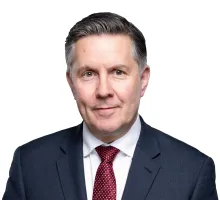
TOM ELLIOTT, HOST: The man with the toughest, maybe second toughest job in federal politics, the toughest probably being the Treasurer, Jim Chalmers, is our next guest. He is the Minister for Health and the National Disability Insurance Scheme. Mark Butler, good morning.
MARK BUTLER, MINISTER FOR HEALTH AND AGEING, MINISTER FOR DISABILITY AND THE NDIS: Good morning, Tom.
ELLIOTT: Well, I interviewed your predecessor, Bill Shorten, about this a year and a half ago, and he admitted that the NDIS, the spending was growing too fast. It looks like not much has been done. What are you going to do to wind it back now?
BUTLER: You're right to say spending growth just hasn't been able to be got under control. Only a few weeks ago, the actuary for the scheme, so the guy who sort of oversees the numbers, reported to us yet another cost blowout of $13 billion. That's since December when we updated our budget figures in the mid-year budget update. Our ability to sort of get this thing under control is proving really difficult, and partly that's about the way in which the scheme was designed. I said yesterday that I was going to bring a law to the Parliament or a bill to the Parliament when we come back in a couple of weeks' time to allow me to put in place some urgent financial controls. It's just good management, frankly. It's not about the scheme design or ongoing reform of scheme, which we're going to have to work on over the coming months with the Victorian Government, with disability advocates, obviously. But we've got to get some good controls in place. There's just far too much spending growth happening in the scheme.
ELLIOTT: Sure, okay. And I know spending's growing at like 10 per cent per annum, and government revenue is not growing at 10 per cent per annum and you need to wind it back to 2 per cent per annum. But, I mean, that's the big picture. Below that, what do you do? I mean, you're quoted today as saying you want to purge, well, purge is maybe too strong a word, but you want to remove 160,000 people from the scheme. So it's currently 760,000. You want to wind to 600,000. Is that right?
BUTLER: That's right. That’s longer term work. The immediate work that I'll be taking to the Parliament, for example, is just dealing with some of the big inflation you get in individual plans, some of the cost areas that are growing way out of control, I'm going to put a cap on. Some of the rollovers of money that happen in plans, again, a big driver of costs, we're going to bring that to an end. There are just some basic financial management levers that I'll put into the Parliament in a couple of weeks' time, and I hope to get the support of the Opposition for that.
But longer term, what I said yesterday is this scheme has gone way beyond what it was intended to cover. It was set up to cover people with permanent and significant disability, and we projected at the time, back last decade, the Productivity Commission projected that by the end of this decade by 2030, that would cover maybe 550,000 people, people with significant permanent disability. Now, it's already 760,000, not 500,000, and if we don't do something by the end of the year, it'll be almost a million people, a whole lot of people who don't have that level of need that was envisioned when we designed this scheme.
Now, I'm not blaming them for getting onto the scheme. The reason they've got onto it is because whole lot of those other support systems that used to be in place for kids and for adults who do need some support but don't have that very high level of need that people with significant permanent disability have, they've all been dismantled. We've got to rebuild them. We're doing that. You and I have talked about Thriving Kids. We're doing that for kids under the age of nine, but we've got to extend that good work that we're currently doing to the rest of the community.
ELLIOTT: Now, look, I've got a lot of questions for you, so I'll just dive in. Now, this is the Daily Telegraph in Sydney. It has listed NDIS participants by primary disability. I know a lot of people have more than one. They say that autism is 43 per cent of the total. Now, does that mean you have to have a serious look at the level of funding for autism?
BUTLER: What we've said we'd do is not take a particular approach to any one disability, whether it's autism or schizophrenia or Down Syndrome or anything. What we want to do instead is to look at a person's functional capacity, so what is their capacity to function in a daily sense? And if it's substantially reduced, which was the intention of the scheme in the first place, yes, they're on the scheme. If their functional capacity impacts are more mild to moderate, then they shouldn't be on the NDIS, they should be accessing some other type of support. Now, you're right to say that the numbers of people with autism are substantially higher than we would have predicted early in the scheme's history, or certainly when the scheme was being designed 15 years ago. But I'm not proposing that any particular approach is taken to autism or any other condition. What I am saying, though, is everyone on the scheme, everyone applying to get onto the scheme, will have to undertake one of these objective tests.
The problem we have right now, Tom, is a diagnosis gateway. Basically, the way you get onto the scheme is you go to a doctor, if you can find one, you pay a few thousand dollars if you've got it, you wait for 12 or 24 months to get that appointment, you get that treasured diagnosis and you take that to the NDIS and say, I have autism level 2, or I have schizophrenia or I have some other condition, and you’re automatically put on. We've got to stop this diagnosis-based approach to the NDIS, because it means hundreds of thousands of people are getting on the scheme, or certainly many tens of thousands, who were never intended to be covered by the scheme in the first place.
ELLIOTT: But does that mean you actually don't trust a lot of the doctors? I mean, again, you’re quoted here as saying that we need a standardised evidence-based assessment of a person's functional capacity. So what, does the NDIS- will it use its own staff to make these assessments and not just take diagnoses prepared by doctors? Is that right?
BUTLER: Against an objective, evidence-based tool that we're going to have to work to develop with states and with the disability community. That was always the intention when the scheme was set up. The scheme was set up on the basis that we'd use these diagnosis lists just to get the scheme up and running, and then we'd develop something more sophisticated and basically more equitable, because currently it's a bit of a lottery. I mean, can you find a doctor? People from outer suburbs, regional areas, they've got a kid there, one of their sons or daughters they're worried about. It's very hard for them to find a paediatrician out there. It's hard for them to find the thousands of dollars. We’re going to end this lottery that is highly inequitable. And frankly, there is a bit of discussion about whether there's been a bit of diagnosis inflation as well.
ELLIOTT: Well, there probably has. But, I mean, you are going to pick a fight with the medical fraternity here. If you tell a doctor who is a specialist in autism, to be honest, we don't trust your diagnosis, we're going to do our own ones, I mean, those sorts of doctors and lots of other doctors will arc up about that.
BUTLER: I'm quite happy to have a conversation with doctors and with their groups and say the scheme was never intended to operate on the basis of a label or a diagnosis. It was always intended to operate according to the degree to which a person's functional capacity was impaired. Now, frankly, the scheme and I shouldn't care whether it's because of autism or schizophrenia or down syndrome or quadriplegia. The analysis should be on a person's functional capacity, not some label that is given to them or diagnosis.
ELLIOTT: Yeah, alright. Well, now, what about, I mean, we've had a lot of calls and emails today. One bloke regularly goes on cruises up and down the Australian coast with his wife, and he sees lots of NDIS participants and their carers, and he points out that once the sun goes down, the carers are in the nightclub dancing the night away until the early hours of the morning. We had another person who's encountered NDIS carers who are on overseas trips to Japan and to Europe. Is that- are those sorts of trips an appropriate way to spend NDIS money?
BUTLER: Bill Shorten, when he was the minister, really did clamp down on making sure that there were only certain things you could use NDIS money for. And there was a bit of a debate about that at the time, and I think that's been an important reform to clean up the scheme a little bit. We do generally though want to have a look at the market, this free-for-all market that's grown up over the last 10 years, where people with very little qualification or experience in disability services have set themselves up in this scheme because they want to change or they think this is a good way to make money. And many of them are providing really valuable support. Others are providing pretty ordinary support.
I talked about the stories yesterday we get time and time again from participants where they are taken out of their home, which is a really important activity, but sometimes taken to a food court and left at a table while their support worker scrolls on their phone for hours. And many of your listeners will have seen that. I've seen it. I've seen it in my local shops down at the beach. So, yes, that social community participation is a critical part the scheme's support for people, particularly people who can't get out and about by themselves. But it's got to be real. It's got to be genuine. You can't just be taking to a food court and leaving them at a table.
ELLIOTT: See, Minister Butler, my grandfather was profoundly disabled. He was diagnosed by the Australian army in World War Two with multiple sclerosis. And by the 1970s, he could barely walk and spent the rest of his life in a wheelchair, and then he was bed bound for the last 10 years. So I have seen firsthand. Now, he went overseas twice in his life. Once with the army and that was not exactly a pleasure trip. And once, he and my grandmother funded a trip to America and they made us watch the slideshow. And that was their trip overseas once. Now, he's not alive anymore, but he would have been aghast that money was being spent to take disabled people overseas when for him, it was getting rails in a bathroom, getting a wheelchair that worked, transforming his car so he could still drive when he was still allowed to drive. You know what I mean? Like, I don't know that trips to Europe really should be funded by the NDIS.
BUTLER: I think all of those questions are questions that we want to raise and answer as we're going through this process of cleaning up the market and making sure that people have confidence in this scheme, which has, as you'd understand, Tom, with your family experience, really transformed the lives of many people. When I started work in the early ‘90s, I spent a lot of time going to the disability institutions, those big disability homes that used to exist back then and the big psychiatric hospitals, where in terms of disabilities, kids were often put there when they were very, very young and were there for their entire lives. The experience that people have nowadays in a relatively short period of time is profoundly different, and we should be proud and celebrate what this scheme has done to transform the lives of hundreds of thousands of people but also be honest.
Now, this used to be a source of real national pride. I’m concerned it's becoming a source of real national concern. The zeitgeist out there, the conversation out there in the community, does focus on the things that you've raised.
ELLIOTT: Well, rorts.
BUTLER: The concern that it's costing too much, the concern that it's being rorted, there's too much fraud, too many dodgy providers. If we want to secure this thing for the long term, we need to do this big reset, as difficult as I acknowledge it's going to be.
ELLIOTT: I don't envy your job. I think it must be, as I said, the hardest or second hardest job in politics at the moment. How long will it take to see results? One year, two year, when the spending growth gets wound back?
BUTLER: The bill that I will introduce into the Parliament in a couple of weeks, I want to see passed before the end of June. And if it is, and I really look forward to some good constructive engagement with the Opposition, who I know want to see this thing brought back on track as well, if we can pass that bill, that growth- we can start putting in place that control immediately. And I'm confident we can see that growth come down in the first 12 months.
In terms of the broader eligibility changes, who's in the scheme, who's not in the scheme, that's going to take a bit of time. We're going to have to work hard on developing that tool, and I'd see that kick in on 1 January, 2028, so the year after next. We've got a bit of time, but we've also got a lot of work to do. You'll see spending growth come down immediately. It'll stay pretty low as we're resetting the scheme over the next few years, and then it should return to about 5 per cent a year, which is where it should be. That's population growth plus inflation. It's the sort of growth you see in schemes like Medicare and childcare and such like, and that's where the NDIS should be as well in the long term.
ELLIOTT: Well, good luck with that. We'll talk again at a later date. Mark Butler there, Health and NDIS Minister.
Media event date:
Date published:
Media type:
Transcript
Audience:
General public
Minister: