
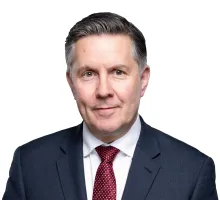
CHRIS SMITH, HOST: You know, sometimes government gets it right. And when it does, it deserves a proper nod. And today, Health Minister Mark Butler has something worth celebrating. In just one month, almost 4 million extra GP visits were bulk billed under Labor’s Medicare boost. That’s not spin, it’s not theory – that’s real Australians walking into a doctor’s clinic and walking out without a bill. Bulk billing jumped from 77 to just over 81 per cent in November, a shift we haven’t seen in years. So yes, credit where it’s due, the GP reforms, they are working.
I know I hear from doctors on a frequent basis, saying it’s not enough for me to move over.. Well, some are. But as always in health, one win uncovers the next challenge, and he’s got a few things to juggle at the moment. The Minister, Mark Butler, joins us now. Congratulations, Minister, that is a huge lift in bulk billing. You should be happy.
MARK BUTLER, MINISTER FOR HEALTH AND AGEING, MINISTER FOR DISABILITY AND THE NDIS: I’m very happy, and 4 million Australians who didn’t have to pay for their visit to their local GP but would’ve the previous month, they’ll be happy as well. A long way to go, and we want to see that number increase even further. But 4 million – we went from 7 million free visits in October to 11 million in November. 4 million additional free visits is certainly an indication, I think, we’ve got this policy right. We’ve got hundreds and hundreds of clinics across the country who in October were charging gap fees, are now bulk billing all of their patients all of the time. That’s one indication that we’re heading in the right direction in general practice which, after all, is the backbone of a well-functioning health system.
SMITH: Yeah, absolutely. Did they expect this? The bureaucrats, were they tipping that there'll be 4 million more? Or is that above expectation?
BUTLER: They didn't give me a number they expected, but in my own mind, I thought it would move a little bit slower than it has. I think there will be waves of practices starting to decide to go to full bulk billing. The first wave, though, is very big. We're now up to almost 3000 general practices across the country bulk billing 100 per cent of their patients. They're getting good income to do that. We really have made it worth their while. Obviously, it's better for patients, but it's also better for the GPs themselves and for the practice overall if they move to 100 per cent bulk billing.
SMITH: Well, you deserve credit for it. Other things are not so easy. Hospitals are still battling bed block, largely because older Australians can't be moved into aged care. How do you tackle that choke point, and how do you keep the state and territory ministers from having a shot at the feds so often as they are at the moment?
BUTLER: Part of Australian politics is state governments having a shot at the feds. That's not a party-political thing, it's a reality of Australian politics. But I've been up front – I am very worried about the lack of sufficient supply of aged care in Australia. We're at a point where more Australians than ever before are turning 80, and that is the critical age for needing aged care. Over the last 20 years, about 20,000 Australians every year had their 80th birthday. But from this year, it climbs to about 60,000 a year. My dad turned 80 this year because he was an original baby boomer. After his dad came back from five years serving overseas in the army, he and so many others who returned started raising a family. Eighty years on, that is translating into big demand for aged care services. State governments have a point. We need more aged care beds. We've put a lot of money into additional aged care services, a lot of money into paying aged care workers properly, which means that the providers are telling me they're finding it much easier to get the staff that we need. But we need to do more,I'm just going to be honest about that. We need more Home Care Packages. We need more aged care facilities built than are currently being built. We're putting our shoulder the wheel, working closely with state governments, but we've got more to do.
SMITH: You’ve got this standoff over hospital funding. Are you any closer to solving that?
BUTLER: In spite of all the sort of media coverage which indicates it's all difficult, we've got very constructive negotiations going on. On Monday, there's another full day negotiation meeting, which is proceeding constructively. Very senior officials have been involved in that from a state government point of view, usually the Heads of Premier's departments or the Heads of Treasury. There's a lot of buy-in from all governments because it's in all our interests to get this right in the interests of our citizens. Whether we can get this done by the end of the year is still a bit uncertain, but it might be it creeps into early next year if we can't land it in the next couple of weeks. But all of us are working really hard. It's not just about hospitals. We also need to agree some pretty important things in disabilities, and also around the new program I announced six months or so ago of Thriving Kids, which is designed to just make sure that fewer young kids are on the NDIS if they don't need to be.
SMITH: It needs to be addressed as well. And on specialists, you've said all options are on the table to rein in soaring gap fees. Not a week goes by when I don't get an email or a caller on the open line talking about the gap fees. The gap fee has more than doubled since 2010. How do you strike the balance between protecting patients, keeping specialists engaged and making sure that specialists aren't being too greedy?
BUTLER: I think the balance has shifted far too far against patients, frankly. You’re right to say there’s that average, but averages are always just averages. What we’re finding in some areas is specialist fees are completely out of control. For basic procedures like cataract surgery and some others, where specialists are able to do a number of them every single day, the out-of-pocket fees are just off the charts. I've been really clear with doctors’ groups that in our first term of Government, unapologetically our focus was turning around bulk billing for general practice visits. That really is the backbone of the system. But out-of-pocket costs for specialists have got to be the focus of our second term agenda. I've been up front with doctors’ groups – from my point of view, every option is on the table. We cannot continue in the direction we're going right now. It's not only a huge hit to household budgets, but we know that more and more Australians are choosing not to access the care that they need to because of cost. We can't be in that position.
SMITH: That's so right. That's the message I get frequently from listeners in written communication and on the open line as well. Once again, congratulations on the win with those GP reforms, but in particular, bulk billing. Thank you very much for making yourself available on the times that you have this year too, Minister. I appreciate that. And have a great Christmas.
BUTLER: My pleasure. You too, Chris, and to all your listeners as well.
SMITH: Good on you. Thank you very much for that, Health Minister Mark Butler.
Media event date:
Date published:
Media type:
Transcript
Audience:
General public
Minister: