
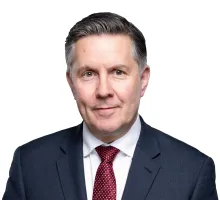
MARK BUTLER, MINISTER FOR HEALTH AND AGEING, MINISTER FOR DISABILITY AND THE NDIS: Thanks so much. It's such a great privilege to be at Jane McGrath Day here with Glenn McGrath, the President of the McGrath Foundation, and founder of it along with Jane. Holly Masters, the CEO of the Foundation, 300 or so terrific cancer care nurses who are changing lives the better for so many cancer patients around Australia.
Today is another really important day. A couple of years ago, the Foundation, through Glenn and Holly and the Chair, John Connolly and I, had a discussion about taking this extraordinary organisation to a new level and transforming Jane's vision to support patients with breast cancer to a foundation that supported every Australian, no matter who they were, no matter where they lived and importantly, no matter what their cancer type was. And I was so delighted that Glenn and Holly and John and all of the nurses and staff at the Foundation were willing to take on that additional challenge and that additional opportunity. Today I've announced on behalf of the Government an investment of an additional $213 million over the five years from next year into this Foundation to continue that important work. Importantly, that will give the Foundation security around the Commonwealth's investment well into the 2030s, but it will also ensure that the Foundation can increase the number of Commonwealth-funded cancer care nurses from around 250, which is the current funding, up to 350. Now, mind you, that's only the Commonwealth funded nurses, as I'm sure Glenn and Holly will say. There are a range of other nurses that are supported by donations from people who are attending the SCG today but also as Glenn will say I'm sure the hundreds of thousands of Australians who are not able to be at the ground today but are supporting the Foundation through the amazing virtual Pink Test initiative or Pink Seat initiative.
I'm really delighted that the Government has been able to extend our partnership with this Foundation. It's really an investment that takes its inspiration from Jane's vision to support people on their cancer journey with breast cancer, extends it to all cancer types and it's an investment really built that taxpayers and governments can have from a foundation that has truly put runs on the board in this area. Very delighted to hand over to Glenn now.
GLENN MCGRATH, PRESIDENT OF THE MCGRATH FOUNDATION: Well thank you, Minister Butler. It's an absolute honour and privilege to be standing here. Our partnership with the Federal Government goes back quite a while now and it's something that we're very proud of. Now that the increase there to ensure another 100 McGrath Cancer Care Nurses are out there over the next five years on top of the 250 is absolutely incredible.
I know firsthand the difference having a cancer care nurse makes through a journey like this. When Jane was first diagnosed, we didn't have that support. When she had the recurrence, it was there and the positive difference it made was absolutely incredible. I've heard similar stories ever since by my travels around Australia talking to people coming up and saying, or sharing their story with me through their cancer battle. And then they say they've had one of our McGrath Cancer Care Nurses. They say they don't know what they would have done without that support. It made a massive positive difference. And hearing those stories inspires me to keep going, but to know what we're doing is making a big difference. As Minister Butler said, we met up, what was it? Probably 15- 18 months ago to discuss where we can take that support to go from just providing nurses or funding for nurses in breast cancer to now taking it to anyone with any type of cancer because you shouldn't be discriminated against because what type of cancer you have to what kind of treatment you receive. Here at the Pink Test it's great, it's amazing to see people coming together which is what it's about.
Our goal is that every person, every family going through cancer has the free support of a McGrath Cancer Care Nurse where they live and that's a massive task. For breast cancer, we felt that number was 250 more. We got there, now we're doing a needs assessment to work out how many more nurses we need to cover the whole country. Unfortunately, that's a bit scary. One in two people will be diagnosed with breast cancer in their lifetime. That's 170,000 diagnoses every year in this great country of ours. And while this support is absolutely incredible and something we're very proud of, we still need a lot more money to achieve our mission. Days like the Pink Test, Jane McGrath day, always very special. So as brilliant as this announcement is, we still need the support from everyone in Australia and, unfortunately, each person has a story to tell, whether it's a family member or a close friend that's been through or going through cancer.
Thank you to the Federal Government for that incredible support and ongoing support again. But we do reach out to Australians to keep supporting the McGrath Foundation. We can't do what we do without that support. And though I hear stories, positive stories of families having the support of McGrath Cancer Care Nurse, there's so many, too many other families out there going through it with no support. So while we can a difference, we'll still do our best. And a huge thank you to everyone out there who supported the Foundation and continues to support the Foundation. And a huge thank you to the Federal Government for that announcement today. It's going to make a massive difference. So great to be here. I'll now hand over to our CEO Holly, for a couple of words as well. Thank you.
HOLLY MASTERS, CEO OF THE MCGRATH FOUNDATION: I just want to say an enormous thank you to Minister Butler and the Federal Government. This investment today will make an enormous difference to Australians across the country who don't have the support that they need. There is serious inequity in the way that cancer services are delivered people just because of the gaps in nursing support services across this country. This investment of $213 million over five years will seriously increase the number of nurses, enabling federally funded nurses to get to 350 from the current of 250. We are looking forward to rolling out these nurses. We know they will make an enormous difference. Our nurses partner with people diagnosed with cancer from the day of diagnosis all the way through treatment and we know what a difference it makes to their lives. With one in two people diagnosed with cancer in their lifetime, need is enormous and we are incredibly thankful and grateful for the partnership with the Federal Government but we know that's not all we need in order to get there. So it is through the virtual Pink Seat campaign here at the Pink Test and multiple other communities coming together to fundraise for the Foundation we know that we will be able to meet our goal of ensuring that no one goes through council without care. Thank you. We'll now take any questions.
JOURNALIST: Mr Butler, Government sources have been beginning to -
BUTLER: Can we just deal with any questions on the McGrath Foundation investment before?
JOURNALIST: Minister, and maybe one for Holly as well, just in terms of this announcement, what had you been hearing from people on the ground and working with the Foundation about how much this was needed?
BUTLER: I'm sure Holly or Glenn will want to add to this, but really what both of us had come to the view about a couple of years ago is that the gold standard support really provided through the McGrath Foundation for breast cancer patients was not something equitably experienced in other cancer types. And so what our shared goal now is to lift all cancer types, patients with all cancers to the level of support now that breast cancer patients feel they can receive from a whole range of supports, but most particularly McGrath. What a difference the investment has made for McGrath Cancer Care Nurses, so for patients with other cancer types, that the difference that is making for a whole range of different patients, including many men, some of whom, a couple of whom spoke to us today. It’s already making a difference. It’s still very early days, so the non-breast cancer nurse numbers are still building for the Foundation as I’m sure Holly will say, but I’m utterly convinced this is the right direction for the Foundation but also for the Government. It’s a very strong and sound investment on behalf of taxpayers and that’s really why I’ve announced that that funding will continue well into the 2030s and will increase. We know this is going to make a big difference.
MASTERS: We’ve long known that there were inequities in care across this country. We were hearing stories from our nurses of other people with different forms of cancer who really needed support and weren’t able to get it. And when we talk about support we mean clinical, expert care as well as compassion, psychological and emotional support. And we’ve long understood that gap, but we knew we needed to deliver on our mission of meeting the need for breast care nurses first. That was our primary goal. Glenn has always said if we can help, we should but we need to make sure that we hit that first. So when Minister Butler approached us to have a conversation about taking our care to all counsellors, it was very clear that we needed to make sure that we got to our 250 breast care nurses. But we knew that the gaps were vast, and we’re currently doing a piece of analysis to really understand what the gap looks like across this country. We currently have 343 nurses, we’ve placed 82 McGrath Cancer Care Nurses in the last year. We will continue to grow those numbers but there are gaps everywhere. We don’t know how many we will need, by the end of this year we will know what that looks like. But with every nurse that we place, we help hundreds of individuals and their loved ones and the impact that it has just on one person, on one family is enormous. And so we look at it in terms of the impact on every single individual and that’s why we are so excited about this incremental extension of the program and this investment from the Federal Government because it will effect and improve the lives of thousands of Australians across this country.
JOURNALIST: Minister, in the last 24 hours you and Jim Chalmers pointed to the Government's focus on immediate and urgent action following the Bondi terror attack but neither of you have explicitly rejected the need for a Royal Commission. Does this mean the Government is reconsidering a Royal Commission on top of those plans for urgent and immediate action?
BUTLER: Two points that the Treasurer and I have both made over the past couple of days are pretty unremarkable. We've told Australians again what we as a government have been focused on since the horrific terrorist attack against Jewish Australians in Bondi a few weeks ago. Those are those urgent and immediate things that I think Australians would expect us to be working on right through the Christmas and New Year period; updated and stronger hate speech laws that finally shut down these hate preachers and the organisations that employ them. Stronger powers against organisations associated with terror, stronger powers for the Home Affairs Minister around visa holders and visa applicants, gun law issues, accelerating the implementation of the recommendations from Gillian Segal. I think that would be unremarkable. We've also made the point though that the calls for a Royal Commission are coming from people who are making those calls in a sincere and heartfelt way. We are listening to those calls. The Prime Minister I think has made the point this morning that from the time very early in this period, the New South Wales Government indicated its intention to hold a Royal Commission we have been engaging with the New South Wales Government about the way in which that will be held to ensure that it has real meaningful impact for the country in the wake of this terror attack. I think they're both unremarkable points. This is a big body of work that the Government has been working on over the past few weeks. A number of people have made it clear that they want to see these measures brought before Parliament as soon as possible. The Government is set to want to do that. We want to make sure we've got the legislation right. Obviously, when it comes to inquiries, we've also in addition to being talking to the New South Wales Government about their plans for the Royal Commission, we've been setting up the Richardson Inquiry to ensure that we learn the lessons from the Commonwealth Agency perspective from this attack.
JOURNALIST: Government sources are now starting to brief journalists that this is close to 90 per cent likelihood of a Royal Commission. The Prime Minister used a very soft language today compared to some of his previous statements. Are you having conversations with your Cabinet colleagues, with other colleagues in Labor about what they desire to see in the commission?
BUTLER: It won't surprise you that I'm not going to comment on stories based on unknown sources. I really don't have anything to add to what I've said this morning and this afternoon. I understand these are sincere and heartfelt points that have been made by a range of Australians. The Government, particularly the Prime Minister, is also talking every day with members of the community about what a proper response from Government should be to this utterly horrific terror attack on Australia, but particularly on Jewish Australians in our community.
JOURNALIST: So is a Royal Commission likely?
BUTLER: I don’t have anything to add to what the Prime Minister has said. I think it also is clear what I've said today.
JOURNALIST: Is it your opinion though, Minister, in terms of the prospect of a federal Royal Commission, is that completely off the table or is the door slightly ajar?
BUTLER: I can't answer the slightly different form of the question any differently. I've been clear about what the Government has been focused on. The think the responsible thing to do has been to work on the urgent and immediate things that a responsible government should do in the wake of this awful terror attack. Our officials, our health ministers have been working day in and day out ever since the attack took right from Christmas and New Year. Of course, we are listening to community about other suggestions for that response. Of course, we are talking from Prime Minister down to the New South Wales Government about how their calls for a Royal Commission or intention to hold a Royal Commission would operate. I don't think that would surprise any Australians. That's what a responsible government would do.
JOURNALIST: You've said that the calls are respectful and genuine. Do you think it would reflect poorly on the Government then if those calls weren't listened to?
BUTLER: Look, I don't have anything more to add really to what I've said about the Government's actions since the Bondi terror attack, about the way in which we regard what are a range of sincere and heartfelt calls that have been made. We want to make clear from the Prime Minister down, of course, we are listening to the Australian community about their views about what a proper response from the Government should be. Australians should all be assured that we have been working day in, day out, officials, responsible ministers, to make sure that we get that emergent and get the work done as quickly as possible so we can do things like shut down those hate preachers in the organisations that have been able to evade every legal attempt by governments of both political persuasions for far too many years and continue to ferment the hate that we've seen in this country.
JOURNALIST: Minister, New South Wales Opposition Leader Kelly Sloan again today said her concerns with a state Royal Commission is that it's just not going to have the, I think the teeth is the term she used, compared to a federal Royal Commission. Given the sort of tremendous pressure for a federal Royal Commission to occur, do you think the Government, if they do not take that route, is going to essentially be viewed as not listening to the tremendous way that people are calling for federal action?
BUTLER: I don't have anything more to say than what I've already said about these issues. I've said that we are talking and have been talking for some time, mostly with the New South Wales Government, about how their intention to monitor all the issues with this terror attack will operate in a way that has been informed [indistinct].
JOURNALIST: Do you think you should be doing more to fund research, or are you open to lifting disbursements?
BUTLER: This is a terrific initiative that emanated from a review that I set up under the last Labor Government, and to their credit, was implemented by the former Liberal Government. And as you’ve said, [indistinct] capital fund for additional research. So the research, health and medical research budget today is about two and a half times the size it was when I last had responsibility for this portfolio 15 years ago or so. That's a terrific thing. I know there are calls from some across the bench and also some of the research sector to lift the disbursements from the Medical Research Future Fund. There is a review that was conducted in [indistinct] relation to this, a 10-yearly review by the Finance and Treasury departments, that has been delivered to the Government late last year that will be considered.
JOURNALIST: Will we see a rise in disbursements of the MRFF?
BUTLER: The review canvases a range of options and I have only received it relatively recently but we’ll work through it to make sure we get the response right up [indistinct]. For the first ten years the MRFF, the Medical Research Future Fund, has delivered precisely what it was intended to do, not just for money, but money dispersed in a slightly different way to the traditional health and medical research funds that were overseen by the NHMRC. That's been a terrific thing. But I do understand that one of the calls from the sector is the larger disbursements from the big capital fund that has now been accrued over those 10 years. We're going to work through that report. It has a range of recommendations and options within it. I know the Treasurer has talked about this in the Parliament as well. He's aware of the recommendations, he's aware of the calls that have been made by members of the Parliament, particularly on the crossbench, and also members of the research centre. I can't pre-empt what we're going to do about it, but I can assure you that it certainly will help [indistinct].
JOURNALIST: Sorry Minister, just so I'm clear on your earlier comments, are you in a position to rule out the prospect of a federal Royal Commission?
BUTLER: I don't have anything further to add to my comments. I'm trying to be really clear about what we're focused on, about the way in which we're listening to the community, and the Prime Minister's been clear about that this morning. Thanks very much.
Media event date:
Date published:
Media type:
Transcript
Audience:
General public
Minister: