
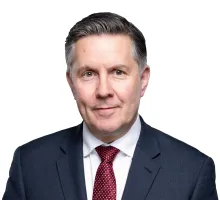
MARK BUTLER, MINISTER FOR HEALTH AND AGEING, MINISTER FOR DISABILITY AND THE NDIS: I’ll make a few comments about my meeting with my health minister colleagues, but we’ve also had a terrific dialogue for the whole of yesterday with First Nations leaders. This is something we do every couple of years. It's quite unique, that engagement that we have along with our departmental secretaries, with First Nations health leaders, really reflecting the unique challenges that we confront in First Nations health, particularly with the Closing the Gap targets. I’m happy to take some questions about the constructive discussion we had there about this incredibly pressing challenge that all health and social care systems are facing right now around the ageing of the population. But if you don't mind, first, I'd like to make some comments about the Coalition's tobacco policy announcement yesterday.
What we're seeing on the conservative side of politics increasingly is One Nation yelling jump to the Liberal party, and Angus Taylor simply asking how high. You saw that yesterday again around tobacco excise. This was a grossly irresponsible policy announcement from an alternative party of government. What we've seen is a policy with no modelling behind it, no plan around the way in which it will roll out in the retail sector. But more importantly, the Shadow Health Minister confirmed this morning no modelling, no understanding about what this policy is going to do to smoking rates. And we know that smoking is still the largest preventable cause of death in this country.
Now, advocates of a big excise cut tend to cite the Canada example. The important thing to note about the Canada experience is that when there was a big excise cut, there was a demonstrable, evidence-based big increase in smoking rates that went alongside it, particularly among young people. And as it happens, after some years, the rates of illegal cigarettes bounced back to their level anyway. What Angus Taylor and Anne Ruston need to demonstrate is if they are going to follow One Nation down this path of a huge cut to the tobacco excise rate, they need to tell us what that is going to do to the public health of Australians, and it appears they've just not simply done the hard work.
Alongside that though, they've decided to start to turn around the very big inroads we were making on vaping among young Australians. In the three years before we came to Government, vaping rates among teenagers climbed by more than fivefold. They absolutely exploded on our high school campuses. And after we took strong action in 2023, not only did we stop that increase, we've actually turned it around, and there have been significant reductions in vaping rates among young Australians, including and particularly teenage Australians in high schools. If you ask high school principals and school leaders what's happening anecdotally, is what was the number one behavioural issue they were dealing with in high schools has significantly moderated because of the strong action we're taking. Again, what is the argument for turning around all of that action on vaping rates and exposing young people to the sorts of things we saw when this government was last in power?
JOURNALIST: Minister, on aged care, have you brought a single new dollar today to deal with this aged care crisis?
BUTLER: We have put very significant new investment into aged care in the budget in May.
JOURNALIST: No, today? Have you brought a single new dollar to this meeting of the state health ministers? Have you brought anything new today?
BUTLER: Health minister meetings are not about budget announcements. We release our budgets and our budget updates in May and in December. The increases we have made to aged care in our time in office have been eye-watering. The per bed rate that we pay aged care providers has increased for the care they provide by 65 per cent per bed in just four years. We increased in May significantly the accommodation payment support for providers who are supporting recipients who can't pay accommodation bonds, and we're doing more work now as we speak with providers about other capital support that we can give them.
There have been huge increases in aged care support, but as we talked about this morning, the level of demand increase you are seeing for aged care at home, for residential aged care, and for health care is climbing at unprecedented levels. As we see the oldest baby boomers start to enter their 80s, which is the peak age of aged care demand, we are seeing levels of demand increase that this country has never ever seen before. Increases in aged care demand, increases in demand for people getting Support at Home. And it's no surprise that you're also seeing more older Australians in hospitals. This reflects a community-wide phenomenon.
JOURNALIST: Minister, I don't know if you heard the whole press conference earlier.
BUTLER: Only snippets. The highlights.
JOURNALIST: With the private health insurance rebate changes, the Ministers here did say they expect the Feds to chip in if that pushes elderly Australians onto their public system. Are you open to that sort of funding arrangement?
BUTLER: We had a good frank discussion about this over the last couple of days. There are three pieces of modelling around about what the impact of our changes will mean. Government modelling from the department indicates that maybe 44,000 people will leave health insurance at a time where health insurance membership will continue to climb. The University of Melbourne, so not the Government, not the industry, has indicated that that's a high point. They think it's more likely to be somewhere between 12,000 and 41,000.
Now, the insurance industry unsurprisingly has put out very different numbers, and it appears that the state governments are simply reflecting the insurance industry modelling about what they think will happen. I made the point to my health minister colleagues today, if you go to the private health insurance website, they still have modelling on their website that says that when we means-tested health insurance some years ago, 1.6 million people would leave health insurance, 850,000 additional people would end up in public hospitals. None of it happened. None of it happened. I say to my state minister colleagues, have a look at the government's modelling. Have a look at the independent modelling done by the University of Melbourne rather than simply accepting arguments that in the past have been shown to be self-serving from the insurance industry.
JOURNALIST: Minister Butler, you can hear the frustration from the state and territory ministers about the aged care bed problem, and you have reflected that yourself in your comments. What are you doing? What can you do?
BUTLER: I've tried to be honest with the Australian community and my colleagues that there is no easy fix to this challenge of demand. The numbers are simply unprecedented - the number of older Australians needing and deserving support, whether that's support through the health care system or support through the aged care system. I said to them again this morning, we increased the number of home care packages last year by 25 per cent. Even with that increase, there's still more and more demand. But frankly, it is difficult for us to increase the number of packages by more than that level and essentially run into labour supply constraints. Some of those packages, they might be funded by government, but they're not being delivered to older Australians because we don't have enough workers in this country.
There are some natural constraints on what we can do, how quickly we can build new facilities. We are leaning in as much as we can. The private health insurance rebate changes that we've just been talking about, I'd prefer not to have made those changes. I think they provide a level of equity between different age groups. But we have to start taking difficult decisions like this because every dollar that we raise or save through that change is going to be ploughed into aged care. More beds, more packages, better care. There are very difficult choices ahead of all governments to ensure that we're able to provide the level of aged care and healthcare that older Australians, particularly those who are now entering their 80s, frankly deserve after a lifetime of building this country.
JOURNALIST: So it comes down to funding? New funding?
BUTLER: It comes down to funding, but also workers. I think we've got the model of care right. I think we've restaffed aged care facilities now over the few years that we've been here by changing their wage rates, by putting staffing level requirements in place. Frankly, this sector was on its knees when we came to government. You saw that in the Royal Commission that was titled Neglect. You saw that through the COVID pandemic, where so much of the sector really struggled to provide proper care to residents. And it was on its knees when we came to government. We’ve ploughed money, ploughed energy, into getting it back on track and in a position where it can grow at the level and the rate that we require it to grow, particularly to care for that large baby boomer generation that's starting to enter it.
JOURNALIST: Minister, how will immigration help the labour shortages that you mentioned?
BUTLER: Well, obviously, I've made the point when we consider the question of migration that ultimately it's a question of balance. It’s a question about the ability of our country to absorb greater numbers of people in it in terms of housing and transport and other infrastructure. But also recognising that significant parts of our economy are substantially staffed by migrants, and aged care is right up there, frankly.
You go to any aged care facility, a very substantial proportion of this workforce will be a migrant workforce. You see that in the health care system as well – hospitals in cities like Sydney, but particularly in regions, general practice in health care as well. These are the balance questions that, obviously, governments and the community have to consider when we debate migration.
JOURNALIST: Minister, the aged care sector is saying that the increase to AN-ACC funding is so low, they might just not build new beds. How much of a concern is that after a year where only 800 were built?
BUTLER: Obviously we've spent a lot of time trying improve the investibility of this sector so the sector invests in new beds, in new facilities. We have to build new facilities at a pretty alarming rate. I’ve made the point today that we’ve increased the funding that providers receive for every bed, every day by 65 per cent, so that's an increase in just four years of 65 percent per bed, per day.
Now, the increase that we announced, I think, yesterday – it was in the media today – reflects advice given to us by the independent aged care pricing authority. Hospital funding, aged care funding for care is the subject of an independent cost study done by independent experts. It’s not a decision made by politicians as used to case, frankly, a little more than six or seven years ago. This is the subject of a scientific study about the cost-base for providing care, not for providing other services but particularly for providing care. And I'm not going to quarrel with the independent advice of experts.
JOURNALIST: Minister Butler, just back on the private health insurance rebate changes. The ministers express their reluctance for these changes. You don't appear to have the support of the Opposition, but are you determined to push these changes through? Is this a must have in order to free up funding?
BUTLER: I have made the point that budgets, certainly the Commonwealth Budget, doesn't have money available for new spending. And there are difficult choices that face governments when it comes to delivering a budget particularly, as we’ve been talking about, when aged care is in need of so much additional supply. This is not a decision I particularly would like to have made in ordinary circumstances. But this one of those difficult choices we have to make that will mean the two households living next to each other on exactly the same income, exactly the same income, will receive the same level of taxpayer support regardless of their age. That's not currently the position. It was originally the design when John Howard introduced this, but it's not currently the position. I think there are arguments in favour of it, but I recognise the cost of living hits that it will make to people over the age of 65.
For those who are opposed to it, including my state minister colleagues, I say, where else are we going to get that $3 billion to invest in the beds that they've just been arguing for here? These are about choices.
Now, in terms of the position of the Opposition in the Federal Parliament, there is a Senate inquiry underway. We're monitoring the evidence closely about that. I’ve indicated to states, if they have modelling that is not just simply echoing what the insurance industry is saying, I'm all ears. Let me have a look at it and we’ll consider it carefully.
JOURNALIST: Given the demographic crunch that you've outlined with an ageing population, do Australians have to be prepared for the government to make more hard decisions in health care and aged care spending?
BUTLER: Across my portfolio of health and aged care and disability, there is pressure on all of those different elements of the health and social care system. But the pressure on aged care is quite unique, and it is a reflection of those demographics. As I think I've said a number of times, when I was last aged care minister 15 years ago, there were about 15,000 people turning 80 every year -, next year it’ll be 90,000, so five or six times the number reaching that critical age that we think about when we think about aged care demand.
The numbers are not just an incline, they're a step change. And that reflects the 1946, '47, '48 babies that were born in very big numbers as returned soldiers, like both of my granddads, came home from several years away fighting the war and wanted to build families. And this is something we always knew was going to happen. We're in it now and, to a degree, we need to recognise that as a community we have to lean in to make sure that those Australians who have worked so hard over the last several decades to build the country we enjoy now are given the care and dignity that they deserve.
JOURNALIST: Is it a danger that, because of the trend lines, the complexities to try to deal with this, all these issues these ministers have raised, that in future the only people who can be sure of getting aged care are those who are rich?
BUTLER: That really has always been the challenge of the aged care system, and our health care system for that matter. And that's why we built Medicare to deliver, really, the best health equity outcomes in the world – that’s reflected in pretty much every global study. And in aged care, to make sure that if people do not have means beyond maybe their family home and the pension, then the Commonwealth supports their accommodation needs. We increased the support for those Australians, what we call supported residents in aged care, in the budget only a few months ago – a very big investment, in part funded by the changes we've been talking about in the private health insurance rebate.
So particularly as a Labor government, we are absolutely committed to ensuring that the aged care system does not discriminate between older Australians of means and older Australians who do need to be supported through the system.
JOURNALIST: Minister, from your government’s own projections, we need an extra 10,000 new aged care beds a year to meet current demand. Will you match that demand? How many new beds will you add in a year?
BUTLER: First of all, we do accept that modelling, and that also assumes at the same time there’ll be a big increase in the Support at Home supply as well, so a lot more people receiving Support at Home, not having to go into residential care. But ultimately, a lot of older Australians will have to enter residential care at some point. That's much later in life than it used to be, and it's usually for a shorter period of time than it used to be.
But we are going to have to build about 10,500 beds every year – open a new facility every three days is how I’ve described it – and not just for a short while. We have to do it for 20 years, because this new level of demand that we’re currently climbing up to is the new normal for the next 20 years. Our baby boom wasn’t a short spike, it was a long plateau of high birth rates and high immigration through the ‘50s and ‘60s and into the early ‘70s.
We've got a very big job ahead of us as a county. We’re not anywhere near building that 10,500 beds. Which is why we're trying to lean in so heavily into improving in the investibility of this sector.
JOURNALIST: Just on the numbers, do you actually know how many beds are available in the system right now?
BUTLER: Sometimes that is a decision that providers are taking on a pretty ad hoc basis, that they'll shut down some beds or they'll shut down a particular ward. We think it is really important to have a much more detailed understanding of the beds that are out there licenced, how many of them are available. And where there are beds that are effectively shut, what we can do to open them, because that's obviously a much easier short-term way of adding to supply than building a whole new facility.
So, we have a sense. I don't have that off the top of my head, but we have a sense of the number of beds that are licenced that are actually available. But some of those decisions are taken, really, almost on a week by week basis by providers. So we can never have a purely scientific exact sense of that on a week-by-week basis.
Thanks, everyone.