
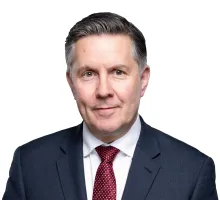
CAROL BERRY, MEMBER FOR WHITLAM: Good morning, everyone. It's such a pleasure to be here this morning at the official opening of the Shellharbour Medicare Urgent Care Clinic. This was an election commitment that I made last year, that we would deliver an Urgent Care Clinic in Shellharbour if I was elected and if Labor was re-elected. I'm so pleased and proud to be here today to open this fantastic facility. I'm joined by the Minister for Health, Minister Butler. What I'm really proud of in relation to this clinic is that we will be delivering free urgent care for the community here in Shellharbour.
This clinic is designed to take pressure off our emergency department at Shellharbour Hospital. There's no appointment needed. You can walk in. There's no- it's completely bulk billed, so there's no charge. I know this is going to be a fantastic resource for our local community.
And on that note, I'll pass over to the Minister for Health.
MARK BUTLER, MINISTER FOR HEALTH AND AGEING, MINISTER FOR DISABILITY AND THE NDIS: Thank you so much, Carol, and thank you for making that commitment to people in this part of your electorate.
This is the 130th Urgent Care Clinic that we have opened across the country. There's one in Dapto, as Carol knows very well. There's also one up in Wollongong. And next week, we'll be opening the clinic as well down in Nowra, which will be the final commitment we made to the people of New South Wales.
Once the full network of 137 Urgent Care Clinics is up and running, two million Australians will go through those clinics every single year. They're open seven days a week, extended hours. And as Carol said, all you need to take is your Medicare card because they're fully bulk filled.
They’re designed to provide people with an opportunity to get high-quality urgent care for things that frankly need to be attended to urgently, but don't need a fully equipped hospital like you see at the Shellharbour Hospital just around the corner here. It means that people are getting that high-quality care in their community when and where they need it. But we also know it's starting to take pressure off our busy hospital emergency departments as well.
I really want to thank the local practice for sticking their hand up, putting themselves forward in a competitive tender to present and provide the Urgent Care Clinic for the Shellharbour area. It's part of our broader program of strengthening Medicare. More Urgent Care Clinics around the country, more bulk billing, more doctors, and cheaper medicine.
Shellharbour has already benefited from a range of different investments we've made. A Medicare Mental Health Centre that's available free of charge for walk-in patients opened back in 2023. There's the headspace service here as well. But our bulk billing investments that took effect only last November have meant that we've gone from 10 practices being fully bulk billed in Carol's electorate of Whitlam, now to 25. This is a very significant increase. And we know right across the country, every single week more general practices are opting to become full bulk billing practices just like this one. I saw the sign when I came in here as well.
I'm delighted to come and see the opening of this Urgent Care Clinic. It's going to provide terrific service to the people of Shellharbour. It's going to relieve pressure from those hardworking staff at the busy emergency department around the corner. And it's part of a really exciting network now that we've built out right across the country.
Now, Dr Abdool is working here I think as the clinical lead for this Urgent Care Clinic. He's happy to take- say a couple of words, and then we'll take some questions.
DR ALZIN ABDOOL, CLINICAL LEAD: Good morning everyone, and thank you for coming. I'm the Clinical Lead for the Urgent Care Centre. Just to reiterate what Mark and Carol was saying, essentially, it does bridge the gap between GP and A&E, and it does reduce the pressure on A&E. But it also reduces health inequalities because it allows people to have access. And obviously, as it’s bulk billing, we can care for them. And we've been serving for quite a few weeks now, and the general feedback has been quite good really. We've helped people, appointments and services. It's been a good service so far, and we hope that will continue.
JOURNALIST: Do we know roughly how many people have walked through the door?
DR ABDOOL: We do shift work like A&E, looking at between 8:00 until 4:00 we will see about 18 patients in a day or so, which is quite reasonable.
JOURNALIST: Are you getting any patients that might have been coming from an ED department or they would have would have gone to a service like that but instead are coming here?
DR ABDOOL: Yeah, absolutely. We do get calls from the ambulance group who’ll bring patients to see us for things like be suturing. So we do get those patients coming through.
JOURNALIST: Do you think that the public's perception of how an Urgent Care Clinic works and what it can help with is being reflected in the presentations that you're seeing?
ABDOOL: Absolutely. We have a triage pathway so we know what patients we can send to GP, or even patients we can take on as well. But essentially, most patients, when they come in, they are all triaged be it fractures or lacerations or head injuries
JOURNALIST: Minister, I know you just mentioned the Nowra Urgent Care Clinic earlier. Last year, we heard that it was going to open in January. We're now hearing the end of February. Now a promise that it's open next week. Why have we seen the delay there?
BUTLER: The commitment I made was to have them all open by 30 June this year. We're well ahead of schedule in doing that. I said we'd open 50 between 1 July last year and 30 June. We're now up to 43 of those 50. And as I said, Nowra is expected to open on Monday. It's taken a little bit of time to get contracts right. Once the contracts were in place, a number of practices undertake some renovations to ensure they have treatment rooms and things like that. We can't click them on overnight. But frankly, from a commitment made in May that we expected to deliver by 30 June this year, we're well ahead of schedule.
JOURNALIST: How can we be ahead of schedule, Minister? Our Member down there, Fiona Phillips, said last year, January 2026 that service will be open.
BUTLER: I committed that they'd all be open by the 30th of June. We undertook the tenders through the Primary Health Networks and then there have been some arrangements that each of the clinics have had to finalise around contracting or maybe making some changes to their practices in terms of physical renovations. I'm delighted, by the fact that we'll have all 50 up and running over the next several weeks, and now or next week, which will be the 44th of the 50 that I've promised.
JOURNALIST: So; Monday?
BUTLER: Thursday, next week.
JOURNALIST: There have been some concerns around the Wollongong and Dapto clinics around the availability of imaging services. They’re only available at 8:00am to 4:00pm on weekdays, so some people are being diverted back to their emergency departments. How is the Government supporting these clinics to expand the availability of their services?
BUTLER: It’s important to remember, before I get to the specifics of those clinics, that this is still a relatively new model of care. We've only started rolling these clinics out a couple of years ago now and we're now up to 130. We made it very clear that we had strong expectations that all of those clinics would, first of all, operate extended hours seven days a week and 365 days a year. Many of them were seeing patients on Christmas Day, for example. But also that they would have access to imaging and pathology facilities.
Now, some of that was relatively straightforward for practices that already have them co-located in the clinics, others have had to work on that over time. Now we've given those practices time, they've got clear contractual obligations. I don't know the specifics of Dapto and Wollongong particularly, but I know that we are working patiently with those practices right across the country - there's an issue for a number of practices across Australia - to make sure that, over time, they can deal to those contractual expectations.
JOURNALIST: There's been an interim review into ED care clinics and it's raised issues with workforce shortages, particularly in regional areas. Is the after-hours model at risk if there aren't enough GP’s and nurses to start with?
BUTLER: I've been, very pleasantly surprised at the degree to which these practices are able to attract doctors and nurses to work in them. I'm told repeatedly when I talk to staff across the country working in clinics, that this is great work, they enjoy doing the work. Now, that doesn't mean there aren't workforce pressures in this program as there are right across the healthcare system here in Australia - in primary care, in hospitals and all of the other elements of our healthcare system.
There are workforce pressures, which is why we've been working so hard to increase the number of doctors in particular into the system. We've seen record numbers of doctors enrol to practice over the last few years. We've got a record number of junior doctors training as GP’s this year. Last year was a record. This year we’ll break that record again.
We're making sure that we've got a strong pipeline of new doctors and nurses coming into the system. This is an attractive place to work. All the operators say that they find a lot of staff are keen to come and work in these clinics because it's really terrific work.
JOURNALIST: More than half of Urgent Care Clinic patients say they would have otherwise gone to a GP and are concerned they're just replacing rather than bolstering primary care.
BUTLER: You'll see that about a third of presentations to Urgent Care Clinics are over the weekend when it's usually very difficult to get into a general practice. Many of the rest of them are after hours as well and, increasingly, it's hard to see a GP after hours. And we know that GP’s are busy, that general practices are busy, and it's often very difficult to get in there at short notice. That's why these Urgent Care Clinics feel such a gap in our system.
This is a model of care that's very common in other countries. Somewhere where people can go at short notice for something that needs to be seen urgently. I'm very confident this is filling a significant need in the healthcare system. Our general practices, not Urgent Care Clinics but our standard general practices, I can tell you, are still very, very busy. This is not taking work away from them that's leaving them idle. They are still very, very busy places, just as our hospital emergency departments are still busy in spite of the fact that this clinic network is undoubtedly relieving some pressure on hospital EDs.
JOURNALIST: What was the cost to create this clinic?
BUTLER: Most of the cost comes through Medicare billing, so they'll bill obviously when people come into the clinic. As well as that, clinics receive a subsidy to ensure that they're able to operate over seven days a week and over extended hours. And as well as that, there's an establishment grant for each Urgent Care Clinic into the program to help assist them with any new equipment or any renovations they need to make to their practice to accommodate this new model.
JOURNALIST: Just finally on the report, it found that there was a reduction in presentations to hospital ED’s but not in wait times. Can more be done to divert more people in hospitals to Urgent Care Clinics.
BUTLER: We'd like to build out this network. We've steadily been ramping it up over the last couple of years. Now we'll get to 137 clinics over the next month or two. By then we'll see two million patients every single year and half of them at least would have gone to hospital emergency departments. Given that there's about eight million presentations to hospital ED’s, the idea that we're taking as many as a million of them off the books and diverting them into Urgent Care Clinics is undoubtedly relieving pressure on those hospital ED’s.
But again, pressure is still building. We're a growing population. We're aging quite rapidly right now. There is a greater incidence of complex chronic disease which sometimes ends up in our hospital ED’s as well. So yes, we're relieving pressure, but that doesn't mean that there's not still building pressure on a hospital emergency department systems.
That's why, for example only three weeks ago the Prime Minister and I concluded an historic agreement to provide $25 billion in additional funds to support our 750 hard-working public hospitals, because we know that pressure on that hospital system continues to build.
JOURNALIST: What is the Federal Government doing to support state governments in the issue of hospital beds being taken up by aged care patients who have nowhere else to go?
BUTLER: We've got some programs that we funded with the New South Wales Government a couple of years ago to try and divert older patients from hospital where they can be cared for in settings like residential aged care. In those negotiations I just talked about that resulted in the agreement struck between the premiers and the Prime Minister a few weeks ago, we put $2 billion of tied funding to help particularly with the issue of longer stay older patients.
Now, state governments decided instead they'd prefer the money to go into the general hospital's bucket rather than to targeted programs to alleviate pressure for long stay older patients. They can explain their reasons for doing that. But the very significant way of relieving some of that pressure is for us to build additional age care beds. We've got a couple of capital grants that are operating in this region, one in Wollongong, one just out near Barrel - I can’t remember the name of the town now - just out near Barrel where we provided grants for new beds to be built.
I have to say, one of the issues in this region and in some other parts of the country is that where we provide bed licenses, we need council approval to be able to build those facilities. Increasingly, particularly in cities, we’re going to have to build those facilities up. We don’t have several acres of spare land in our cities to build single story, sprawling aged care facilities in the way we might have several decades ago. So we have a plan to build more aged care but we need local councils leaning into that. It’s in their community’s interest that we expand aged care capacity right across the country.
JOURNALIST: How can you help councils deal with that though?
BUTLER: That’s something state governments need to lean into. We don’t have a direct relationship with councils. That’s a matter that state governments oversee. I know in some jurisdictions, including this one, that state governments are thinking about ways in which to expedite planning approvals for strategic projects and I think there’s nothing more strategic than building aged care capability and capacity when you’ve got a rapidly aging population which we have at the moment.
JOURNALIST: Carol Berry, do you want to that at all about supporting councils?
BERRY: Across the Whitlam electorate, I look after three local government areas. So I have been speaking to the mayors and general managers of all of those local government areas about the importance of aged care and future planning and I’m really pleased to say that they are really leaning into that space. What’s really important here in in the Illawara is that we continue to collaborate where possible with all levels of government to address some of those challenges that we have in relation this.
JOURNALIST: I just wanted to find out what hours the imaging and pathology services are available at this clinic?
GENERAL PRACTITIONER: The imaging services at the moment are open on weekdays from 8:30am to 5pm, but we are working towards the provision of such services on the weekend.
JOURNALIST: What do you think needs to be done to maybe attract more staff?
PRUDENCE BUIST, COORDINARE CEO: I can probably answer this one. We’ve got a number of initiatives that we’re doing to try and support the urgent care clinic, but also general practice, to help them enhance the workforce that is available to work in the urgent care clinic. We are running education programs and a number of other initiatives to make it more attractive for doctors to work in general practice.
JOURNALIST: Thank you, and if we don’t have any more questions on urgent care, I’d like to ask Minister Butler some questions from my colleagues at Four Corners. AHPRA has continually not backed women’s claims about Dr Simon Gordon while some complaints were ongoing and piling up. What more has been done before the agency can finally acknowledge that it needs repair?
BUTLER: First of all, can I say I watched the Four Corners episode Scarred last night, and even though I knew some of what was coming in your program, it's still, frankly, sickened me to the stomach to hear those brave stories from young women willing to talk about the trauma that they suffered at the hands of this doctor.
As I think it was made clear in the story, the hospital where this doctor operated and provided services referred this man to AHPRA again late last year and I've made clear my expectations that this investigation take place quickly and thoroughly. We're also investigating this man's billings under Medicare. I’ve read reports over the last couple of hours as well that the Victorian Premier has referred this case to the Victorian Police for potential investigation around any criminal offences that might be involved. I welcome that, because the bravery of those young women talking about their stories, their deeply distressing and traumatic stories last night, in the hope that other young women wouldn’t face the same experiences into the future, frankly demands that governments at both levels, the Victorian Government and the Commonwealth, take all of the steps necessary to bring any wrongdoing to justice and to learn the lessons to make sure that this doesn’t happen again.
JOURNALIST: So if the team referred to AHPRA a couple of times, what has to happen for that agency to finally acknowledge that the probably needs to be some changes?
BUTLER: I think the first thing that's important to do is to investigate these cases thoroughly. AHPRA has heard the message that they're expected to do that. This is an independent agency that is not particularly a creature of the Commonwealth but reports to all governments, state territory governments as well as the Commonwealth. I know that the chief executive officer is seized of the importance of this investigation but beyond this one case, I think it's important that governments sit down to learn the lessons of the story that Four Corners brought to light last night because even knowing some of the detail beforehand, I think anyone who watched those brave young women talk about the trauma they'd suffered at the hands of this man would have been sickened to the stomach. They were deeply, deeply distressing the stories that we should not have to endure in a healthcare system as good as ours.
JOURNALIST: AHPRA has admitted to Four Corners that it received no independent expert advice on complaints made about Dr Gordon nor did they routinely get independent advice on other complaints. Will you ensure that AHPRA reviews its processes?
BUTLER: That really goes to the point I make about meeting to learn some systemic lessons from this case. As it made clear last night, I also wrote to the Victorian Health Minister a couple of weeks ago when the stories first came to my attention, asking her to consider whether the agency's Safer Care Victoria, which oversees the operations of private hospitals in that jurisdiction, should conduct an inquiry into the Epworth Hospital. Particularly into the clinical governance systems at that hospital, because it does appear that internal complaints were made about this doctor over a number of years and yet still who was able to practice.
JOURNALIST: Just finally, Minister, what will you do to ensure that this never happens again?
BUTLER: I want to learn these lessons, that we need to see the AHPRA investigation carried forward. I want to see what happens at the Victorian level, whether that's with the police and or with Safer Care Victoria. We need to gather those reports and think seriously about what reform in the future needs to take place to protect young women like those brave young women who stood up last night, their equivalents in the future.
JOURNALIST: Thank you.
BUTLER: Thanks very much.
Media event date:
Date published:
Media type:
Transcript
Audience:
General public
Minister: