
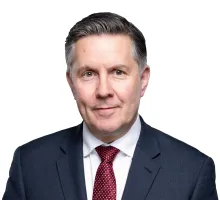
MARK BUTLER, MINISTER FOR HEALTH AND AGEING, MINISTER FOR DISABILITY AND THE NDIS: Morning. I know it’s been a busy day already, so thank you for coming along. A couple of things I want to provide a quick report on. Firstly, this morning I introduced into the House of Representatives the government’s bill to amend the NDIS Act to start to implement the measures that I announced at the Press Club a few weeks ago and were provided for in Tuesday night’s Budget.
The Senate has just agreed to refer that bill to an inquiry that will report back on 16 June, and I thank the Senate for that, particularly the Government and the Opposition for working together on a sensible process forward. I also particularly want to thank Melissa McIntosh, the Shadow Minister, for her engagement on this. We are committed, the Government is committed to passing this bill before Parliament rises for the winter break so we can get on with the business of getting this scheme back on track.
I’d also like to provide an update on hantavirus. I’ve just come from a briefing from the Centre for Disease Control from my department and from the Chief Medical Officer, also providing advice on the World Health Organization’s latest briefings on the hantavirus outbreak on Hondius, the cruise ship Hondius. There are, as the World Health Organization reports now, 11 cases. All of those cases of hantavirus are from passengers or crewmembers, people from the cruise ship. Tragically, there have been still three deaths associated with this viral outbreak.
I want to stress this is still, on all of the evidence, a virus that is very rarely transmitted from human to human. All of the cases that have been reported thus far and all of the evidence previously about hantavirus shows that it requires very close contact between two humans to be transmitted. But obviously, our agencies, and certainly I am monitoring this outbreak very, very closely, and the World Health Organization is providing very regular advice to agencies like our CDC.
I can also report that the Department of Foreign Affairs and Trade has secured a suitable aircraft and crew to transport the four Australian citizens, the Australian permanent resident and the New Zealand citizen, from where they are now in the Netherlands to Australia. That aircraft is due to land at four o'clock Eastern Standard Time in the Netherlands, due to take off from the Netherlands at about 5.30pm today Sydney or Canberra time as well and will land in Perth sometime tomorrow. Obviously, Foreign Affairs and Trade have also secured all of the necessary clearances and approvals to travel from the Netherlands to Perth.
It is still the intention of the Government, still the arrangement is that that flight will, or that plane will land at RAAF Base Pearce just northeast of Perth, and I'll come to some of those arrangements.
The six passengers are still in good health. They have all tested negative for hantavirus and are showing no symptoms as well. All passengers and all crewmembers will travel this flight for its duration in full PPE. There are very strict conditions about the flight, about the landing, and about the quarantine arrangements at Bullsbrook, which have been developed by our Centre for Disease Control and approved and endorsed over the last little while by the AHPC, the Australian Health Protection Committee, which is essentially the committee of all of the jurisdictional chief health officers chaired by the Commonwealth Chief Medical Officer.
Australians can have very high confidence that we are doing everything to ensure that this repatriation of those six passengers is undertaken completely safely.
As I've indicated before, those passengers will be the subject of a quarantine order to remain at the Bullsbrook Quarantine Facility, one of the National Resilience Centres set up towards the end of the COVID pandemic, and that has already received staff deployed from the National Critical Care and Trauma Response Centre which is headquartered in Darwin. Those staff have been deployed to Bullsbrook ready to receive those passengers tomorrow. These are expert staff, well experienced in infectious disease emergencies alongside a range of other emergencies that they serve the country for.
I repeat that this is one of the strongest quarantine arrangements in response to this hantavirus outbreak you will find anywhere in the world. The quarantine order remains in place for three weeks but will be reviewed during those three weeks to determine what should take place for the remainder of the 42-day period of potential incubation that the World Health Organization has advised.
Again, many countries that are already repatriating passengers from this cruise ship, the US, the UK and others, are only subjecting their repatriated passengers to a managed quarantine arrangement at a hospital or at a centre like Bullsbrook, usually for two or three days, and then allowing those passengers to move into a home-based quarantine arrangement. We have decided on a precautionary basis to take a stronger approach to that, because our overriding priority is to keep the Australian community safe and to keep us healthy. Happy to take questions.
JOURNALIST: Minister, where did we secure that plane from? And there were some issues around a fuel stop. Which country will it be stopping in? And do you have the total cost that will be paid by taxpayers?
BUTLER: Look, we'll do that in due course. Obviously, Foreign Affairs and Trade from time to time, when there are these emergencies that impact Australian citizens overseas, has to be deployed to bring Australians back home. That can be natural disasters, that can be conflict, or it can be international health emergencies. That's part of our job as Government to help Australians return home if they're impacted by global emergencies. In due course, we'll provide some detail about the cost of that. As I said, all necessary clearances and approvals, including refuelling arrangements, have been secured by DFAT. I'm not in a position to give you the precise details of that right now.
JOURNALIST: Minister, with the group of six, the Australians and the New Zealander, are you able to give us any more details on their ages, genders, whether they've been tested recently, the results of those tests?
BUTLER: I'm sorry if I didn't say that. I tried to say that they have been tested very, very recently, a pre-flight test. There is a PCR test for hantavirus and they have tested negative. I can also indicate they are all symptom-free, we're pretty confident they're getting onto the plane without the virus, certainly without symptoms. But they will be subject to testing when they arrive in Australia, and they will be in full PPE during the duration of the flight so there is no risk of transmission, even though we're very confident based on the test that's been done very recently that they don't currently have the virus. I can't give you detail about gender and age.
JOURNALIST: When it comes to the Bullsbrook Centre, what are the testing arrangements for staff that are going to be working there? And will they be, will the staff cohort that's there be there for the entire three weeks, or will they be cycling in and out of Perth during that time?
BUTLER: The AHPC, the Health Protection Committee, and the CDC have developed guidelines for staff as well as for, the repatriated passengers during the duration of that quarantine period. That was developed by the CDC, endorsed by all chief health officers of the country. There will obviously be infection control, very strict infection control arrangements in place at the centre, particularly in terms of any potential contact between NCCTRC staff and the repatriated passengers. In due course we’ll provide further detail about those arrangements. But just to provide very clear reassurance, they are of the highest infection prevention and control standards and have been endorsed by all of Australia's health experts.
JOURNALIST: Minister, just on the NDIS bill this morning, which is very long. It includes several changes to definitions around eligibility. Could you just step through, for participants and people who haven't read that in the explanatory memorandum, what the changes you're making to the definition of functional impairment, this concept of all appropriate treatments, mean? And just secondly, there is a section in there that says you're now tying reasonable and necessary supports to the scheme's financial sustainability. There's a line that says, in some cases, what is reasonable to fund may be less than the actual cost of a support. Does this mean that people could be paying some kind of gap fee for the scheme?
BUTLER: There's quite a lot in that, Natassia. I'll try and step through all of those elements. Firstly, can I say I welcome the fact that the Senate committee has referred this for inquiry. That will be another opportunity for participants and other interested stakeholders to examine this bill and to provide submissions about it before it is considered by the Senate, and I think that's a really important opportunity. A number of the eligibility questions that I think your question went to will obviously be the subject of further work in coming months, and the support in that work of a technical advisory group as well as, of course, of the engagement with the community.
Some other elements, I'll give you one example, the question around permanence which has been the subject of some coverage this morning, is a long-standing recommendation from the NDIS review that was led by Bruce Bonahady and Lisa Paul back in 2023. That really flowed from a Federal Court case called Davis, where the ability of the agency, effectively, or Government to reserve or preserve the scheme for people with permanent disability was significantly impacted.
This scheme was never set up to become a substitute for health and rehabilitation and other treatment that could potentially prevent lifelong disability. And so we will put in place rules that make that much clearer. Those rules will obviously have detail in them that will become clear in due course. We won't, for example, require people with profound hearing loss to receive a cochlear implant. There will be exceptions to that question of treatment, and the detail of that will be developed in due course.
In terms of the reasonable and necessary supports, this will be obviously a very important part of the new framework planning budget process, and will ensure that the development of those plans is able to have a more curated budget developed alongside it. But again, that will become clear as we work through and the committee inquiry.
As to your question about gap payments, I think there'll be much more calibration in our pricing arrangements. As you go through some of the elements of the bill that allow, for example, the Minister to issue different prices for registered and non-registered providers, and some other things that I think will provide much more robustness in pricing in a market that doesn't have a lot of it.
JOURNALIST: But does that mean that there will be gap fees?
BUTLER: No.
JOURNALIST: Well then, what does this mean that some NDIS supports may be less than the actual cost of providing or acquiring support?
BUTLER: I don't have anything to add to what I just said.
JOURNALIST: Sorry, but you're suggesting that supports will be provided below the cost amount for that support. Who pays the gap?
BUTLER: As I said there will be quite differentiated pricing in place. What we're doing is providing the Minister with the power to implement that, and that will become clear as we develop the detail over time.
JOURNALIST: Minister, the funding arrangements also provide that funding is only given for direct support needs and not indirect support needs that might arise from a comorbidity. How do you split that out, particularly when some of those comorbidities may be caused by a disability?
BUTLER: Again, this has arisen from a number of legal disputes in the Federal Court and the ART. And where there are needs connected directly to the disability, they will continue to be able to be funded in a participant's plan. But what we have found is that participants have been able to seek supports from the NDIS in relation to conditions that are not connected to the disability or the impairment for which they've gained access to the scheme. For example, someone might be on the NDIS for a particular impairment and develop a health condition that is separate from that impairment. That health condition, unless there's a connection, should be supported through the health system like it is for every other citizen.
JOURNALIST: On the part of the law that allows the Minister to make a kind of broad cut to a certain section of the NDIS, I assume gives you the power to revert that social and community participation section back to its 2023 levels. But there are a range of examples in that document. Does this power give you the option, say in another few years, costs keep going up, to just keep making blunt cuts to sections of the scheme to keep its costs down?
BUTLER: Our position is very clear. And we're particularly focused on that stream you talked about, the social and community and civic participation budget, which has blown out from $4 billion five years ago to $12 billion this year, about the same as the entire PBS, and projected to grow to 20.
We're going to, or I'm going to make a determination if this bill passes to return that budget to 2025 levels for individuals. That will mean a return to 2023 levels, so still substantially bigger than it was several years ago. And yes, that power allows me to do that. I also intend to reset the therapy budgets which, on average, will mean, for example off the top of my head, a shift from on average around 71 or 72 hours of therapy a year down to about 68 hours of therapy per year.
We've been very clear, that is our focus. As I said at the Press Club and I've said a number of times since, we very deliberately, when we were looking through different ways to manage the cost growth in the NDIS, were keen to ensure that we could quarantine those more critical areas of support like activities of daily living, travel and transport to medical appointments, accommodation supports and such like, and that's why we've focused on those two streams.
JOURNALIST: Minister, have you had any movement with the states on getting them to pay their share of disability care? Have you had any breakthroughs since your speech?
BUTLER: We're making good progress on Thriving Kids. That obviously is the first port of call. Had really good discussions with some of the states about the Thriving Kids plans that they're in the process of developing. I think families will be very much filled with confidence that they and their children are going to get the support in places they're very familiar with, where their kids live and learn and play. Obviously the longer term work around foundational supports for other cohorts is something that we're going to have to move to, we haven't begun that work yet with states.
JOURNALIST: Just one more on the NDIS bill. There's a section that said, sorry there’s a section says, this will allow for the use of automated decision-making within the NDIS. Can you explain how you see that working?
BUTLER: That really is an enabling provision. I talked about that in my second reading speech. At an administrative level, there is a lot of opportunity for Government to use that sort of decision making to make things more efficient, but also frankly more equitable and fairer. Also, being able to automate some of these basic administrative functions free up our highly qualified public servants, frankly, to do more work with actual interaction with human beings where that interaction is particularly important. So not really taking up so much time of public servants in doing basic rudimentary tasks.
But what I also said yesterday is, I think we've all learned the lessons of not over-relying upon automated decision-making. We are stepping carefully into this, putting this power in place to allow this to be used for basic administrative tasks. Obviously, there's a lot more to talk through about that in coming months. But I wanted to give some reassurance in my second reading speech in the parliament about our recognition that this can be a terrific thing that frees up public servant time to engage with our citizens in the stuff that really, really matters. Also, frankly, lead to more equitable, more predictable outcomes. But we're also conscious about the potential risks.
JOURNALIST: Will it ever be used as part of functional capacity assessments?
BUTLER: That will be more work done by the technical advisory group. Having humans involved in functional capacity assessments, for me, is absolutely central to the work of furthering a scheme that is so utterly human at its essence. It's not to say there is not the ability for some very basic rudimentary tasks to be done in an automated way but this is, fundamentally, a human exercise. And I certainly take that position into what will be a discussion with the community, with states and with the technical advisory group.
JOURNALIST: I do just have one more on NDIS if I don't mind. Just in relation to the permanence assessment. I mean, you spoke about one of the reasons for a functional capacity assessment is to provide some equity, that there's people paying sometimes thousands for the reports necessary for those assessments. Under the new scheme, will the necessary assessments people need to prove permanence of disability be paid by the Government?
BUTLER: I think that's a question that's been raised by a number of people with me over the last few weeks and I think something we want to take into this discussion. How does that assessment work; what sort of reports, expert reports are fed into it; and, who pays for it is something I've got a pretty open mind about. And I want to have a discussion with the community and with the technical advisory group about as well.
JOURNALIST: On Monday when you were speaking about quarantining for hantavirus, you said that it was your belief it should be a Commonwealth responsibility. Immediately after you spoke, the Queensland Health Minister, Tim Nicholls, said that he was open to having an additional quarantine period after those two passengers left Perth and headed back to Queensland. I mean, what's your stance on that? Are you in conversations with Nicholls about whether or not that's an appropriate way for quarantine to be managed?
BUTLER: I know Minister Nicholls and also Minister Park in New South Wales, and their chief health officers, because these are the two states where these passengers are resident, are engaging with the Commonwealth about this. I think they both strongly support the fact that we've stepped in and put in place national quarantine arrangements at the National Centre for Resilience at Bullsbrook.
But equally, as we've said, we'll be taking some advice towards the end of that three weeks about what happens for the remainder of the 42 days. We're all signed up to 42 days of some sort of quarantine. At the moment, the first three weeks will be done at a centre. Managed quarantine, as I said, one of the strongest responses you'll see anywhere in the world.
We'll take on advice about that and we'll engage with the Queensland Government and New South Wales Government about what happens in the fourth, fifth and sixth week. That may be more centre-based quarantine or it may be that someone wants to float the idea of home-based quarantine back in Queensland and New South Wales. We haven't got advice about that.
The AHPC, the Health Protection Committee, will provide us with advice. That includes the Queensland Chief Health Officer and the New South Wales Chief Health Officer as well. But I can tell you, I can assure the community, I'll go into that discussion, basically with one job, and that is to do everything I have to do to keep this community safe and healthy.
JOURNALIST: Should the states continue some form of quarantine program? Would it be a prerequisite for you that they be absolutely equal, that New South Wales and Queensland, if they do home quarantine, if they do hospital quarantine, that's to be the same period of time?
BUTLER: It's got to be 42 days. We're not going to let anything happen that doesn't align with World Health Organization advice about the incubation period for this virus. I've said as well, I think if we've learned anything over the last five or six years, having uniformity across state boundaries is something that I think that's what Australian citizens expect. Thank you, everyone.
Media event date:
Date published:
Media type:
Transcript
Audience:
General public
Minister: