
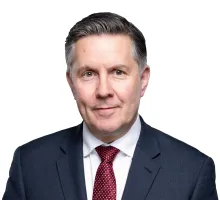
MARK BUTLER, MINISTER FOR HEALTH AND AGEING, MINISTER FOR DISABILITY AND THE NDIS: Morning. We were elected to government with four core promises to strengthen Medicare. We need more doctors into the system, particularly new GPs, and I’m pleased to report the registration of new medical practitioners is up 50 per cent on pre-COVID levels, and particularly pleased that more junior doctors are choosing general practice as their career. We need that to happen because general practice is the backbone of a well-functioning healthcare system. This year, a record number of junior doctors are training as GPs – about 500 more than were being trained under the former government. We also promised Urgent Care Clinics, and right now we’ve got 123 Urgent Care Clinics open across Australia, with several more to open in coming weeks. Already they’ve seen 2.5 million patients, all bulk billed, across seven days a week and extended hours, taking pressure off our crowded emergency departments.
The third promise we made was to make medicines cheaper for pensioners, but also for people who don’t have that concession card and were paying quite high prices for their medicines. Today, they pay no more than the same script price they were paying way back in 2004. We’ve saved Australians literally billions of dollars at the pharmacy counter through our cheaper medicines policies.
And fourthly, and from a Labor perspective perhaps most importantly, we promised to turn around bulk billing, which was in freefall when we came to government. And over two waves of big investment, we’re starting to see those numbers turn around. Back in 2023, we tripled the bulk billing investment that GPs receive when they bulk bill concession card holders, pensioners and kids, and I’m pleased to say that bulk billing rate for those 11 million Australians is back up over 92 per cent. But we also recognise that bulk billing was continuing to slide for those Australians who don’t have a concession card. Given that the card cuts out at about 540,000 income for a single, many Australians still on relatively low to middle incomes were choosing not to go to a GP, even when they needed to, because they couldn’t afford to. I’m pleased to say, three months after our record investment of bulk billing kicked in on 1 November, we are seeing those rates increase significantly.
In the last three months, we’ve seen an 8 per cent increase in bulk billing for Australians who do not have a concession card. In some jurisdictions, we’ve seen that increase even higher – in the Northern Territory, we’ve seen a whopping 21 per cent increase in bulk billing for Australians without a concession card. In South Australia and Tasmania, a 12 per cent increase. In Victoria, a 9 per cent increase. What that means is that the national bulk billing rate is now sitting at about 81.5 per cent. What that in part reflects is hundreds and hundreds more general practices moving from mixed billing, so charging gap fees back in October, or as recently as October, to now becoming a 100 per cent bulk billing practice that bulk bills all of their patients all of the time. Since 1 November, more than 1300 general practices have made that switch, so that now more than 3400 general practices across the country are fully bulk billing, meaning that 96 per cent of Australians live within a 20 minute drive of a full bulk billing practice.
We know there’s going to continue to be more to do. Every week, we’re seeing more general practices seek registration as a 100 per cent bulk billing practice. As the Prime Minister and I committed at the election last year, we want to see that bulk billing rate continue to climb over the course of the coming few years to get it back up to 90 per cent. We’ve made a terrific start. There’s more to do, but this is delivering on the promise we made to the Australian people to strengthen Medicare.
Happy to take questions.
JOURNALIST: Minister, the 3412 is still short of that 4800 that Labor promised. What’s a timeline to getting to that? And what would you say to GPs who might be resistant to register?
BUTLER: I’d say to GPs who are resistant, first of all, crunch the numbers. It is overwhelmingly in the interests of practices and individual GPs to make this switch. We calibrated the package to make sure that was the case. A full bulk billing doctor now will earn about $125,000 per year more than they would’ve three years ago because of our investments. That’s in the major cities. The increase is even higher if you’re practicing in rural communities, so I’d say crunch the numbers.
What we’re also hearing from bulk billing practices is that patients are moving to their practice. GPs in these full bulk billing practices are run off their feet because patients are coming to them, so I think what you’ll also see is practices that are still charging gap fees starting to look at their competitors down the road and recognise they should have another look at the investments we’ve put on the table. But as I say every week right now, more and more practices are registering to become 100 per cent bulk billing practices.
In terms of the targets, we said that we’d get to 90 per cent by the end of this decade, there’d be 4800 bulk billing practices by the end of this decade. In about 2028, we expected to be at 3600. Now, we’re already pretty close to that three months in. We’re well ahead of the targets we had when we modelled this incentive program. More to do, there’s no question about that, but this has been a terrific start to a record investment to restore bulk billing as the beating heart of Medicare.
JOURNALIST: Minister, if I can ask, last time we were here we were talking about Thriving Kids. You spoke about wanting to have negotiations finished, funding starting to roll out from 20 Feb – that’s nine days away. Have you locked in any agreements with states yet?
BUTLER: No, we haven’t. Those negotiations are continuing. I’m meeting with my health minister colleagues here in Canberra on Friday. We’ve got a lot of business to transact, but a discussion about those Thriving Kids bilaterals will be a part of that as well.
JOURNALIST: Do you still think that 20 Feb is realistic?
BUTLER: Yeah, I’m still targeting 20 Feb. I recognise these are short timeframes. That timeframe particularly reflects South Australia going into caretaker. We’re keen to lock all of this down before that happens, because that interrupts the process obviously for some weeks. We’re all working very hard to get to that point, but obviously there’s more to do, and the meeting on Friday will be an important part on that.
JOURNALIST: And just finally, because I always have three questions – do you have any idea yet about how you’re going to split up the funding? Obviously, 1.4 is going directly to the states. States also collectively need to invest too, but I guess the question is what each state and territory- is that about population, or do you have a sense yet what everyone’s going to be up for receiving and spending?
BUTLER: Our commitment is based on a population split. And really, the negotiations are very much centred on what services each level of government would be responsible for funding directly and what, in our case as the Commonwealth, we would expect states to do in return for the at least $1.4 billion we’ve committed to provide to them. And the fact that this is happening bilaterally rather than a single agreement reflects the fact that each jurisdiction really starts from a different place here. They have slightly different services and systems in place, so there will be some variability between states depending on where they come from, which is why this will be a bilateral process.
Having said that though, there are some clear national benchmarks that we will expect every jurisdiction to meet. They reflect the advice from the Thriving Kids Advisory Group which states were represented on, as well as some of the insights we got from the parliamentary committee.
JOURNALIST: If it's bilateral then why the round table with all states on Friday?
BUTLER: Well, health ministers are due to come to Canberra or come together as we do very regularly obviously given that the health system in Australia is a shared system. That is one agenda item we will have just to get a collective sense that there's quite a bit to do in, as you say, only about nine days.
JOURNALIST: Some figures the other day- please tell me if they're dodgy figures, but it said that 50 per cent of the doctors working in our hospitals are from overseas, 40 per cent of nurses, which speaks of a- [indistinct] workplace shortage here. I heard you yesterday speaking in parliament about medical schools, but do we- are you of a view that we need to increase skilled work visas for medical workforce given the demand [indistinct]?
BUTLER: The first thing I'd say is Australia's always relied on a level of overseas trained workforce, doctors and nurses in particular, always done that, particularly in rural communities, but more generally through the system, and that remains the case. I can't tell you whether those figures are precisely right. The hospital systems are operated by state governments. What I can say though is that from the national cabinet of the premiers, the prime ministers and chief ministers, our bosses as health ministers, we were directed back in 2023 to start to frankly make it easier for qualified overseas trained doctors to come to Australia and practise.
I talked a bit about this yesterday, what we call an expedited pathway for doctors from jurisdictions where we have high confidence in their training systems. That's generally the UK, Ireland, New Zealand and Canada. We've been working through specialties from general practice, anaesthetics, psychiatry, obstetrics and gynaecology, general physicians, paediatrics, I think are the ones we've done so far. And they're able to get onto the floor much more quickly than was the case before. There was a lot of red tape, it would take them ages to get a visa. They're now being put at the top of the pile. We're cutting the fees that they have to pay which might have amounted to tens of thousands of dollars to the colleges. They don't have to pay that as well.
We are seeing an increase in the number of well-qualified, overseas trained doctors from jurisdictions where we have high levels of confidence and we need them. We are lifting the number of training places for Australians. We've expanded medical school places in the cities for the first time, frankly, in over a decade this year. We've also opened medical schools in places that never had them like Cairns and Darwin. And as I said in my opening, we're training more junior doctors as general practitioners than has ever been the case in Australia. Last year was a record. This year has broken that record, but they take some time to work through the pipeline.
So yes, we want to build our local workforce, but we do have to bring overseas trained doctors and nurses for that matter in to supplement that workforce. We always have, and I suspect that will remain the case at least for a long time.
Sorry, you’ve got a follow up?
JOURNALIST: Yeah, I do, just a quick one. With the resurgence of One Nation and their anti-immigration stance and the fact that the Liberals have shelved or won't tell us what their migration policy is, what would be the effect of reductions in migration on Australia’s health system?
BUTLER: That depends on the nature and the scale of it. But the sector of our society for which I have responsibility are heavily reliant upon overseas workers. If you go to an aged care facility, you will see that. If you look at an NDIS worker, you will see that. And our hospital systems, it's very hard to find a general practitioner outside of our major cities who is not an overseas trained doctor. As you say, our hospital systems are heavily reliant upon it as well. So that's why I as the Health and Aged Care and Disability Minister make the case for a balanced approach to this migration debate.
All of those health and social care sectors are heavily reliant upon overseas workers. and you know, if we sort of shut the border in the way that some would suggest on the far right of politics, it's going to be very hard to get work done in our aged care facilities, in our disability sector, and through health. So a balanced approach, a considered approach to these things is the approach that we take as Labor.
JOURNALIST: To the visit of the Israeli president. Do you think it's increased social cohesion in Australia?
BUTLER: I think this was an important thing for the local Jewish community, the Australian Jewish community, which is grieving, which is going through deep pain and which is frightened. They wanted to receive a visit from the Israeli president, the equivalent of our governor-general, it's important to say. And that's why we supported the invitation from the governor-general. And I think that has been a source of, over the last couple of days, enormous comfort and solace to Jewish Australians, and I think that's a very good thing.
As the Prime Minister said also yesterday in the parliament, it is important that we retain a dialogue with Israel. At the end of the day, if any of us are serious about delivering a two-state solution and implementing the recognition we've made to the state of Palestine, we're going to have to have a dialogue, all of us, with Israel. So, maintaining those communication links are important in spite of the fact that there have obviously, it's no secret, been disagreements between our government and the government of Israel about a range of matters over the last two and a half years.
The last thing I'd say is yes, a number of the scenes we've seen over the last couple of days have been confronting, have been distressing, which is why the Prime Minister continues to counsel our community to turn the volume down. People don't want to see that raging conflict play out on the streets of Australia.
JOURNALIST: There are nearly a million people who have unclaimed Medicare rebates. It's been a really high number for a while. A lot of those people are young people who assumedly don't have the awareness about the system. Do you think there's enough being done to make people aware of the rebates that it has to be- like, it should be automatic [indistinct]?
BUTLER: I’m going to be very quick here. I know our government has been looking at that since we were elected. Bill Shorten as the minister for government services was looking at that seriously. I know that's work that will continue in that Services Australia portfolio. I apologise for running away. Thank you everyone.
Media event date:
Date published:
Media type:
Transcript
Audience:
General public
Minister: