
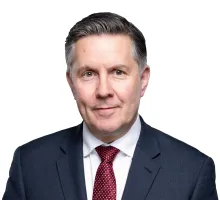
TRISH COOK, FEDERAL MEMBER FOR BULLWINKEL: Good morning everyone, and thank you for being here in the hills of Mundaring. I’d like to acknowledge the traditional owners of this land, which are the Whadjuk Noongar people, and pay our collective respects to their elders, their people and their culture.
It is fantastic to be here this morning. It’s very exciting to be delivering on my election commitment to Mundaring for a Medicare Urgent Care Clinic. As some of you know, I’m a long-term nurse and I’ve always advocated for healthcare, and it’s just terrific to be able to provide a service in the Perth Hills for a huge catchment area where people can get affordable, accessible healthcare when they need it. This is a game changer for people in this area, for people of Bullwinkel, and of course with the Albanese Labor Government's reforms in women's health, men's health, affordable medicines and of course Strengthening Medicare and bulk billing. I'm so proud to be part of that Government.
This morning we have Minister Mark Butler here to help us celebrate this opening, and Mark is Minister for Health and Ageing, Minister for Disability and the National Disability Insurance Scheme. I'm joined also this morning by my colleague Klasey Hirst, MLC and Dr Kiran who'll say a few words later. Thank you, here's Mark.
MARK BUTLER, MINISTER FOR HEALTH AND AGEING, MINISTER FOR DISABILITY AND THE NDIS: Thank you, Trish. Thank you Dr Kiran for hosting us and for putting your hand up to join the really exciting Medicare Urgent Care Clinic program. It's so good to be here in Mundaring again with my new-ish colleague Trish Cook. I first met Trish a few years ago when she was presenting at an international conference hosted by the Melanoma Institute of Australia by the two former Australians of the year, Georgina Long and Richard Scolyer, where Trish was presenting on her research into the benefits for patients receiving chemotherapy in their own home. It just shows the extraordinary experience and understanding of the healthcare system that Trish brings to the Federal Parliament, brings to our Government party room, as only the tenth nurse ever elected to the Federal Parliament. It is so appropriate that Trish has been elected to represent the new electorate of Bullwinkel which of course is named after Australia's most famous nurse, Viv Bullwinkel.
Thank you also to Klasey for joining us. I'll be joining the Premier and the Health Minister in the next couple of hours at the Joondalup Health Campus. We have a really strong relationship between the Commonwealth and Western Australian Government across so many different domains, including in healthcare as well.
As Trish said, one of our most important priorities when we were elected in 2022 was to strengthen Medicare, to turn around a decade of cuts and neglect that were making it harder and more expensive for Australians to see a doctor, particularly to see a GP. That is so important because General Practice is the backbone of a well-functioning healthcare system. Our Strengthening Medicare agenda had four pillars to it, including more doctors to the system, which we're doing; making medicines cheaper so that Australians are able to afford the scripts that their doctors have prescribed as important for their health; but also turning around plummeting rates of bulk billing and introducing this new model of care called urgent care. After the 2025 election we've been busy rolling out our second wave, particularly on bulk billing and urgent care clinics.
I'm really pleased to say that since our first wave of reform in bulk billing, bulk billing rates in Western Australia have increased by more than 5 per cent. They were in free fall when we came to Government. They've increased over the last few months, but they're still short of where I'd like them to be. We're going to continue to encourage General Practices to take up our offer to become bulk billing practices.
But urgent care has been a game changer for our healthcare system. This week we will be opening three new urgent care clinics in Western Australia. Booragoon in the Fiona Stanley Hospital catchment, that urgent care clinic opened a couple of days ago on Monday. And here in Mundaring and over in Yanchep, another two urgent care clinics will open over coming days. We've only got one more to open that we promised at the last election - in Geraldton -and that will open in March, bringing the total to 14 Medicare Urgent Care Clinics in this terrific state of Western Australia.
They offer great care, open seven days a week, with extended hours and importantly they are fully bulk billed. They take real pressure off local hospital systems. Particularly for semi-urgent and non-urgent presentations that take up a lot of time and energy in hospital emergency departments that really were built for more life-threatening, once-in-a-lifetime emergencies they can focus on if some of those lower urgency categories are diverted to a clinic like this.
Dr Kiran, thank you for putting an interest forward to the local primary health network that conducted an open competitive tender. I'm really looking forward to how the Medicare Urgent Care Centre here in Mundaring, and for the surrounding area, changes access to bulk build urgent care for this community. Thanks very much.
DR KIRAN PUTTAPPA: Thank you Minister. We've been here in Mundaring for the last 10 years, and from next week opening an urgent care clinic we have a great opportunity here to serve the community seven days a week and with extended hours and no cost. We've got an excellent team of GPs including myself, and the staff are ready to start looking after the patients of urgent non-life threatening illnesses in the Mundaring community. The urgent care concept is giving the right treatment in the right place at the right time. This will avoid unnecessary presentation to the hospital emergency department, putting unnecessary pressure on the hospital system. Urgent care is a very good concept. Thank you, Minister Butler and the Federal Government, for this excellent initiative, and the local communities can get fast healthcare nearby to their home. Thank you.
JOURNALIST: Just on health insurance, you set health commitments at the election, so how can you justify jacking out health insurance premiums by more than 4 per cent in the cost-of-living crisis?
BUTLER: We know that the cost of medical and hospital services are climbing quite sharply, climbing higher than general inflation. The latest data that we have for a full year shows those costs rising at about 5 per cent. That reflects the input costs for providing hospital care and for wage increases that are flowing through from a range of different agreements struck across the country.
We’ve worked really hard over the last few months to approve and increase the balances, obviously at the interests of households who are doing it tough with cost of living pressures, while on the other hand having to ensure that our private hospital system remains viable and strong and able to continue to provide the health services that it so importantly does for Australians. I went back to the insurers on a number of occasions and indicated to them that their original claims for increases were not acceptable to the Government. We’ve asked them on a couple of occasions to sharpen their pencils to justify the increases that they’re seeking to flow on, and we’ve come to the view that these increases are the lowest possible increases that are consistent with a viable private hospital sector.
JOURNALIST: What would you say to people that are thinking about cancelling their private health? Won’t that add pressure to the public system?
BUTLER: That has been a very significant factor in the decision we’ve taken to approve these increases. Over the course of our time in Government, the private health insurance increases have averaged about 3.5 per cent over those four years, substantially lower than the increases averaged under the Coalition Government. We’ve tried to keep them as low as we possibly can, consistent with a viable private hospital sector. Private health insurance is still growing in terms of its member numbers. It’s been growing consistently since the COVID pandemic, but we know this is going to be tough for households. We've also been clear with insurers that we expect them to pay more of their income to private hospitals, and we're confident that will continue over the next couple of years to underpin the viability of this important private hospital sector.
JOURNALIST: Is the government trying to undermine the private health system?
BUTLER: Not at all. Going back to the days of Bob Hawke introducing Medicare, the Labor Party has always had a very strong view that Australians are best served by a mixed health system that sees a strong Medicare and public hospital system supported by a viable public hospital sector, that does about 70 per cent of elective surgeries and still delivers probably around a quarter of newborn babies. This is an important part of our system. I've always had that view. Every Labor Health Minister before me has always had that view. The truth is that the private hospitals have been under real pressure through declining income from private health insurance as well as a range of other changes that are happening in the sector, many of them very positive for patients. We've been determined to make sure that we do what we can to improve the viability of private hospitals. We've got the CEOs of the insurance companies and the hospitals together around the same table for the first time, looking at reforms that will strengthen the private system. We're absolutely determined to ensure that we retain that mixed nature of Australia's high quality healthcare system.
JOURNALIST: Minister, why are insurers who made some $2 billion a year in profit getting such a hefty premium rise? And why can't they just pay hospitals more out of their profits?
BUTLER: We're seeing increases in what is called the hospital benefits ratio. That's the percentage of the income that insurers earn that is actually paid to hospitals to deliver services. Some of their income also goes to out of hospital services like optical and dental and things like that. I said 12 or 18 months ago I expected insurers to lift that ratio. It had got as low as 83 per cent in 2022 and 2023 when we were coming into Government. That has increased over the last little while. It hasn't increased as fast as I would like, not because insurers aren't paying hospitals more for their services, but because activity in hospitals has not grown as quickly as we expected it to. Our projections are that the income hospitals get from insurers will continue to climb over the course of 2026 and 2027. I expect insurers to do more still to make sure that what they're earning is going to hospitals rather than to their own profits and their management expenses.
JOURNALIST: Are you confident that Australians will be able to afford this in a cost of living crisis?
BUTLER: I know this is going to be tough for households, that households are dealing with a range of pressures around cost of living. I know for many of them, private health insurers is one of those pressures. That's why we've worked so hard over the last couple of months. My department and I have worked hard to get those increases down as low as we possibly can. They've averaged about 3.5 per cent, which is higher than I would like them to have been. But it’s the minimum increase over our time in Government, consistent with making sure we have a private hospital sector that's there for people. We've seen real pressure in the second biggest private hospital operator, Healthscope. We've had to work hard to make sure that company didn't collapse, which would have had very serious ramifications for the broader healthcare system. This is about a balance of interest. The main thing I've been focused on is getting those increases down as far as I responsibly can, while making sure our hospital system is viable.
JOURNALIST: But do you concede that some Australians will have to cancel their private health now?
BUTLER: Households will make those decisions. Quarter on quarter over the last several years, private health insurance has grown. But that doesn't change the fact that this increase is going to be tough for many households. I've been conscious of that since I first wrote to public health insurers some months ago asking for their submissions for premium increases for 2026.
JOURNALIST: Can you just be a little bit more specific about what exactly is the rising cost of medical services? Are those rising costs due to inflation?
BUTLER: The biggest cost for private hospitals is wages, and wages in the healthcare system, and other parts of the economy as well, but particularly in the healthcare system, have been under pressure for some years, particularly since COVID. And wage increases or wage agreements that have been struck in different state jurisdictions in the public hospital sector have started to flow through to the private hospital sector. If you talk to the operators and the chief executives of private hospitals, they are under significant pressure to lift their wages, something in line with what is paid in the public hospital system. Otherwise, they simply can't attract and retain the nurses and the doctors and the other health professionals they need to operate the system. There are other input costs, but as I'm advised by private hospitals, the most significant pressure on cost is in wages. You will see insurers have increased the benefits they pay to hospitals for each hospital service quite considerably, by more than they have since 2008.
Hospitals are earning more of the money that insurers are receiving from their members, and so they should. It substantially dropped from the pre-COVID average and that's why I've been arguing so much that benefit should flow more to hospitals rather than be kept by insurers for their own profits or management expenses.
JOURNALIST: Just on that, private hospitals and doctors argue that industry problems and contracting rates to hospitals can be fixed with a new regulator. Are you considering that?
BUTLER: I've got the chief executives of the big hospitals, the big insurers, and also a range of other people you would want around the table - clinicians, doctors’ groups and patients and consumer groups - thinking about longer term reforms that would really ensure and sustain the viability of this important part of our healthcare system. That is looking at some of those measures. I don't have a firm view about some of those proposals, which is why I've put them to this chief executive forum for them to consider and provide advice. That forum has been chaired by the secretary of my department. It's taken very seriously by Government and I expect it to come up with some ambitious ideas for long-term reform in this sector. It's not just the viability and the wage and cost pressures the hospital sector is facing. It's also the fact that the way in which these services are delivered is changing. There is more single day surgery, so people don't need to stay overnight for surgery in the way they might have several years ago. The hospital sector has to adapt as well. But while it is adapting to that change, we need to make sure it's viable, so it doesn't disappear, so we don't see more closures.
JOURNALIST: Minister, do you have any update on the investigation into the deaths of a family of four in Mosman Park and whether they are receiving adequate disability supports?
BUTLER: I've addressed this a couple of times before. Any investigation will be led by Western Australian authorities. The National Disability Insurance Agency - which operates the NDIS - has made it very clear that it will cooperate to the fullest extent it can with WA authorities, whether that is the police or ultimately at some point a coronial inquest. I've been clear that the NDIA or the NDIS legislation makes it very clear that I'm not able and no one is able to disclose the circumstances of the plans, the two plans that the two deceased children were under. I'd be happy to talk about that if I was able to, because I know that's a subject of some significant public commentary, particularly here obviously in Western Australia. But I'm legally prohibited from doing that. It's contrary to the law and that really goes back to the importance that the National Disability Insurance Scheme places on privacy of individual participants.
JOURNALIST: On NDIS supports, there is another case where there was a recent coronial inquest that has been examining the quality of supervision and care a man received before he died in 2023. The provider was on quite a high contract and care for this man. What are you doing to crack down on providers like this? The one specifically is Phoenix Community Care.
BUTLER: I'm not in a position to comment on that individual case, but we are doing more than any Government before has done to improve quality and controls in the system. The Auditor-General said when we came to Government that there were essentially no compliance systems in place for the NDIS before we came to Government, which is extraordinary given the hundreds of thousands of participants whose well-being depends upon a well-functioning NDIS, and the tens of billions of dollars that taxpayers are spending on it. That's why we've worked so hard to introduce those regimes, particularly around fraud, and around wrongdoing by providers. We've got very substantial resources going for that. But in a broader sense, as to quality, we've also got work before us to start to develop a system that has more registration of providers. We have hundreds of thousands of providers of the NDIS who are not registered at all, unlike aged care for example, where providers have to be registered, where we know who they are, we know what their history is. We're working through those recommendations as well.
JOURNALIST: The man's support worker had stopped being paid and it took them a month to find his body. What kind of support is the Government putting in place to stop this kind of thing from happening again?
BUTLER: I don't have anything to add to what I previously said. It is clear that the quality control, and particularly the compliance systems in place for the NDIS, particularly as we came to Government, were not just inadequate, but in some cases non-existent. We are working very hard to start to build them up, in some cases from scratch to cover a system that has hundreds of thousands of providers and now about 750,000 participants.
JOURNALIST: How close are you to agreeing to a deal with the states on the Thriving Kids program ahead of Friday's deadline?
BUTLER: My advice is that we're proceeding well on doing that. I don't have any reason to think that we're not going to get there with all the states, and I think you'll see that reflected in some of the commentary from states as well. This has been terrific work between the Commonwealth and all eight different state and territory governments. There's a really shared sense of purpose there to make sure that we put in place as quickly as possible a system of broad-based mainstream supports for parents and their children where their children are experiencing some developmental delay, or autism, or both, frankly, with more low to moderate support needs, which was not a cohort really for whom the NDIS was originally intentioned.
JOURNALIST: Just tell us how many doctors and nurses will be able to work in a facility like this.
DR PUTTAPPA: We have a number of doctors working a number of shifts, but it will always be one doctor and the nurse and the receptionist from 8:00 am to 8:00 pm, 7 days a week.
JOURNALIST: Some people may be confused on if they qualify to come to a place like this versus if they should go to the hospital. What would you tell someone like that?
DR PUTTAPPA: What we look after here is urgent but non-life-threatening illnesses. If something is urgent, we'll definitely treat as if the patient is an emergency patient, and we make a referral to the emergency department of the nearest hospital by calling an ambulance.
Media event date:
Date published:
Media type:
Transcript
Audience:
General public
Minister: