
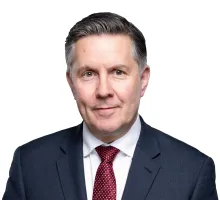
JESS TEESDALE, MEMBER FOR BASS: Thank you so much everybody for coming along today. It is a pleasure to once again welcome Health Minister Mark Butler here to Tasmania. He's a regular visitor to Tasmania and a strong supporter of everything that we’re trying to do here. We know that for a variety of reasons over the past decade or so health in Tasmania has had a few hits. We're all really proud to be part of a federal government which is putting record amounts of funding into health in Tasmania. We've just been to the Launceston Medicare Urgent Care Clinic, which is one of the busiest in the country. They've seen over 80,000 patients since they’ve been opened. Now, that is taking pressure of our local hospitals which are desperately needed. We are seeing the impact of the $25 reduced PBS prices and $7.70 locked in until the end of the decade. The bulk billing has gone up in Tasmania by record amounts just since November.
We are doing so much here in health, but it's not only health that the Minister has under his portfolio. And today, we're really excited to be here at Calvary Sandhill, which has received a $1.75 million grant from the federal government to create a memory support unit here, which will include turning this garden into a safe space for people who are suffering from dementia, and also 12 beds that will be specifically set aside for people with dementia here at this facility. This is all part of how our federal government is looking after people holistically from birth, right through their lifespans.
And I’d like to throw it to the Minister. Thank you.
MARK BUTLER, MINISTER FOR HEALTH AND AGEING, MINISTER FOR DISABILITY AND THE NDIS: Thank you, Jess. Thank you for hosting me again in your beautiful town. Such a beautiful day here in Launceston, and we're joined by Senator Polley and Senator Tyrrell. Helen particularly has been such a reliable, terrific partner in aged care policies for many years, and it’s completely fitting that we're here at Calvary Sandhill to talk a bit about their plans for better aged care services here in Launceston. Calvary has been such a reliable partner for federal and state governments right across the country in health and aged care, home care and a range of other social services for many, many years, and we're going to rely upon them very heavily in the future to deliver the expansion of aged care services that we need as a country, as our population ages very, very quickly.
We're going through a period now where those baby boomers born when all of the returned soldiers were coming home in the 1940s are starting to get to aged care age. We need more home care packages, which is why we expanded the home care program so significantly last year, and we'll do so again this year. And we need more residential aged care beds as well, which is why the capital grant that Jess just talked about being provided here is going to allow Calvary to continue to deliver first-class aged care services here in Launceston at this facility.
I also just want to talk a bit about what we're trying to do to deliver a stronger Medicare for the people of Tasmania. I'm from South Australia and like Tasmania, I am in a state which is a little bit older than the rest of the country and has slightly higher rates of complex chronic disease as well. The need to deliver a stronger Medicare and cheaper medicines is more pronounced in our 2 states, Tasmania and South Australia, than it is across the rest of the country. And our government has been busy delivering on the promises that Jess made to this community, that the senators made to the state more broadly, to do just that.
As Jess said, bulk billing is up by double digits in every part of Tasmania. Very significant increases in bulk building, particularly in the north and the northwest, which means more people are able to go to the doctor for free, more people are able to go to the doctor when they feel they need to rather than when they feel they can afford a gap fee that was becoming far, far too common. This year, we'll also deliver record amounts of funding to the Tasmanian Government for hospitals. For the first time, a Commonwealth government has recognised that the smaller jurisdictions, Tasmania and the 2 territories, do face additional pressures running hospital systems. So in addition to the record funding that every state in the Commonwealth is getting, we're also paying an additional small states grant as well, which means that this year, the Tasmanian Government will receive about 20 per cent more hospital funding than they would have received under the old Morrison-era agreement. Instead of $750 million in the 26-27 year, they'll receive $910 million this year, allowing them to put on more doctors, more nurses, more beds and deliver better hospital care for the people of Tasmania.
Jess has already talked about the way in which we're seeking to take further pressure off the hospital system through our innovative Urgent Care Clinic program. There are 137 clinics now open across the country. The Launceston Urgent Care Clinic is, I think, the busiest clinic in the country, and it is taking pressure off the LGH for those semi-urgent and non-urgent presentations that we know are very big numbers going through the front doors of our EDs across the country. But we're committed to doing more, because we know there's nothing more important to the people of Tasmania than their health. We want this island to be a healthier island, the healthiest island, healthiest state in the country. And I'm so fortunate to be working with a terrific Labor team here in Tasmania that understands the health and the social care needs of this terrific state, and is fearless about advocating the interests of Tasmania when they come to Canberra.
Happy to take questions.
JOURNALIST: Just on other issues for me. Okay, Tasmania's Launceston General Hospital has reported a very busy night. There was dangerously high ramping in excess of 100 minutes. The Tasmanian Government had previously said they need more federal funding. Is there more you or the Tasmanian Government can do – needs to do more?
BUTLER: I was on radio this morning following Emily Shepherd, the secretary of the Nurses Union who talked about last night's activity levels at the LGH. I said this morning that I've heard Emily telling those stories year after year after year about the LGH. Now, there are 750 public hospitals across the country. I'm not familiar with the operational details of every single one of them. But I've heard these stories about the LGH for far too long. There are obviously some issues around the LGH patient flow systems, around staffing and recruitment, which the Tasmanian Government needs to pay closer attention to. As I said earlier, we are providing record levels of funding to the Tasmanian Government to run their important public hospitals. But we've been hearing these stories about the LGH for far too long. It's time that the Tasmanian State Government set about doing the hard work of implementing systems that mean that last night's patient activity levels and the ramping and all of the other things that we've been hearing about over the last 12 or 18 hours aren’t a regular occurrence in the way that they have been far too long.
JOURNALIST: Tasmania consistently has some of the worst health outcomes in the nation. Is there not more that the feds can do?
BUTLER: We're doing an enormous amount to deliver a stronger Medicare. Bulk billing was falling off a cliff when we came to government 4 years ago. In this state, probably more than any other. And that wasn't just a cost-of-living issue for people. It meant that people weren't going to the doctor when they needed to because of cost. So the very big increases we've seen in bulk billing rates, that means that more people are going to the doctor when they need to, and that means they're getting the care they need when they need to and not becoming sicker.
We've got cheaper medicines. Script prices are about half what they would have been if we'd not acted over the last 4 years, and that means that people are getting all of the scripts that are provided by their doctors. They're getting them filled. Whereas when we came to government, we were hearing story after story of people not filling those scripts that their doctor had said was important for their health because of costs.
So the affordability crisis that we inherited from the former government is not just a cost-of-living issue, as important as that is, it's delivering better health to the people of Tasmania. And as I’ve said, a 20 per cent increase in hospital funding this year against what they would have received is the biggest increase the Tasmanian Government would ever have received from a Commonwealth.
JOURNALIST: Do you think these wait times are a failing of the state government, or are there broader aspects at play here?
BUTLER: Talking about the LGH, as I said, I've heard these stories about the LGH for far too long. And I remember standing up in front of the LGH with Helen and Emily Shepherd years ago when we were hearing exactly the same stories about the LGH Emergency Department. Now, I'm not pretending that every public hospital, particularly as we head into winter, across the country is not under pressure. As I said, the population is getting older, we're getting a little sicker, so it does mean all parts of the health system are under pressure. But I think we're hearing these stories far too often about the LGH, and the Tasmanian Government needs to lean in much more heavily than I think they have been.
JOURNALIST: The state government are putting $700 million less into health over 4 years. What are your thoughts on that?
BUTLER: One of my colleagues might want to comment on that. As I said, we're putting way more in because we recognise public hospitals across the country are under pressure. This is not just an Australian issue. You’ll see exactly the same thing happening in other countries that are coming to grips with the ageing of the baby boomer population. The idea that a state government, any state government, would be withdrawing money at this time seems extraordinary to me.
But look, I'm not an expert in the Tasmanian state budget. All I know is we're doing our job. We're increasing bulk billing. We're rebuilding general practice. We're making medicines cheaper. We're introducing new innovative models like Urgent Care Clinics. And we're giving the Tasmanian State Government a tonne more money than they would’ve received under the previous government.
JOURNALIST: Do you think 70 people waiting in ED last night is an acceptable number?
BUTLER: I think I've said all that I want to say about what happened last night, and I think the really concerning thing is it's not a one-off. We've been hearing this story for far too long about the LGH.
JOURNALIST: Could you have done something sooner?
BUTLER: We've been providing additional funding since we came to government to state governments, including Tasmania. And in this new 5-year agreement, they now have 5 years of dedicated, committed additional funding from us. They can do their planning. They can allocate more money to more beds, more doctors, more nurses, because they're getting far more money from the Commonwealth.
JOURNALIST: Tasmanians who are on the NDIS feel stressed after – there's been a lot of conversation about NDIS users being the ones who are being impacted by changes by the federal government as opposed to providers. What is your response to people who feel like the government’s failed them about the NDIS?
BUTLER: I think the community broadly understands that the NDIS needs some very significant change. It’s got too big. It's growing too fast. It's gone well beyond the original intent of the scheme. But the changes that we're committed to putting in place will continue to have people with disability right at the centre. It will continue to be the biggest social program we have in the country outside of the age pension, substantially bigger than Medicare, than the PBS, and other programs like that, and will be a program that continues to grow – the centrepiece of the most comprehensive system of support for people with disability you'll find anywhere in the world.
We're still very proud of what the NDIS will look like in the future. But I think the community and people with disability and their representatives understand the scheme was growing too fast, there's too much fraud, too many risks to integrity, which impacts people with disability more than anyone else. And we do need to establish some clearer rules that sets this scheme up for the long term. We're the Labor Party. We introduced the NDIS. We’re enormously proud of it. But we're worried about its sustainability into the future, and this reform process is about securing it for the long term.
JOURNALIST: Just on pathology, some pathology centres started charging for B12 and some urine test last July. Why is that?
BUTLER: We put in place changes to the Medicare benefits for B12 testing last year in response to expert advice that had been received a few years before that. The Medicare schedule is quite regularly updated to ensure that taxpayers are funding services that have the best evidence behind them. And the clinical experts advised us that we should change the B12 items to ensure that only people who have a clinical need for B12 testing receive a Medicare rebate. So everyone is entitled to a B12 test once a year, people with an additional clinical need can continue to have more regular tests than that. And for pregnant women, we provided a much quicker pathway to the sort of B12 test that they need, which is active B12, as a first line test rather than a second line test, again on a bulk billed basis. So these are the sorts of changes you should see in a dynamic Medicare system that keeps pace with the best possible clinical evidence. It wasn't a political decision. It was a decision taken on the advice of clinical experts in this area, and it does ensure that anyone with a clinical need for B12 testing beyond the regular once a year test is able to get that, receive a Medicare benefit and get bulk billed.
JOURNALIST: Is the patient paying because Medicare no longer funds these tests, as you said, or because the Medicare rebate is insufficient and the provider has introduced a gap fee?
BUTLER: I'm not aware of gap fees being introduced for tests that are supported by Medicare. The Medicare system has always operated on the basis that Medicare rebates are paid for services, or in this case, tests that are supported by clinical evidence, And so that's not a change. We have changed the basis of it, but that's because of an update of the best advice from clinical experts. Pathology out of hospital is still probably the most bulk billed services in the Medicare system. About 99.5 per cent of pathology tests outside of hospital are bulk billed. We're determined to keep that bulk billing rate that high. But obviously doctors and pathology companies, the big 3 pathology companies that effectively control the entire market in Australia, have had to update their understanding of this in line with the best clinical advice that we received some years ago.
JOURNALIST: Sonic are introducing fees for things like B6 testing as of 1 July, 2026. They’re saying –the AMA is saying – that's because of not enough kind of funding from the federal government in terms of bulk billing. What's your reaction to that?
BUTLER: I haven't seen those remarks from the AMA. I'm not sure that's the AMA down here or nationally. As part of the Budget last year though, we introduced indexation for pathology testing, particularly that which had a labour intensive aspect to it, so involved laboratory workers. We introduced indexation for those pathology companies for the first time in many, many years. So last year, we increased funding to these big three, very large and very wealthy companies that entirely control the pathology market here in Australia. So I don't accept any complaint that we've not been supporting this sector. We've supported this sector more than any other government in a very, very long time.
JOURNALIST: Is it unfair then if pathology centres are slugging patients during a cost-of-living crisis?
BUTLER: I'm not aware of the particular area where there might be an additional gap fee, but I've said to the pathology companies, particularly in light of the fact that we increased funding by some hundreds of millions of dollars through new indexation, that I would take a very, very dim view of them introducing any new gap fee arrangements. And if they did that, for those 3 big wealthy companies that basically control this entire market, that we would look at action that we would be able to take to ensure that people keep access to bulk billed tests.
JOURNALIST: Can I just chat MS for a second? From my colleagues in Canberra, can you guarantee 2 MS drugs at the centre of a pricing dispute won't be removed from the PBS, or is that now a real possibility?
BUTLER: I've made my views very clear. These are 2 drugs that are delivering enormous benefit to many, many patients, many Australians living with multiple sclerosis and have for quite some time. Like many drugs at the moment, there is a level of dislocation happening because of pricing changes in America in particular, but to a degree in China as well, which has meant that companies are taking a different view about some drugs. But I've said it's really important that these 2 drugs stay on the PBS. The advisory committee, which is the experts that provide advice and have for many years to government about what drugs are on the PBS, is considering these 2 drugs at their meeting this week, and I'll wait to hear the outcomes of that.
JOURNALIST: Neurologists are saying these drugs aren't interchangeable in clinical practice. Why is the government treating them as equivalent for pricing purposes?
BUTLER: The government's not. The company and the PBAC, the Pharmaceutical Benefits Advisory Committee, are meeting over the course of this week, and that will be the subject of further examination. I've indicated the government’s view. I want to see these drugs kept on the PBS. They’re delivering enormous benefit to patients. But I want to see the outcome of that work over the course of this week.
JOURNALIST: Sorry, last one, on gambling. A debate on tougher gambling restrictions seems likely at the Labor National Conference. Is that something the government would take into consideration?
BUTLER: We take our national conference very seriously, obviously. There's no other party that has a process quite like this that is open to the community to watch. It's televised, it's not secret, which many other parties do. It's a forum for more than a hundred years where some of the most important policy in this country has taken place – the NDIS, which we’ve talked about, being one of them. We're also really proud as a government about the reforms we’ve put in place to deal with problem gambling. No other Commonwealth government has put the changes that we have in place to deal with this. As the Prime Minister has said, gambling is still a legal activity and we're not seeking to shut that down, but equally we recognise that responsible gambling is a really important policy objective of any government – not just the Commonwealth, but state governments have a lot to do in this area as well. We're really proud of the package of reforms that the Prime Minister announced recently at the National Press Club, and we want to see them legislated through the Parliament.
JOURNALIST: Would you look at addressing inducements?
BUTLER: I'm not going to talk too much about the detail of this. We've introduced legislation to implement the policy announced by the Prime Minister. I'll leave the relevant minister to talk about that in further detail.
Thank you.
Media event date:
Date published:
Media type:
Transcript
Audience:
General public
Minister: