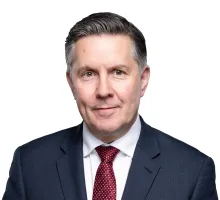
MARK BUTLER, MINISTER FOR HEALTH AND AGEING, MINISTER FOR DISABILITY AND THE NDIS: As we approach the end of the parliamentary year, I'm delighted that we're continuing to deliver on our promise for a stronger Medicare and a healthier Australia. Our agenda has rested on four pillars, and we're making huge progress in relation to every one of those. We said we needed more doctors, and in particular more GPs. This year, we are training a record number of junior doctors in general practice. When we came to government it was about 1,500 a year moving into general practice training. This year, it's more than 2,100. Next year, I'm confident we'll break that record again.
We've got our 137 Medicare Urgent Care Clinics up and running. Now they're fully up and running we'll see 2 million patients every year going through those clinics, fully bulk billed across seven days a week, 365 days year. And about half of them or more say that they would otherwise go to an emergency department, and we know how busy hospital emergency departments are right now.
On bulk billing, in just 12 months we're halfway to our 5-year commitment of a 90% bulk billing rate by 2030. We're well ahead of where we thought we'd be at the end of 2026. There are now 4,000 general practice clinics bulk billing every single one of their patients, that's more than we thought we'd have by 2028. I'm delighted at the response across almost all of the country around bulk billing.
And today, I'm delighted that the Senate passed our latest instalment to make medicines cheaper. As I've said a couple of times, when we came to government far too many Australians were saying that they were going without the scripts that their doctors had prescribed for them because of cost. And wave after wave of cheaper medicines has not only provided really important cost of living relief to households, it's also building a healthier Australia. The Senate passing the freeze on PBS script prices for general patients will make a real difference to household budgets, but it will also make sure that more and more Australians fill those scripts when they need to rather than checking their wallet or their bank account and seeing whether they can afford to. Happy to take questions.
JOURNALIST: Minister, as you say, you've been working on these healthcare measures. They’ve been a key, for quite a while now, they’ve been a key part of your pitch on cost of living. But voters are continuing to flock to parties like One Nation, senators flocking to parties like One Nation. Is it not working?
BUTLER: We're very confident that this agenda, particularly around stronger Medicare and a healthier Australia, is the right agenda for the country. It balances, not only cost of living relief, with the second objective of a healthier Australia. Far too many Australians were going without medicines, were not going to the doctor when they needed to because of cost. And our targeted, responsible, in this case relatively modest investment in cost of living relief through the MYEFO that we'll deliver and formalise next month achieves those twin objectives - helping out with household budgets and building a healthier Australia. And I think that's exactly the balance that the country needs right now.
JOURNALIST: Minister, are you, during this ERC process and heading towards MYEFO, are you frustrated that you appear to be the only Minister who is offering up genuine savings?
BUTLER: The portfolio I have the great privilege of holding is the biggest spender by far in the government, so it's not and in many areas, is recording very substantial growth in demand. Aged care, for example, we know what's happened with NDIS spending over recent years, so it's probably no surprise that a lot of the responsibility for finding responsible savings ends up at the door of the biggest spender in government.
Of the $60 billion in savings that were delivered in the 2026 Budget, more than $50 billion came from the Health, Disability and Ageing portfolio. They were responsible. I'm very confident they were the right savings to deliver. They weren't all supported by the Coalition, as we saw in the Senate this week. But I think we've got the balance right. We're investing where we need to invest; bulk billing, more doctors, Urgent Care Clinics. But where there is the ability of my portfolio to deliver budget savings to offset some of that important new investment, I think that's been the right thing to do.
JOURNALIST: What about some of your other colleagues, though? Could they be doing more heavy lifting?
BUTLER: I think as Jim and Katy as the Treasurer and Finance Minister have said, we've been pretty clear as an ERC that responsibility for delivering responsible budget savings rests right across government. And I've seen, as a member of ERC, minister after minister come in and present options for the ERC as they're expected to do. Unlike the Coalition which in their last budget delivered not a single dollar in savings, we've been able to reduce projected gross debt by $200 billion. We've delivered huge amounts of savings, 2 budget surpluses. And I think that the ERC, with the support of every minister in this government, has achieved that right balance.
JOURNALIST: Just on MYEFO, we know that the government is investigating use of artificial intelligence as a source of savings across the public sector. You see that in numerous reports, including Rick Morton in The Saturday Paper saying that Medicare is a possible source of savings using artificial intelligence. Can you talk about what sort of potential that has in your portfolio?
BUTLER: First of all, Medicare is operated in the government services portfolio. Katy Gallagher has responsibility for Services Australia and I think she's talked about where there are opportunities for artificial intelligence in government, I’m not going to cut across her responsibilities in that respect. Obviously, like every organisation, every business, every government, not just here in Australia, across the world, we are considering what artificial intelligence means for our operations. It would be irresponsible of us not to do that. But as to the extent to which that's been considered as part of MYEFO, you'll have to wait until then.
JOURNALIST: On the spending and saving in the Health portfolio. Yesterday, with the compromised deal with the Greens on private health you lost $1.5 billion of the $3 billion you banked. Does this mean you’re going to have to find another $1.5 billion to offset it elsewhere in the Health portfolio?
And almost on the reverse. The Coalition’s actually accusing you, based on evidence provided to Senate Estimates, of an under-spend in aged care of over a billion. Can you explain why the government spent less than it budgeted in aged care, given there is so much demand in that system?
BUTLER: There's quite a bit in that, Natassia. I'll start with the last bit first. The Budget in aged care has been growing very substantially. When I came to this job we were spending about $24 billion a year on aged care services. This year we'll spend $44 billion, almost double the amount of expenditure. Now, what we estimate that we will spend in residential care and in Support at Home does move around a little bit depending on our ability to get packages out on the ground, depending on the extent to which beds are filled by residents. That's not entirely within our control, it's not unusual for there to be estimates variations in every budget update. You'll obviously have to wait and see what those variations might be, but they really reflect what's happening out on the ground. Sometimes that's impacted by labour force supply issues in some parts of the country as well.
The trajectory though, is pretty clear. We're spending a lot more on aged care services than we did five years ago. We've tripled the number of home care packages since the COVID period. And still, because of what's happening in our community with ageing, still we're struggling to keep up with the demand. Every budget update will see a trend in aged care expenditure going up, and that's pretty much unavoidable given that the oldest of the baby boomers are now entering their 80s. Sorry, I’ve forgotten what the first question was.
JOURNALIST: Just are you going to look for that $1.5 billion elsewhere now?
BUTLER: I think it's a great pity that the Coalition talks the big talk on fiscal responsibility in the abstract, but when it comes to actually supporting a responsible measure that we bring into the parliament, time and time again they don't. Time and time again they don't. And that reflects, really, the approach they had when they were in government, particularly what you saw in the 2022 Budget. We'll obviously have to reconcile those figures in a future budget update. Frankly, I don't know whether there will be the time to do that in MYEFO. But at some point, we'll obviously reconcile that in a future update, and how we deal with that will become clear then.
JOURNALIST: How confident are you that we’ll start to see Thriving Kids properly rolling out next year? Have you got any progress from the states on that?
BUTLER: We've got really good progress from all of the states, with the exception of Queensland. And I really do call on the Queensland Government to come to the party and implement the commitments that Premier Crisafulli made at the National Cabinet Agreement where they received very substantial additional hospital funding, but also made a very clear written commitment to implement Thriving Kids. Queensland is a particular issue. In the rest of the country, states are already progressing the rollout and the ramp up of Thriving Kids programs.
Now that will happen in parallel with continued access to the NDIS, even for children who might in the future be covered by the Thriving Kids arrangements. There's certainly no capacity for families to fall between the two stools. But I'm really pleased with the way in which states are ramping up their services, often with additional Commonwealth funds.
JOURNALIST: Minister, a bigger picture question, compared with where we were a year ago, the government's doing much worse in the polls, the economy is worse. You’re facing the psychological blow of losing in the Victorian this weekend. Are you feeling gloomy?
BUTLER: No, I'm not feeling gloomy. I think I've recognise, as much as every Australian does, that this has been a really tough year. Most importantly, a really tough year for households and for businesses. The economic circumstances are really challenging. The Treasurer outlined that earlier this week, I think, in a really clear, articulate economic statement to the Parliament. Obviously over the course of this period of time we've seen another global war that's impacted prices right across the global economy, including here in Australia. But as the Treasurer also said, there were inflationary pressures in our own domestic economy that were becoming apparent towards the end of last calendar year as well.
I do not feel gloomy. I feel incredibly hopeful for this country. I know this is a country with some of the greatest opportunities on the face of the planet. I don't want to talk this country down in the way that some of our political opponents do. It’s got a great future, but is going, like so many other countries around the world, through a very challenging economic time.
JOURNALIST: On reflection on the private health insurance. Did the government get it wrong picking this fight, given that we've seen criticism from Greens all the way through the Coalition, accusing the government punching down on pensioners? What do you say to that criticism, and do you regret taking up fight?
BUTLER: No, I don't regret it. I think I've been very clear from the time we announced this, I actually pre-announced it before the Budget, that this is a difficult save. Reducing government support for any group in the community is a difficult proposition to sell. But I was very determined that we would do the responsible thing in our portfolio and find savings when we had to do so much heavy lifting into an expansion of aged care services. As I said in response to an earlier question, I'm really cognisant of the fact that almost all of the areas of expenditure I have responsibility for are experiencing big demand increases, some of them very big demand increases. I take the view that I've got a responsibility and government's got a responsibility to find ways to offset that new investment.
This was a policy put in place by John Howard. People have got used to it, I get that in over two decades, but one that I thought was increasingly difficult to justify when it was really important to find new money to invest in new services. Now I recognise the realities of the Senate. We've agreed to the amendments that pass the Senate earlier today. And as far as I'm concerned, that is done, we move on to the next challenge.
JOURNALIST: Minister, at the end of last month the Prime Minister gave Nicolette Boele an additional staffer, you know, in a quiet manner. That now means that the only independent in the House of Representatives who has less staff than her colleagues is Dai Le, she won her seat off Labor in ’22 and held it in ’25. In the Senate the only independent with less staff than her colleague is Fatima Payman, and she left the Labor Party. Is your prime minister prime minister punishing people that hurt his electoral chances? And isn’t it time that it hands that power to an independent body?
BUTLER: As I understand it, I'm not aware of staffing arrangements, but as I understand it the Prime Minister has, for quite a deal of time, held the responsibility that the current Prime Minister holds, and I'm not aware of those circumstances.
JOURNALIST: But do you believe he's been administering in the same way that his previous colleague, the Prime Ministers have? Do you think he has been appropriately handing out staff and not withholding staff for political gain?
BUTLER: Yes, of course I believe that my Prime Minister’s been behaving appropriately, exercising the powers that prime ministers have had for some time.
JOURNALIST: Given the PBS bill that just passed in the Senate, is that a case of basically recycling the greatest hits from successful election campaigning rather than doling out for new material given the way that the economic mallet is at the moment and people are crying out for extra ways to deal with cost of living pressures rather than measures that have already been implemented?
BUTLER: This is a measure that is going to make an impact on household budgets that would otherwise have seen medicine prices rise in four or five weeks’ time for general patients, those people who don't have a concession card. And we're really conscious of the need to focus on that group of Australians. The concession card cuts out about $40,000 a year for a single, that is by no means wealthy. And we saw in all of the data that that was the group increasingly going without the scripts that their doctors have prescribed for them, and going without to see the doctor because bulk billing rates for those Australians had plummeted as well. This is really just investing in programs that we've seen over the last four years work in those twin objectives of providing relief to household budgets and building a healthier Australia.
JOURNALIST: Minister, your colleague, former front bench colleague, Ed Husic, in the past week had raised the idea of Labor Party members having a better say in choosing the next leader when you need to do that. Do you agree with the sentiments he expressed?
BUTLER: I'm not sure anyone has been a longer supporter of party reform than I have in my 20 years on the national executive, my time as party president. I, frankly often against the right faction in the party, argued the case for members to have more say in the election of important positions in the party, whether that was the party president, or ultimately the party leader here in Canberra, and in state capitals as well. I'm a long-time supporter of that. As I think you know, Andrew, those rules were changed in 2013.
JOURNALIST: Minister, according to the One Nation Leader, it is a sign that One Nation is growing it’s support in the community. And you now have Labor MPs heading back to their electorates to pretty bleak receptions from voters. What’s your advice to them with the reality of the fact that One Nation grows its ranks on a day where you’re having to defend your economic record?
BUTLER: Firstly in relation to Senator Blyth's defection. This is an extraordinary vote of no confidence in Angus Taylor. We've got a frontbencher appointed by Angus Taylor himself only earlier this year, and a former president of the party in South Australia saying she no longer trusts the Liberal Party. If she doesn't trust that party, how can the Australian people? She's also said, and I think this is really concerning, that she felt physically unsafe as a senator and candidate for party president in a formal Liberal Party forum, to the extent she had to hire physical security or private security. And I think there's a very big question there for Angus Taylor about what he has done to intervene in the arrangements of the South Australian Liberal Party if a parliamentarian, a leading woman in that branch, felt physically unsafe in a formal Liberal Party forum.
JOURNALIST: What about the economic realities that your Labor MPs are going to have to go back and face an electorate very angry?
BUTLER: I've already addressed that. I recognise, every one of my colleagues recognises, that things are tough there and we are doing everything we can to get Australia through this global period of pressure and instability that we're all experiencing. And doing that in a way that maximises our opportunities into the future. No one's defecting from the Labor Party right now.
You can see that this is a dance going on between the three conservative parties to work out who has which place in the pegging order on the right wing. At the end of the day, they're all going to have the same agenda to cut Medicare, to cut wages, and to take this country backwards.
JOURNALIST: Minister, you made the promo talking about the Private Health Rebate, that that was a pre-announced budget measure. Considering how this year post budget has gone for the government, do you think there is merit in fronting up and doing more pre-announced budget measures since they’ve gone a bit more credibly here than they have for the Treasurer?
BUTLER: I think it's horses for courses. When I went down to the Press Club and pre-announced a number of measures that were going to be rolled out through the budget in my portfolio, I thought it was important that particularly participants in the NDIS, their families, providers, but most importantly participants understood the reasons why we were going to undertake the reforms to the NDIS that I announced, and give them some time to digest that through their representatives, to engage with the government about that. I think that was the right decision to take.
But look, budgets generally are announced on budget night. That's long been the practice of Australian governments of both political persuasions and pre-announcements have always been the exception rather than the rule. Thanks, everyone.
JOURNALIST: Are the South Australian Liberals now a party of cookers?
BUTLER: That's a question you need to ask the South Australian Liberal Party. I think it’s a matter of great concern in the broader political community that a former party president and federal senator has claimed that she felt physically unsafe in a former Liberal Party forum. And it doesn't appear to me that anyone in authority in the Liberal Party, most particularly the federal Liberal leader, has done anything about that. Thank you.