
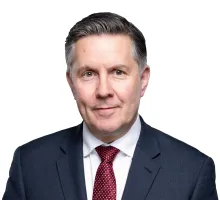
LISA CHESTERS, MEMBER FOR BENDIGO: Good morning. Welcome everyone. Lisa Chesters, Federal Member for Bendigo, standing here today with my good friend, Minister for Health, Mark Butler. This isn’t Mark’s first visit to Bendigo. He was here many years ago to open the Bendigo headspace, which we know is thriving and supporting young people. I mention that because that is just the calibre in what Labor Governments do when we’re in government, and Mark as the Minister has continued to deliver not just for Bendigo but for people all throughout regional Australia.
And we’re here today at our Bendigo Medicare Urgent Care Clinic. It is part of the original GP superclinics, which were again funded by our former Labor Government. but only became an after-hours, 100 per cent bulk billing service when Labor was re-elected, reinvested in Medicare and has reopened this space to be an urgent care centre. It is one of 137 around the country, and I'm very proud that it is here in Bendigo.
I've also invited Mark to Bendigo to also meet a number of our GP clinics which have transitioned and are now bulk billing their patients. Our record investment in Medicare is seeing a turnaround here in Bendigo. We’ve gone from just two clinics that were bulk billing all patients under the former Liberal-National government to now 38 clinics bulk billing all patients that come through their doors. This is an outstanding turnaround, and it’s because of this Minister and the Albanese Labor Government investing in Medicare. So welcome back to Bendigo, Mark, and I'll hand over to you.
MARK BUTLER, MINISTER FOR HEALTH AND AGEING, MINISTER FOR DISABILITY AND THE NDIS: Thank you, Lisa, and thank you for that trip down memory lane. I remember the opening of the Bendigo headspace, I think it was back in 2012 or thereabouts. One of a very big network of headspace services now that support young people and their mental health in their late teens and very early 20s in a way that generations before just never could even imagine. I'm so glad that we committed at the last election to expand and improve the services of the Bendigo headspace. It will be one of what we're calling headspace Plus services when we get to that investment over the next little while, and it will deliver even better care and even more support to young people in this terrific region of Victoria.
We are here to talk about a stronger Medicare, and it was an absolutely central commitment of our election in 2022 and our re-election in 2025, because as the party that introduced Medicare and has fought for it consistently over four decades, we were absolutely horrified at what we inherited when we came to government after a decade of cuts and neglect. Bulk billing was in freefall, and it was in freefall in this community as much as any other in the country. Bulk billing for people who do not have access to a concession card was down to 50 per cent. In 50 per cent of GP visits in this part of Australia, people without a concession card were being charged a gap fee. This is not a group of Australians with great wealth. The concession card cuts out at about $40,000, so people on still relatively low incomes were finding increasingly that because the last government had frozen Medicare rebates for years and years, they were being asked for a gap fee every time they went to the doctor. This wasn't only a cost of living pressure for them. We found more and more that those Australians were choosing not to go to a GP when they should because of cost. So not only a cost of living pressure, it was starting to impact the health of this community as well.
The impact of the bulk billing investments we've made over the few years are simply extraordinary in this community. No electorate out of the 150 electorates in the country has seen a bigger increase in bulk billing than this one, with only one exception up in Darwin. The numbers are, frankly, jaw-dropping. Those people without a concession card are now seeing bulk billing rates of well over 80 per cent, from just 50 per cent a few years ago to well over 80 per cent. IIn Bendigo and the surrounding towns, pensioners are now seeing bulk billing rates of around 94 per cent, when a few years ago they were down as low as 80 per cent.
That in such significant part is down to the way in which Lisa has advocated these reforms in this community. Local members matter. I see that across the country – where you have a local member with the energy and commitment to a stronger Medicare and cheaper medicines that we've seen since we started that investment from Lisa Chesters, you see results that are way above everything else that is happening in Victoria. While Bendigo had much lower rates of bulk billing than the average in Victoria a few years ago, bulk billing rates are now much higher than the Victorian average and much higher than the national average, in a significant part because of Lisa's advocacy. I'm really proud of the work that my friend and colleague Lisa Chesters has done here. She's put a lot of energy in this, a lot of her resources into promoting our reforms because she knows at a time of huge cost of living pressure for households, it is a really important issue for hip pockets. Saving money at the pharmacy counter because of cheaper medicines, knowing you can go to the doctor for free. It's also delivering a healthier Bendigo, and that's really what a Labor government is all about.
I just quickly want to say a couple of words about the urgent care clinic as well. We now have 137 Medicare Urgent Care Clinics open across Australia. Now that network is up and running, they will see around 2 million people every single year. Most of them would otherwise have gone to the local emergency department. I know the ED here at Bendigo is under significant pressure like every ED across the country. Not only are we giving more money to the Victorian Government to run their hospitals in a record funding bill that kicked off a couple of weeks ago. These urgent care clinics are taking that pressure off the hard working doctors and nurses up the road at the local ED, but they're also providing better experience for people who need to be seen urgently but don't necessarily need to go to a fully equipped hospital. I'm talking about parents whose kids break their arm at Saturday afternoon sport or falling off a skateboard – spending hours and hours at the local emergency department is not a great experience for them or for their child. Being able to come here, get expert care pretty quickly in their community, completely free of charge because everything is bulk-billed, is also a terrific service for this local community. It's already seen well over 20,000 people, and it will see more and more as the years go on, because we have made urgent care clinics in last budget a permanent feature of a stronger Medicare going forward.
Happy to take questions. Maybe I’ll take questions on these issues first, and then general issues of the day.
JOURNALIST: I just- why is it that bulk billing rates have increased in Bendigo specifically?
BUTLER: As I said, very significantly down to Lisa's advocacy. Across the country, Labor members are obviously committed to this. For Labor, Medicare is just such a central part of our reason for being as a party. Universal healthcare was hard fought for in this country over four or five decades, but we've cemented it as part of our social fabric. When we came to government, we were determined to restore bulk billing as a core feature of Medicare. For Labor, bulk billing is the beating heart of Medicare. Again, it has been strongly contested over the years. The doctors’ groups when we first introduced Medicare were very opposed to it, the Liberal Party was opposed to it, Peter Dutton tried to abolish it when he was the health minister. But we've built this up, we've put the dollars on the table, and Lisa's advocacy in this community has meant more practices have taken up that offer than really almost every other part of Australia.
JOURNALIST: Minister, talking about the strain on the hospital, last weekend, ambulances were ramped outside the emergency department for up to 12 hours. Do you think there's enough awareness about these clinics to help people know not to go to the emergency department and they have other options available?
BUTLER: Lisa's obviously doing a lot of work to spread the word in this local community. We're also putting money behind information campaigns. Most of them are targeted to particular communities, largely on social media, but a bit on billboards and radios and stuff as well. I'm not quite sure what Bendigo is doing, but local hospitals are generally publicising this as well. They know it's in their interest to have people come to an urgent care clinic if their case can be adequately and well cared for up here. That will develop over time, I think, as people become more and more aware of this.
I know in most communities I go to, this is now a topic of discussion at school gates. Parents know that this is a terrific option for them when their kid gets sick overnight and needs to be seen urgently, or falls off a skateboard and gets sprain or a break and they can't get into their usual GP. Awareness will increase. Now the network is fully up and running, it will take significant pressure off hospital EDs, but just as importantly, it will deliver that terrific care in a community free of charge that people can rely upon.
JOURNALIST: There's two medications that are at threat of being taken off the PBS for multiple sclerosis. Do you have any clarification on whether these medications will be taken off the PBS?
BUTLER: I've made my view clear. I want to see these medicines stay on the PBS. They're really important to many Australians who live with MS. The Pharmaceutical Benefits Advisory Committee, which is the group of medicines experts that effectively oversee the operation of the PBS and have done so for many, many years, they met last week with the companies. They're providing me with advice about the way forward. They are well aware of my views about this and I'm gathering that advice right now, and will be considering as soon as I can.
JOURNALIST: Patients are in limbo at the moment. Do you know when that decision will be made or announced?
BUTLER: As soon as possible. I've made it clear to both the companies and also to the PBAC that I want to see this resolved very, very quickly. I know the level of uncertainty and anxiety at this question the possibility that these companies would withdraw their medicines from Australia. I know the uncertainty and anxiety that that's causing many, many Australians living with MS, who've got great relief from these terrific medicines. I want to get the right advice. I don't want to do it too quickly, that I'm not getting the right advice. But I realize the level of urgency. I've made that clear to the companies and the PBAC.
JOURNALIST: Is the government considering any changes to the way the PBS prices medication?
BUTLER: Yes, we've got a range of work underway, partly and mainly because we received a once in a generation review of our health technology assessment systems recently. I've already started significant work on that late last year, which is underway right now. I've also been very clear that policy changes in the United States under the Trump administration about the way in which America prices medicines is having a very significant impact through the rest of the world and, in part, is due to some of these decisions you are seeing by major pharmaceutical companies to reconsider whether they bring medicines or keep medicines in the Australian market because of the impact that they feel it might have on the American market.
This is a very significant issue for us. I've been quite honest about that. I am concerned about the potential for these issues to have an impact on the access that Australians have traditionally enjoyed to the best medicines available around the world at affordable PBS prices. This is a significant focus of our government right now.
JOURNALIST: Is the lowest cost system the most effective if medications proven to work are at risk of becoming inaccessible?
BUTLER: We don't just have a system of lowest cost. We have a system of comparing new medicines to clinically relevant other medicines. That system, the comparative selection system, is under review right now, and there are different views in the industry about that, which I acknowledge. I do reiterate a conclusion that that health technology review came to, which is that our medicines policy has delivered terrific outcomes for Australia and quite sustainable prices for taxpayers. Our commitment, again as a Labor Party that introduced the Pharmaceutical Benefits Scheme and is committed to the equity that it delivers in access to terrific medicines, our focus is very much on making sure that for decades to come, Australians can continue to rely on the idea that the best medicines that are around the world are coming to Australia, whether that's the MS medicines we've just talked about, whether it's others that are being considered for withdrawal from the Australian market that I've talked about publicly.
JOURNALIST: Minister, speaking of the US President, overnight, he announced reinstatement of the blockade and further strikes on Iran. What's the government's response to this?
BUTLER: We've been very consistent about our views on this. We want to see this situation deescalate. We want to see the ceasefire that was concluded a little while ago to remain in place while the parties, particularly the US and Iran, continue negotiations to bring this conflict to a final end. This conflict, this war, can't end soon enough, obviously, for innocents who are caught up in it in the region but also for the broader global economy. It's reverberating right through every country in the world really, including here in Australia. We want to see the conflict brought to an end.
We're very concerned about the escalation of conflict over recent days, which in significant part is a result of Iran frankly attacking shipping again, trying to make their way through the strait, but also attacking third-party countries in the region. Iran has to allow free passage through the strait. We've been very clear, as have other countries, these are international waters and it's important that freedom of navigation be able to resume and then continue through the Strait of Hormuz.
JOURNALIST: Given the volatility, are you considering extending the fuel excise cut beyond 2 August?
BUTLER: We've made our position clear about this. It's a very significant piece of expenditure from the government, but it was put in place because of the real pressure that this conflict was placing on global oil prices and, through that, on households and businesses at the bowser. It’s had a really significant impact, I know, on household budgets being able to half that fuel excise and to extend some more moderate excise relief over the course of July. The Prime Minister and the Treasurer have confirmed, really since the beginning of July, that of course we continue to monitor this situation, and if we have to make decisions in the interest of households, we’d obviously look at that at the appropriate time. But that will be sometime in the future.
JOURNALIST: To what extent were hospitals impacted by the Telstra outage last week?
BUTLER: I haven't got a report on that. Obviously, we are gathering advice about the extent of that impact. I haven't heard any reports across the country of any particular adverse events that can be connected to the outage. We're very concerned about what happened. An inquiry underway by the relevant authority, ACMA, is going to uncover a lot of the reasons why that outage occurred and how it can be avoided in the future.
JOURNALIST: Just on illicit tobacco, a report on 7.30 last night showed the black market is now proliferating online. What is the government doing to tackle online illicit tobacco sites?
BUTLER: We'll have more to say about that later in the week when I'm with the Assistant Minister, Julian Hill. The enforcement issue sits in another portfolio, in Home Affairs. As the Health Minister, I've said I'm very concerned about the proliferation of illicit tobacco. Significantly, this is a law and order issue. This is an extraordinary revenue source for some very, very bad criminal gangs who are using that revenue to bankroll other criminal activity like cybercrime, sex trafficking, drug trafficking and the like.
As the Health Minister, I'm also worried that this is one of the major threats to our most important public health campaign. Smoking still kills more Australians than any other preventable cause – more than 20,000 a year – in spite of all of the progress we've made to get those smoking rates down. Whether it's from a public health perspective or a law and order perspective, we're doing everything we can to stamp out this criminal activity. We've lifted enforcement resources for Border Force and at state and territory level very significantly. I'm glad that Victoria and New South Wales have started to switch that enforcement activity on. We're monitoring this very closely.
JOURNALIST: Would you consider a short-term cut to the tobacco excise?
BUTLER: That's not something we're considering right now. I also have said that no one's put to government a particular sweet spot of the tobacco excise where illegal cigarettes would suddenly become uncompetitive when compared with the price of legal cigarettes. I understand the debate about this issue. We're obviously continuing to monitor that debate. No one has been able to convince us yet that there is a particular excise price level that makes illegal cigarettes uncompetitive. At the end of the day, this is a legal activity. It should be treated as a legal activity. People who are involved in it should not think that this is some harmless activity. At the end of the day, not only is it denting our most important public health campaign, it's providing billions of dollars in revenue to some very, very serious organised criminal gangs.
Thank you.
Media event date:
Date published:
Media type:
Transcript
Audience:
General public
Minister: