
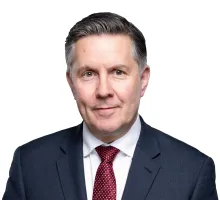
MARK BUTLER, MINISTER FOR HEALTH AND AGEING, MINISTER FOR DISABILITY AND THE NDIS: Good morning from the Royal Adelaide Hospital. There’s quite a crowd here but this is a really big announcement today, so I will hear a few voices about what this means for a number of different groups in our community. This year there will be more than 170,000 cancer diagnoses here in Australia and tragically more than 15,000 Australians will lose that battle. We are though, in spite of those awe inspiring numbers, we are making really serious in-roads in this community battle against cancer.
Part of that is due to healthier lifestyles, particularly things like the sharp reductions in smoking rates, but in significant part, it is down to some extraordinary treatments that are now available to patients. Treatments that do things that were really only able to be imagined not too many years ago. And in the field of big cancer treatments, there's no bigger beast than Keytruda. It’s the biggest selling cancer drug on the planet. It's been on the PBS now for over a decade.. One of the ways that cancer spreads is to create proteins that effectively shut down the immune system, particularly the operation of T-cells. And this checkpoint inhibitor, this PD-1 inhibitor, Keytruda, effectively kills those proteins and turns the immune system back on so that the body can fight the cancer. It's a very, very effective treatment. As I said, it was first listed on the PBS in 2015 and since then has been progressively expanded to different cancer types. Only earlier this year I announced the expansion to three new cancer types which covered some thousands, about 10,000 patients every single year. But as Christine Cockburn from Rare Cancers Australia will explain, there are still gaps, particularly for rarer cancers that haven't been the subject of a PBS listing.
Well today that changes. This is really quite ground-breaking today because from the 1st of September, Keytruda will be listed on the PBS for all cancer types at an advanced or metastatic level, and instead of having to tick a box of having a particular type of cancer, availability for this drug will depend upon a doctor's decision. The clinical judgement that Keytruda will help a patient with advanced or metastatic cancer fight back disease. This is something that follows a very similar decision that we took earlier this year to list the other big PD-1 inhibitor on the cancer market, which is combination immunotherapy called Opdivo and Yervoy that also benefited some thousands of patients. But having these two big immunotherapies now on the PBS for all cancer types, based on the clinical judgement of medical oncologists like Associate Professor Roy is a game changer and a huge stride forward, particularly in equity, which is at the centre of our national Cancer Plan.
As a result of today's announcement, around 700 additional patients will have access to Keytruda every single year. Without this PBS listing, that would cost them almost $5000 a script. It will now be available for $25. This is a huge step forward in terms of equity in cancer care. I want to thank everyone, particularly the company represented here by Chifumi for the hard work that they've done with clinical experts, but with our department to reach a solution that works for the company and works for the community to make this great stride forward in equity.
We're going to hear from Chifumi representing the sponsor company of Keytruda. Then we're going to hear from Associate Professor Roy, and then Angelo, Steve and Frances, who are three patients who were affected by this listing and then Christine Cockburn who runs Rare Cancers Australia, a terrific patient advocacy group working right across the country. Then we'll take some questions, and then after that, we’re happy to take news of the day. Chifumi.
CHIFUMI UMEDA, MANAGING DIRECTOR OF MSD AUSTRALIA AND NEW ZEALAND: Thank you, Minister. Good morning, this is Chifumi Umeda from MSD. We are delighted to be here on this very special day for immunotherapy and patients who are eligible for our treatment. MSD, our company, has been working for a decade to bring this innovative reimbursement scheme to Australia and we're very grateful for the cancer community who supported us along the way. It’s been a long and winding road but the outcome is the affordable and equitable access as you mentioned, Minister, and we're very grateful that we can come this day. Thank you, especially Minister, for you and your teams stewardship, the support, the vision to get us here and we're very excited for what we can do for patients in Australia. With this, I'd like to hand it over to Dr Roy.
DR AMITESH ROY, ASSOCIATE PROFESSOR AND ONCOLOGIST: Thank you, Chifumi. Morning, everyone. Immunotherapies like Keytruda harness the body's immune system effectively to detect and kill cancer cells, and has revolutionised the way we treat our cancer patients nowadays. Until recently access to Keytruda on PBS has been dependent on several assessments for different clinical communications. But with this listing now, clinicians like me would be able to use immunotherapy based on our clinical discretion, based on best clinical evidence out there and also will be used in ways for treating patients who we think have immune sensitive advanced cancers.
It is an important day. It is an important step in terms of improving access to our patients. Many Australians will be affected by this, but also in many ways, this will become affordable for patients who effectively have rare cancers which we’ll hear about in a second. I welcome this day and I welcome the Minister's announcement today. And with that, I would like to now hand over to our patient - who happens to be my patient, for the last 10 years or so. Thank you, Angelo.
ANGELO FIVRON, CANCER PATIENT: Nine years next month I was diagnosed with lung cancer and I had intense chemo and radiotherapy for a month, and they told me it was all clear. Six months after my left lung collapsed and the help arrived and the doctor said there’s nothing else we can do. A young student from the Flinders Medical Centre said there’s immunotherapy. They put me onto it and I’m still alive today. Thank you very much.
JOURNALIST: What does it mean to you to be able to sort of have a longer, happier life?
FIVRON: Deep down, I knew it was going to get better. I never panic, I never sorrow. But it would have cost me about, for two years, $370,000. I mean, that’s nine years ago. Well, I said, it's cheaper to buy a coffin. I wouldn't have that kind of money to get the treatment done. So he got me in as the guinea pig, I suppose, and that worked. Two years and I’ve been free since then.
JOURNALIST: Did you say it was lung cancer that you had?
FIVRON: Yeah, left lung. The cancer was the size of a walnut, they said, and it was very close to my heart, because they were going to cut me here. In fact, the specialist said it was too close to the heart.. My doctor said, why don’t we try chemo and radiotherapy for a month. They told me it was all clear. And six months after it come back. If it wasn’t for the immunotherapy, I wouldn’t be here today to talk about it. So I owe my life to him really, and the people that developed the drug. I hope they can help other people as well.
STEVE HOLMES, CANCER PATIENT: Thank you. Good morning and thank you for having me. My name is Steve Holmes. My brother and myself, we’re diagnosed with the same cancer, bile duct cancer called cholangiocarcinoma. And we both received a prognosis of six months. Graham unfortunately passed away in 2014 and two years later, I was diagnosed. I was diagnosed in 2016. I underwent 25 hours of surgeries including a burst aneurysm which nearly ended my life within minutes. After that, the cancer still came back aggressively across my liver and both lungs. And my oncologist was very quick to identify the profile of the tumour and align it to a brand new clinical trial out at the time. I went on that trial and three days after that first infusion all the pain was gone - I can sit up unassisted. I could stand up and walk out in the sunshine and then a few weeks later, scans confirmed that at my first surveillance that all tumours were gone. No tumours left. And I said naively to my oncologist, well, what happens now? And he said, Steve, go out and ride your bike, do something special with the opportunity you’ve been given. I’ll see you in three weeks. So the something special part of it did arrive. I decided that - as you can tell, I'm not very good at telling my own story - we would put it to work and we developed the Patient Navigator Journal, which is a patient and caregiver response system that helps people understand earlier so they can make earlier right decisions. And basically that actually helps patients survive and our families from becoming tomorrow's patients.
So what does this announcement mean that Mark Butler has made today. It is significant because people will now get the opportunity I have. My wife and I deal with thousands of patients. And they don’t get the opportunity I had and that's changed today. So thank you, Mark. I very much appreciate it.
JOURNALIST: Using your experience, what will this mean to other families now that have this opportunity?
HOLMES: I know that there’s lots of patients who don't have the opportunity and this will open up a significant doorway for them to have that opportunity. It will save lives because there are a lot of people out there who are unable and cholangiocarcinoma and chronic pancreatic cancers where they cannot get biopsies but they do have the markers and just don't know it.
JOURNALIST: And on the affordability front, I mean, it’s a huge saving. What does that mean?
HOLMES: It was unaffordable if you could get a hold of it to most people. Most people don't have that sort of money. So this is significant advancement. There will be people, lives saved out of this. We don't know how many, but people will have a life-saving opportunity that they didn’t have before.
JOURNALIST: When you were diagnosed what was the prognosis they gave you?
HOLMES: Six months. When I advanced to across my liver and both lungs I was down to weeks. I've been introduced to Keytruda through my oncologist.
CLAIRE HOLMES, WIFE OF STEVE HOLMES: Good morning. My name is Claire Holmes, I’m the wife of Steve Holmes. Just to talk about a caregiver’s side of things. It's obviously very daunting and emotional and overwhelming when people get a diagnosis of any cancer. And in our particular case, because we had known that Steve's brother had the same cancer two years prior, and had passed way, it was very, very daunting for us. I took on that role, obviously being his wife, of caregiver, did all the research I possibly could. Went to all his appointments, did as many things as you possibly can do for your loved one. And we were lucky enough to be given this opportunity of the clinical trial in 2017 and, as you can see, it’s worked extremely well for Steve. What we decided to do from there, since we were so fortunate, and many others weren’t at the time, was to set up a Foundation for this particular rare cancer. And what we've found is that there’s so many patients out there in Australia that just don't get access to these type of treatments. So the Foundation we set up, the Cholangiocarcinoma Foundation Australia, is to help those small group of patients that are diagnosed that just don’t seem to be able to get treatments like this easily. They just don't get told about a clinical trial or they don't have access to the treatment because it's unaffordable. This is going to be a huge game changer for patients that have this particular cancer and we're just so grateful that the Minister is able to act and to have this accessibility to our patients and caregivers that come to us daily, asking for help and we’re just so thrilled that we can now say this is on the PBS and this may help you extend your life like it has for us.
FRANCES, CANCER PATIENT: Hello. My name is Frances and I was diagnosed with bladder cancer back in 2015. I went to my GP straight away, didn’t ignore the symptoms and was treated and had surveillance for the next seven years. Unfortunately, bladder cancer by its nature is that it comes back very often. I had about four recurrences of high-grade bladder cancer. When I got to about 2022, my bladder wasn’t working particularly well so I decided to go with the operation to remove it before it escaped my bladder. Now I've had the bladder removed, which is working well for me and I'm now cancer free. But I'm also here today to represent the patients who have not been quite so lucky and live with advanced bladder cancer. This is where this combination of drugs is going to be a game changer for them as well. Two drugs working together that have proven to be very effective against advanced bladder cancer. Thank you to Minister Butler for this addition to the PBS.My message today to everyone is to don't ignore blood in your urine. See your GP, even if it only happens once because bladder cancer unfortunately is a less common cancer that is not often talked about and yet it is a cancer that unfortunately has been shown to, like other less common cancers has had a worse prognosis for patients in the last 20 to 30 to 40 years, survival rates have declined not improved. This is wonderful to know that this advancement has happened with treatment.
CHRISTINE COCKBURN, CEO OF RARE CANCERS AUSTRALIA: Good morning. Rare Cancers Australia exists because in Australia there is a cancer lottery. If you get the wrong cancer, you're going to get the short end of the stick when it comes cancer care. Two people can be sitting in a chemo ward receiving the same medicine. One of them is paying $25 copay on the PBS and the other one's fundraising, remortgaging, taking out loans to pay thousands of dollars. Well, that ends today with this announcement from Minister Butler and the Albanese Government. Rare Cancers Australia has advocated for many years to help express that these medicines, these immunotherapies, these extraordinary blockbuster medicines work across multiple different cancers. So the way that we currently recognise cancers on the PBS one at a time simply did not work for rare cancers. This is a total game changer. If a clinician wants to prescribe an immunotherapy, Keytruda today, tomorrow, they will not have to have a conversation about the price. They will not have reservations about suggesting what could be an absolute game changer, the survival rates that you’ve seen here with these incredible people sharing their stories. And so many people walking around having accessed immunotherapies at great cost are living normal lives, going back to raising their families and paying taxes and working. And now that will be so many more people will have the access to the equity of those types of outcomes. This listing on the PBS is an extraordinary shift towards equity, particularly for Australians with rare and less common cancers.
JOURNALIST: Could you maybe list some of those cancers, the rare ones that people might not have heard that it could help?
COCKBURN: Rare and less common cancers are actually more common than you think. They are over 250 of them but if you start at the top, less common cancers start with the brain, eyes, mouth, head and neck, bone cancers, sarcoma, thymic cancers, gastric cancers. They're either rare or less common. And if we sat around and waited for that long queue of patients and their indications, their cancers of get access, it simply wouldn't happen. This was the only way for equity to be introduced for those patients that have those really unusual and difficult to treat rare cancers.
JOURNALIST: We'll kick off your reaction to the One Nation election win in Secret Harbour, 30 years Labour have held that seat. It’s a pretty big defeat.
BUTLER: It's a very significant result, obviously. It’s a state by-election. It’s a by-election first of all, so by-elections have a particular character and very much as far as I could see, fought on state issues and reading coverage, some very, very localised issues. But this is a significant victory for the One Nation candidate it would appear. I'm not going to get into the commentary around it. That's really a matter for the WA Premier Roger Cook to lead given it was a Western Australian by-election. But at the Federal level, we’ll continue doing what we've been doing.
JOURNALIST: Given that the results from the South Australian state election earlier this year and now what we’ve seen in Victoria and in Western Australia, are there conversations going on in Canberra around the groundswell of momentum that the One Nation Party is dragging up from the grassroots all the way through?
BUTLER: The Prime Minister and many of us in Government have been clear about that. There are now three parties contesting the conservative side of politics, the Liberal and National parties and now One Nation. It's quite clear that there's really no world in which either of them can form government alone and so what you see now is the slightly awkward dance as they work out who is going to occupy which position in a new coalition between three parties rather than two. At the same time, we're getting on with our job as the Labor Government, governing according to Labor principles. You see that today, our focus very much on better health care, a stronger Medicare and a greater affordability for medicines, for visits to the doctor and a whole range of other things you will see through our tax cuts. And these are difficult times for Australian households and businesses. They have been hit by wave after wave of cost of living pressure. You saw from COVID, the inflation spike after COVID and then two wars on the other side of the world. We understand that households are under real pressure which is why for our four years in Government we've so focused on providing them with good targeted relief.
JOURNALIST: Tanya Plibersek says the Government should be looking very seriously at a UK style ban on strangulation in pornography. Do you agree?
BUTLER: Tanya's been an incredibly important leader in a conversation we need to have as a country. This is not particularly an Australian issue, this is something sweeping countries right around the world as young children, effectively young children are exposed to some extraordinarily explicit and in many cases, violent images on their phones and on their devices, before they've often had their first kiss as very young school children. They've often seen some extraordinarily confronting violent images and what that's doing is normalising, As Tanya has said, normalising some pretty appalling practises in among young people and we've seen that with some awful stories recently. I'm not going to add to what Tanya has said. She has been leading a really important conversation. She's doing a great service to the country. I know many parents and other Australians are looking at what their children are being exposed to and what that's doing to their sense of normal behaviour with absolute horror.
JOURNALIST: Minister, what’s the latest the Commonwealth have in terms of information coming out of Nepal? Is the Federal Government looking at repatriation flights for some of those families that are stuck over there?
BUTLER: The Assistant Minister for Foreign Affairs has provided some reports over the course of this morning. I don't intend to cut across them. Tragically, we've had an update to the number of Australians still unaccounted for. That's now a number of 42 in spite of the terrific news yesterday of a woman contacting and then being able to be returned to Kathmandu. As we engage more with tour operators in Nepal, we are just refining those numbers. That's among I think 3000 people across different country groups, obviously Nepalese themselves who are unaccounted for after this horrific natural disaster. We're doing all that we can. The Minister for Foreign Affairs spoke with her counterpart on Friday night. Arising from that, we have committed $5 million through NGO aid organisations to contribute to the aid effort. We’ll continue to talk to the Nepalese Government about what else that we can do and we've deployed additional consular resources, other crisis resources there to assist both with the recovery effort for the Nepalese but also with ensuring that we can do everything we can to support Australians who are caught up in this.
JOURNALIST: Do you support a moratorium on the import of smart glasses?
BUTLER: I'm not going to add to the commentary and positions put by the Attorney-General here because she has been very proactive in expressing a sense of deep concern and among many, frankly horror at these devices. I'm not quite sure what purpose they serve the community but I do know they are a huge bad step in the infringement on our privacy, driven by the profit motive of big tech. I have the fullest possible support to the Attorney-General for the way in which she has taken on this development. I think they serve no useful purpose. They are a terrible development in our society, just for the profit of big tech.
JOURNALIST: Minister, one a bit closer to home, the South Australian Government, announced late last- late this week that the proton therapy unit next door, they're looking to take control of that project but stopped short of the Federal Government's support. Will the Federal Government be looking at subsidising that should it get up off the ground, or where does the Federal Government now sit in relation to the State Government taking ownership of that particular area?
BUTLER: I think that's a good development. This is a really critical but very complex treatment modality particularly, at the moment at least, for children with cancer. It's certainly best that treatment modality when it does come to Australia is run by health systems rather than a research institute which was the original design of this project here in Adelaide. So I applaud the State Government for doing that. This has been a real tragedy because the original contract that was entered into some years ago hasn't been able to be delivered by the company that was contracted by the former state government. Taxpayers have lost a lot of money from that failure, but more importantly children haven't been treated with this cutting-edge treatment here in Australia because of those delays that were a result of that failure. Now we send a lot of families overseas, particularly to the US to receive proton therapy in American hospitals. We want to see that treatment modality here Australia. I'm engaging with the South Australian Government. They're still keen to see it located here in Adelaide, if that works for them.. There's also a proposal from Melbourne which we're looking at very carefully as well. It may well be based on the advice I have that there’s sufficient patient demand in Australia for two proton therapy units, one in Adelaide, one in Melbourne, but we're still working through that. This will be a significant budget commitment by all governments that are involved. I want to make the point that if it were here in Adelaide, for example, only 7 per cent of the patients would be South Australian. The rest of them would be coming from other states at significant cost to the state that happened to be operating the facility here in Adelaide. So there’s not just work that has to happen between the Commonwealth, the South Australian and Victorian governments. I think it’s a conversation we have to have with all other states whose people, particularly whose children and parents, will benefit greatly when we finally get this modality here to Australia. We must have this treatment here.
JOURNALIST: But can you put a timeline on when it will come?
BUTLER: No, I can't put a time frame on it. Now we've got some clear proposals from the two state governments. I've gone out to other states to see after the failure of the original project here in South Australia, to see whether other states have an interest in partnering from other governments to deliver it here. It’s clear that the Victorian and South Australian governments are the leaders here in proposals and we're working through that, it will be a significant commitment though if we do that so it's not something I can magic up quickly.
JOURNALIST: When you mentioned before only about 7 per cent would be South Australian patients, the rest would ideally come from across the country. Would subsidies from a federal level then assist with that, with South Australia bearing the load of if it does get up?
BUTLER: We understand the Commonwealth would have to lean in here. Under the last project which failed, the Commonwealth effectively gave the state money to purchase the machine itself, about $68 million. Most of that money has been lost as this company has collapsed around the world. But the Commonwealth would obviously have to lean in here, would pay Medicare rebates for the treatment. It would be delivered by the state system where we contribute substantial amounts of the cost as well, but this will be a national capability. It may be located in Adelaide but it will be a national capability. And that needs to be recognised by all governments, not just the South Australian and Commonwealth governments.
JOURNALIST: On the Federal Government's plans to scrap increased rebates on health insurance for people over 65, the South Australian Government is warning that could add stress to the public health system. Will it?
BUTLER: I don't agree with the South Australian Government or the other state governments that have put that view. They don't have their own modelling as I understand it. Our modelling indicates there will be a very modest impact on private health insurance membership, which will continue to grow in spite of the announcement that I made a few months ago. I do make the point that when we do these things, affected industries tend to put out modelling that is relatively alarmist, as I said last week. The Private Health Insurance Association still has on their website modelling that indicated when this was first means tested that 1.6 million people would leave insurance, that 850,000 additional people would go into public hospitals. None of that happened. And I'm very confident in the modelling that we have that it will be a very modest impact both on insurance membership and any flow on through the rest of the health system. Indeed only a couple of weeks ago the University of Melbourne, so not the industry, not the government, but the University of Melbourne put out modelling about the impact of this change that indicated that even the Commonwealth's modelling was too significant. It would be an even more modest example.
JOURNALIST: Do you think this is fair for over 65s?
BUTLER: This is a hard decision I would like not to have had to make if the budget were in a position to fund everything else that we need to do but we need to expand aged care services very, very substantially right now given what's happening to the ageing of our population. Every dollar saved in this decision will be ploughed into more aged care beds and more aged care packages. And what the decision will do is return to the original design of the private health insurance rebate which was to pay the rebate to everyone equally rather than have a distinction based on age. Now people living next door to each other on exactly the same household income will receive the same rebate no matter what their age.
JOURNALIST: This is regarding your funding to redevelop Jubilee Reserve. Are you aware of the concerns raised by the Northwest Junior Soccer Association?
BUTLER: Yes, I am. And of the recent statement made by Football SA as well.
JOURNALIST: Okay, so they say that the new winter field will reduce their capacity from 15 pitches to nine and so they've been forced scrapped their 2027 season and beyond unless they find suitable pitches. Are you okay with this?
BUTLER: Well I'm not going to be in a position where school soccer is played off against the understandable ambitions of the only girls and women's soccer club in this state which does not have a headquarters. Now, we were informed on Friday that Northwest Soccer Committee has decided not to support schools continuing a competition in the Western suburbs next year, but Football SA, who was not informed of that decision by the existing committee came out within hours and said that they will guarantee a school soccer competition in 2027. And I think that is a good thing, to have the peak soccer organisation in this country indicating that it will work with the local council, which owns all of these lands, obviously. They're the ones making these decisions with the support of the Commonwealth and state governments. But it's a good thing that South Australia's peak soccer organisation, Football SA, has decided to support school soccer in the western suburbs as they have for some time in the eastern suburbs.
JOURNALIST: Okay, thank you.
Media event date:
Date published:
Media type:
Transcript
Audience:
General public
Minister: