
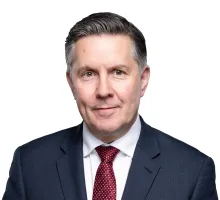
MARK BUTLER, MINISTER FOR HEALTH AND AGEING, MINISTER FOR DISABILITY AND THE NDIS: Thanks everyone for coming. This is a really exciting opening here at Estia at Findon. Estia is now the biggest provider of aged care services in South Australia. Here in the western suburbs, it already has the large Lockleys facility of 120 or so beds. This will be a large facility, 124 beds. The averaged-sized facility across the country is 75 beds, so you get a sense that this is a big, modern, state-of-the-art facility, and it's much needed in the western suburbs. Estia will also be taking on some other facilities that are currently run by Anglicare over the coming short while, including Grange which has been a long established aged care facility in the western suburbs.
This is the sort of construction we need not just in South Australia, but right across the country. Recently, we provided five capital grants to allow additional funding, including a grant to Estia out at Salisbury to allow them to expand one of their existing facilities. We need more beds. We've been doing everything we can to support the modernisation and expansion of aged care services since we came to government. In the year I was made the Minister four or five years ago, we spent $24 billion on aged care. This year, that figure is $44 billion. We've tripled the number of home care packages. We've expanded the number of staff, delivering 8 million additional minutes of care every single day. We have more nurses back into nursing homes as well. But we do need to see an expansion of residential aged care, relieving pressure off our hospital system, providing the sort of care and dignity that older Australians who built this country deserve. But I'm delighted to see an example of exactly what we need here in my own community of the western suburbs of Adelaide at Estia Findon.
And I'll ask Yogi just to say a few words about the terrific services on offer here.
YUGESHWAR SHARMA, HOME CARE DIRECTOR: We are offering a few services as Estia Findon. I look after the home care side of the business, so dealing with the clinical care governance and all those sorts of things. So we have specialised services, allied health services, doctors, GPs that look after the residents, and we do have the other services as per the resident choices. So there are a few more services that also they can be explored.
JOURNALIST: Thank you very much.
BUTLER: Any other questions?
JOURNALIST: You said that you have your eye on this facility for your twilight years. What’s attracted you to perhaps living here someday?
BUTLER: I've been going to facilities for well over three decades, and they've just changed so dramatically. They used to be shared rooms, now they're single rooms with ensuite. They've often got balconies. They've got terrific dining facilities, breakout areas for residents to go and get some quiet time. But particularly, what you notice is walking in the front door. They used to be very forbidding places. Now, they're very welcoming. They'll often have a cafe at the front so that residents are able to sit there and have some coffee and some cake with their kids and with grandkids, who instead of feeling scared of going to these facilities, which is really what happened four decades ago, they feel really welcomed. And so, we need more of them. But what we've seen over the time I've been involved in aged care is quite a transformation about the type of facility that older Australians have access to.
JOURNALIST: Are the 124 spots available here already filled?
BUTLER: I'm not sure whether they're filled. If they're not filled, they will be very quickly. Aged care facilities in this part of the country are in high demand. There are some residents who've already moved in. Still a very new facility, and over the coming weeks, they'll progressively be moving more and more people in to the point where it will be full.
JOURNALIST: Obviously, this is a great step forward, but we've got more than 500 elderly Australians now stuck in our hospitals waiting for a bed. The Government was up this morning, State Government, talking about investment, more needed from the Federal Government. Is there anything else you can do on your behalf to fix that?
BUTLER: I've been honest we need more building. And since we came to government four or five years ago, we've almost doubled the amount of funding going into aged care. We've poured $25 billion additional funds into hospitals to help them deal with the pressure that they're feeling through an ageing population. We've opened Urgent Care Clinics, which have seen 4 million patients now, most of whom say they would have gone to the local emergency department., again, taking pressure off the EDs.
But I've said we need more construction to happen. We've been very successful in tripling the number of home care packages people receive at home, but we need more facilities like this built. We're trying to make sure we have the right settings in place to support that investment, but it's not happening as quickly as I'd like. It's not happening as quickly as state governments would like as well.
JOURNALIST: How long is it going to take to build the 500 beds that needed and more so by the time they are built?
BUTLER: In part, that really depends on decisions by companies like Estia, the big church and charitable organisations, and we're talking to them about understanding what they need. I mean, we've provided them with huge amounts of additional funding over the last four or five years. We recognise there are still some elements of their business model that we need to talk to them about to really make that investment viable and worthwhile for them. But you're starting to see that building happening with the facility behind me. We've provided capital grants, particularly here in Adelaide because we recognise that Adelaide doesn't have as much investment as you see in some of the bigger cities like Melbourne and Sydney.
JOURNALIST: Do you think South Australia gets its fair share?
BUTLER: We provided more capital grants to Adelaide than other capital cities earlier this year, recognising that relatively low level of investment. At the end of the day, a provider like Estia or one of the church providers, if they set up a facility in Adelaide, they get exactly the same amount of money that they'd get in Sydney and Melbourne. We just, right across the country, need to see more of that investment. We have a very big growth in demand for aged care right now because that big group who were born as the soldiers came back in the mid to late 40s, they're turning 80 literally as we speak, the 1946 babies, the 1947 babies, and they're starting to need the sorts of services you get in facilities like this one.
JOURNALIST: On those stats, the one you there about our need for the next 20 years, what was that?
BUTLER: An average-sized facility needs to be opened every three days or so for the next 20 years. This is not a short-term investment bump that we need. This is a long-term investment expansion we need for a couple of decades because that baby boom didn't last just a few years as we saw in many other countries. It went on for decades right up until the mid-70s. The sort of expansion in aged care services that I'm talking about now is really going to dominate this area of policy for a couple of decades.
JOURNALIST: That's pretty daunting. Do you think that's achievable?
BUTLER: I think it is achievable. We've got the right providers who recognise now what sort of model that they should be delivering to older Australians. Those numbers that I talk about still reflect the fact that more and more people will be receiving care at home than used to be the case. Still though, we'll need that sort of investment in residential facilities. Now, we've got a challenge of finding the land in the big cities. These are big places. There's 124 people who will be housed here. In some parts of the country, those buildings are going to have to go up more than they did perhaps 30 or 40 years ago when we were building big, sprawling single-storey aged care facilities. There are challenges not just for us, the Commonwealth who have responsibility for funding this sector. There are challenges for state governments and for local councils to get their planning settings right as well. I acknowledge the Malinauskas Government has made some very welcome changes to their planning laws to prioritise approvals for aged care facilities. I'd like to see all of the state governments do that.
JOURNALIST: What's your message to the 400, 500 families that are waiting with their loved ones stuck in a hospital bed who may think that the Federal Government's just hasn't been acting fast enough to resolve the issues?
BUTLER: Our message and my message consistently has been, we're doing everything we can to get you the care that you need in the right care setting, whether that is at home or whether it's in a facility like this or something somewhere in between, a sub-acute type facility. I've been honest about the fact that we are struggling to get the investment levels that we need to see over coming years, and that is having an impact on our hospital systems. I've tried to be honest as I can about that.
JOURNALIST: And what about concerns that 3,000 beds are being shelved because of cuts to the Australian Aged Care Classification price coming in below inflation?
BUTLER: I think what that story reflects, and all I've seen is a media report of that, what that story reflects is the Government's decision to pass on a decision of the independent pricing authority that prices aged care. Now, that's a reform that was put in place some years ago. Frankly, it has meant over the last several years that aged care providers have got very good increases in their funding levels, much better than used to be the case, I know under the old funding arrangements. What we've done is pass through a decision of the pricing authority. I recognise that we're continuing to talk to providers. We're very interested to know what sort of funding arrangements will ensure that they are operating at a level that allows them to invest in new stock like this.
JOURNALIST: So just to be clear, you've seen really the Government is doing all it can. So there's nothing more that can be done for these hundreds of families that are stuck in hospitals?
BUTLER: No, there is still one or two pieces of the jigsaw puzzle we're talking to the providers about and that particularly is around capital assistance for some providers that don't have the capital available. For example, the Estia appears to have had to make this investment possible. Whether that takes the form of additional capital funding of the type that we announced earlier this year in South Australia, that's something we're still talking through with providers.
JOURNALIST: And what's your reaction to the state government here and probably also in other states blaming the Federal Government and the aged care crisis for ramping and hospital crowding?
BUTLER: Yeah, I've obviously seen particularly the coverage of the South Australian Government here. There's a bit of that around the country. We have pretty frank and honest discussions about the pressures right across the health and social care system. I've tried to be honest about what I see as our responsibilities, as a Commonwealth, to ensure that aged care is expanding quickly enough. At the same time, I do want to reiterate we've provided record levels of funding to state governments, including because the offer we made for additional funding into aged care was rejected by them and they wanted to take the money into their hospital system instead.
I'm willing to take our fair share of responsibility for what is happening across health and social care because of that aged care demand issue that we have. But I don't think Australians are going to be very patient with state governments who blame every single problem that exists in our hospital system on aged care. That is simply an overstatement of the issue. And I think, I would caution against state health ministers thinking that every single thing that goes wrong in their hospitals, for which they have operational responsibility can be sheeted home to an aged care issue that I've tried to be very frank and honest about.
JOURNALIST: Just one on another topic. Minister, do you have any information about a fire at an NDIS home in Elizabeth this morning?
BUTLER: Sorry. Can you say that again?
JOURNALIST: Do you have any information about a fire at an NDIS home in Elizabeth this morning?
BUTLER: No, sorry. I've been at events. I haven't even heard a headline about that. So, I'm very sorry about that.
JOURNALIST: On the snowy hydro, does Labor need to accept responsibility for the cost blowouts?
BUTLER: I think what this shows, this latest update shows, is that frankly the cost estimates that were put in place when this project was first initiated and Angus Taylor was the energy minister were completely unrealistic. This is an incredibly complex project to deliver. Geologically, the drilling involved that amounts to about 40 kilometres of drilling as I understand it is incredibly complex and incredibly expensive. Obviously, there's been some escalation of construction costs over the last few years, but what we have tried to do is to bring to this debate the most complete set of costing estimates that we can do. And that's not what we had several years ago. This is still an important project for grid stability. It's still going to be an important way to keep energy bills down over coming years and decades. But frankly, it was underdone. It was under costed. There was not enough rigor in the work that Angus Taylor did on this.
JOURNALIST: Does the $25 billion price tag now make you question its worth for communities across the country?
BUTLER: Obviously, this news is not welcome, but it really reflects some honest hard work done about the costings involved in delivering a project as complex as this, but it remains a very, very important part of the future of the grid in the national electricity market.
JOURNALIST: Minister, may I ask a question about Katherine Bennell-Pegg who’s put in an offer to the European Space Agency. We’ve clearly found some money?
BUTLER: Yeah, that's right. And the South Australian Government's been terrific in providing some additional support for that. Philanthropists have come to the table, as I understand it, with several million dollars in pledges as well. Unfortunately, we haven't seen that same level of commitment from other state governments. I think we'd all love to see Katherine be a part of this project and be able to take up this offer. But I'm sure the relevant minister will have more to say about that in due course.
JOURNALIST: How can the government justify the spending?
BUTLER: This is something, I think, we would like to see all governments, this is not just a Commonwealth Government issue, all governments recognise the return on investment that we would get from having one of our own take part in a space mission. This is a really important thing for our country's future. The message it sends to young Australians, including young girls and young teenagers, about the importance of science. But the Minister will have more to say about that due course. Thanks everyone.
JOURNALIST: A couple more if you don’t mind. Are there plans in Parliament next week for tributes to Helen Haines?
BUTLER: I think they're still being developed. Obviously, we'll be talking across the aisles about that, talking to Helen's family about that as well. I don't think they've yet been final. But when they are, they'll be announced either by the Prime Minister or the Leader of the House, I imagine.
JOURNALIST: And has this dirt sheet on Helen Haines prompted any introspection? Is the practice of pulling together these types of documents part of the problem?
BUTLER: That’s your description of this document that has been reported. I know that a couple of Helen's teal colleagues who sit with her in the parliament have rejected that characterisation, have said that this isn't a non-issue. And what I've said earlier this morning is that what really this reflects is a debate that happened some time ago, couple of months ago, I think, about election commitments that were made by all lower house members of Parliament, whether they were coalition government, or crossbench MPs, relationships that people might have had as patron, or life member, or honorary member to these organisations. It was done in an open way. It was done in the Parliament. It was done through the media, often driven by the media. And it was pretty unremarkable, I have to say. I reject that characterisation. I don't think it's the right characterisation of what happened during that debate.
But more importantly, I feel very strongly that if people want to have a debate about what happened back then, over that couple of months ago over those days, when there was debate in the Parliament and the media. Sure, let's have that. But do we have to have it in this week of all weeks? When I thought what we were all trying to do was to send all of our love and our energy to Helen and her family while she remains in a hospital bed in a critical condition.
JOURNALIST: So you wouldn't just write a letter and email sent directly to journalists suggesting questions for Helen Haines [indistinct] dirt sheet?
BUTLER: No.
JOURNALIST: It’s looking like Matt Canavan might contest Capricornia. Does this reflect concern for the threat posed by One Nation across the divide?
BUTLER: Matt Canavan's decision around candidacy doesn't reflect anything within the Labor Party. So you'd have to ask Matt why he's doing that, but I wish him all the best.
JOURNALIST: Just one more. Victoria has record low number of beds for mental health patients. Following the attack on Helen, how much of a concern is it that there's potentially not beds for people that do pose a threat to the community because of their mental health?
BUTLER: I don't want to go into the circumstances of the gentleman who's been charged for this horrific attack on Helen. I'm going to steer a very wide berth away from that. But I think, for some time, we've known across governments that there is unmet need out there for people with severe and complex mental illness. Mental Health Ministers are meeting in a couple of hours’ time, which I'm a part of. Our third meeting of the year, we'll have another meeting in December, addressing those very issues. We've expanded services dramatically.
Obviously, we're not responsible for beds, those are delivered by state governments. But we are responsible for a lot of community services that people with more severe and complex mental illness often require. We've expanded those services and we'll continue to do that wherever we have the opportunity. Thanks everyone.
JOURNALIST: Has this alarmed you that further action is needed to provide more mental health beds?
BUTLER: I don't want to connect what is a really important community debate to this issue at a point in time where Helen is still in a critical condition in hospital and while charges are being laid by police authorities. Thanks.
Media event date:
Date published:
Media type:
Transcript
Audience:
General public
Minister: