
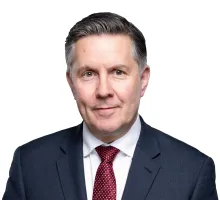
MARK BUTLER, MINISTER FOR HEALTH AND AGEING, MINISTER FOR DISABILITY AND THE NDIS: I'm delighted to be home from a couple of weeks in Canberra, in the beautiful western suburbs of Adelaide, here with my long-time friend and colleague, the State Minister Nick Champion, for another really exciting announcement about the partnership, the really productive partnership between our two governments, the Albanese and Malinauskas governments. I think it was about 18 months ago we were exactly here announcing some funding for our housing support program to facilitate developments like this. Funding that's able to help with the costs of sewerage connections, water connections, road connections and the like. This development here in Seaton is a really exciting part of the urban renewal story about beautiful Western suburbs, but it's also going to make a huge contribution to the supply of public and affordable and social housing. And Nick is doing such a terrific job leading that here in South Australia so I'm delighted to hand over to Nick Champion.
NICK CHAMPION, SOUTH AUSTRALIAN MINISTER FOR HOUSING AND URBAN DEVELOPMENT: Thanks Mark, and thanks for your local advocacy and for the Albanese Government's national advocacy for housing. And it's really important, 1,200 homes across the state have been built in partnership with the Albanese government through their HAFF fund in this instance. And what a difference it makes to this site, 42 affordable apartments going up next door to public housing apartments, which are funded by the state government, and market apartments and homes in this first stage of Seaton. And so what we see here is a mix of housing, public, community, private, which will help us build our way out of the national crisis.
The only way you can fix the national housing crisis is to build more homes. Every lever we have in South Australia is focused on the supply of new homes and building of new homes, whether they be public, community or private. And the partnerships that we can form with the Albanese Government, providing vital funding in this case through HAFF, but also through water, sewer, infrastructure funding that they put on the table. And our partnerships with community housing providers like Junction, Maria’s here today, and she’ll say a few words about community housing. But all of that makes for a better mix of housing, more new housing, the rebirth of suburbs like Seaton. And importantly, housing supply going in that will help resolve the housing crisis, which comes in two forms, a crisis in ownership and a crisis in rental. And it's important that we free up the rental market so we have downward pressure on rents and that's what community housing provides. These rents will be 75 per cent of the market rent which will rise downward pressure on rents across the state. And of course, co-located next to the public housing which is vital for people [Indistinct].
So this is great news for South Australia, great news for Seaton, and it's really good municipal for community housing as well. I'll ask Maria to say a few words, and then we'll go to Jim.
MARIA PALUMBO, CEO OF JUNCTION: Good afternoon everybody. I'm here representing Junction but also the community housing sector, who has been a major beneficiary to this program and it has been a game changer for us. Junction's been successful in securing more than 400 new apartments from this program, and that's new rental, affordable rental houses, both social and key worker housing that would not be available but for this program. And all of these apartments are coming out of the ground as we speak, some are already being tenanted by people who are incredibly grateful for the opportunity to have stable housing, and I think that's the point. This housing is not about just having a lower cost to the market rent, it's stable, it's long term, it's going to be affordable for a minimum of 25 years, so that people can settle into their homes and not have to keep moving because they're in the rental market. Because there's so many more working people who are just not going to get access to home ownership anymore, and that's what we're doing, we're creating new supply for those people.
MIKE WHITING OAM, EXECUTIVE CHAIR OF BADGE CONSTRUCTIONS: We’re a South Australian locally owned, family owned business and we're pleased to be here because we started 43 years ago just down the road. So I didn't think in 1993 that we'd be here doing this sort of thing today. But these 42 units will be delivered in about 12 months, which is about- a bit less time than it takes to build your house at home. So look, it's great work for us, we've got a really good team and we're looking forward to seeing you at the opening in 12 months time. Thank you.
JOURNALIST: Maria, just quickly. You talked about the long term, people having rentals in the long term here. What type of homes are they going to be moving into that can help them out in the future? What type of, what can they expect?
PALUMBO: So these are rental properties. In the main, they're medium and high density. And the idea is that we locate them really well so they’re located in built up areas that have got mixed precincts near retail, near schools. So every single project you'll see has been considered about location and medium infill. So the properties that we've been able to put on the ground in the first two rounds, super well located areas, and the key workers that we're now housing, we've been gobsmacked at the interest and the level of demand for that housing. Like, we are filling buildings within a week. It's been incredible, but that just shows you how much this is needed, and how many people are out there desperately needing something secure, like this offers.
JOURNALIST: They are so close to shopping centres, schools and that, what will this mean for them?
PALUMBO: It's just game-changing for them. Like, where they're living, they're next to transport routes, they're next to lots of amenities. So, you know, places like Prospect on Churchill Road, places like Unley, places like Tonsley, but it's about the stability. People don't have stability when they don't have much home ownership, and this country needs to actually build rental assets that actually are about long term stability and not constantly moving people out of their homes. So that's the most important thing that they tell me that matters to them.
JOURNALIST: How do you go about finding the right sort of people to live in these rental apartments?
PALUMBO: Well, the demand is huge. So what we do is we select people that can pretty much live in this form of accommodation but in a way that harmonises the community. We see these buildings as vertical communities. We are there as a manager for long term, and we’ll constantly curate that community and manage it so that they can live well and live in harmony together and be part of the local community, because they can really settle here.
JOURNALIST: You must get thousands of applications then?
PALUMBO: Yeah we do.
JOURNALIST: How do you sort through that?
PALUMBO: The same as any rental property. So we do this, we put them on realestate.com, people apply, we interview them, and we look at suitability for the accommodation that we're offering. But also we carefully curate a building to make sure that the mix and profile works together well, and then we're a long-term manager of that place. And so these buildings will be coming along and online more and more as this program starts to actually be completed. By 2029, there'll be 30,000 new houses across the country from this program, and we're really hoping that governments on all sides of politics continue this program, because it is an absolute game changer for people.
JOURNALIST: 75 per cent of the market rent, how much will these people save a week in rent?
PALUMBO: Significantly, because the other part of, we'll reduce the cut of market rent to 75 per cent, but the other thing that we do is we, because we're a community housing provider, that is not for profit, we will make sure that whatever their income is, they don't pay more than 30 per cent of that income for their rents. That means that their cost of living is more manageable. So those two things are what we access when we're housing people.
JOURNALIST: So you take people on quite low incomes as well? Do they have to be working?
PALUMBO: Yeah, really low. No, no, no. So the income threshold is quite low. So for an individual, it's kind of around $65,000 -$70,000 is the normal income ranges for people that are coming into this form of housing. And if you look at the price points in the rental market right now, they cannot afford rental.
JOURNALIST: This has been a historic area in South Australia for such a long time, how much is it changing now in your eyes and the government’s eyes?
CHAMPION: Well, this is a major redevelopment. It’s going from around 400 homes to 1,400, so there’s going to be amazing change through here. We had the old traditional work; housing trust houses, small houses, big blocks, not great public housing for today’s tenants, really fit for a previous era. And what we’re getting is 1,400 homes-plus, and it comes in all forms; apartments, both public housing and community housing, but also a arrange of market housing as well and market apartments in the later stages of the project. And what you see here is a pipeline of housing, a new community forming here, and it’s close to public transport, close to shops, close to town. It has everything that you would need, good upgraded high school as well. So this is going to be a great place to live for a range of incomes, a range of opportunities, and it’s that mix that makes Australia and South Australia in particular a great place to live.
JOURNALIST: There’s been allegations that a far right influencer has been paid to harass candidates during the federal election. What’s your take on this?
BUTLER: These are really serious and troubling stories. We’d already heard a lot of evidence about the coordination between the Liberal Party and the Exclusive Brethren. Frankly, to disrupt activity at polling booths of last year’s federal election, and that was frankly concerning enough. But the reports out this morning about far right figures being paid by the Exclusive Brethren to go and intimidate the Prime Minister and other high profile public figures at election events is, I think, a new low for our democracy. These reports indicate in my view a clear conspiracy to disrupt our democracy and our elections, and frankly, given the involvement of the Liberal Party in that polling booth activity, Angus Taylor and his party now have some very serious questions to answer about the degree to which they were involved in or aware of the arrangements that are talking about, duffle bags full of cash to send out random right wing figures to events to intimidate people.
Now, we know that security threats for public figures across Australia and you see across the world are at record highs. We’ve seen warnings from the Federal Police Commissioner, the Director-General of Intelligence about that, and the idea that there would be an encouragement of that sort of activity is the height of irresponsible.
JOURNALIST: Minister, you said this morning that you could consider two proton therapy units. Is it viable to have one in Melbourne and one in Adelaide?
BUTLER: That’s the advice that I’m taking, particularly from Cancer Australia. I asked Cancer Australia a few years ago to do a bit of a, do some advice not just for me but for all state governments about what the future looked like in terms of demand for proton therapy, and they indicated that over time we would need a second and then a third proton unit, given the projections for new indications that would be used, that would be available for proton therapy. I think given the afflictionof time, there is the possibility that we're not looking at a question of either a Victorian or a South Australian proton therapy unit, but indeed, we might need to look at both of them at the same time. The two projects are a little different, so they might serve different needs in the community. But the fact that I went back to all state governments and sought an expression of interest, an informal expression of interest from states about being involved with proton therapy in the future, I think has been a positive thing.
This is all, I think, a highly regrettable tragic outcome of the project that was signed by the former state government, the Marshall Government and the Morrison Government, frankly not being able to be delivered because the company that they engaged hasn't been able to deliver the unit to Australia. Taxpayers lost a lot of money because of that. More importantly, I think we’ve lost a lot of years in terms of being able to bring this cutting edge treatment to Australia, particularly for the treatment of cancers in our youngest children.
JOURNALIST: When do you expect people will be able to receive that treatment in Australia?
BUTLER: I can't put a particular date on it. I've indicated to people that I'm looking at it very seriously. I've kept in close contact with the Treasurer here in South Australia, Tom Koutsantonis, who has direct oversight of this, as well as engaging with my other state colleagues. This will take a significant expenditure on the part of the Commonwealth, and the states will have to think about the way in which they underwrite the treatment of their young people, whether it's in Adelaide or Melbourne.
We’ve got a bit of work to do on this, but this isn’t a nice-to-have technology. This is a technology we need in Australia. We should be more advanced than we currently are, but we're not because the project that was signed by former governments frankly wasn't able to be delivered. This was a company that had only delivered one unit anywhere else in the world. It was relied upon Russian supplies, which obviously after the war in Ukraine are a higher problem. And so we're sort of back at the beginning.
JOURNALIST: The state government says they're doing as much as they can to bring this therapy to Adelaide. Do you believe they are doing everything they can? And if not, what else could they be doing?
BUTLER: Look, I couldn’t ask anything else of the state government here, particularly the Treasurer. A whole lot of clinical capability has been built up here in Adelaide with the expectation that that proton therapy unit would be built on or would be installed on North Terrace. They've been terrific at maintaining that clinical capability, not just for the state but for the nation, which would be a national capability. That's why I've kept in such close contact with them.
They obviously have a proposal before us. It's a pretty significant expenditure of Commonwealth taxpayer funds, and we're working through that. We're looking at the Victorian proposal as well, as I said, taking advice from Cancer Australia. But this will, at the end of the day, have to be another budget consideration by the Commonwealth because the Commonwealth expenditure under the last government has frankly come to nothing because this company collapsed.
JOURNALIST: So does the accountability and timeline for this project to get off the ground now lie with the federal government, or is it the state's responsibility?
BUTLER: Like everything in health, it's essentially a partnership. I make no criticism whatsoever of the state government here. They inherited a project that wasn't able to be delivered because a company was contracted, and frankly was probably, with the benefit of hindsight, never going to be able to deliver this project in the way that people hoped. They have, as I have said, maintained that interest, maintained that clinical capability. But I think everyone recognises the need to be patient. We now have to find an alternative option for Australia, or potentially an alternative couple of options that will give access to local patients.
In the meantime, frankly, we have a program at a Commonwealth level that funds young patients, usually kids and their families, to go overseas to receive this treatment. We've lifted some of the sort of challenges in accessing that funding program for families, which means that more and more of those young kids are going overseas, usually to the United States to which they've received to receive proton therapy. But no one more than me would like to see them being able to receive that therapy here in Australia.
JOURNALIST: So you're saying it's a partnership, it's not just up to the state or the feds to bring this machine to Adelaide?
BUTLER: Yeah, it's going to be a partnership. There's no way, at the end of the day, this is not going to be a South Australian capability. This will be a national capability. And if it is installed here, probably only one in 20 patients will actually be South Australian kids. The rest of them will be from the other states and territories. I applaud the degree to which the South Australian Government is willing to lean into this, not just for its own population, but for kids from all around Australia. And I think what I need, what the South Australian Government will need, is for other states to recognise that contribution that South Australia and the Commonwealth are making.
JOURNALIST: In terms of ramping, obviously this week we've seen high numbers of ramping cases. Just how concerned are you with how ramping is getting, considering that we saw more than 80 patients waiting just for an ambulance?
BUTLER: And this, of course, is not a South Australian issue, indeed, it’s not simply an Australian issue. Hospitals with an aging population in western societies are seeing this right around the world, particularly in the winter months as you see respiratory illnesses you find, like flu and RSV and COVID. But I know and I understand the frustration that state governments like South Australia's feel because of the lack of sufficient supply in aged care beds being built in this country. We're doing everything we can to shift that along and to see more facilities added so that older patients are able to move out of the hospitals as quickly as possible. We’re also funding projects for all state governments, including South Australia, to smooth that pathway out of a hospital into some other setting, whether that's back at home or into an aged care facility.
But look, I've been honest, I know there's more to do. There was not enough building of aged care happening over the last decade and we’ve got a lot to catch up.
JOURNALIST: So, how high on the priority list is that residential aged care option so we can avoid this?
BUTLER: It’s been one of our higher priorities as the government since we got elected in 2022. The aged care sector was, frankly, on its knees when we came to government. There had been the royal commission which the report was titled “Neglect”. And I think many, many Australians will remember some of these utterly horrific stories that we were hearing, and that was before COVID really hit the aged care sector.
There hasn't really been an area of policy we've invested more money into than aged care to get it back on track, to get staff back in the system, to get it ready for the sort of expansion that we need to deal with the increasing demand that comes from the age of the baby boomer generation in particular. But I understand the frustration, not just that hospital systems but other parts of health and social care are dealing with the reverberation of that lack of sufficient supply in aged care.
We also need state governments and local councils to lean into this and recognise we're going to have to get these places approved quickly as well. When we fund bed licences, we need councils to approve those. Now, we've got a very good system here in South Australia but, frankly, in a lot of the eastern states we’re finding those council approvals to take place far too slowly to what's practically rejected.
JOURNALIST: In terms of this ramping event, have you checked to see if there were any adverse outcomes such as unanswered priority one calls, potential preventable deaths?
BUTLER: Obviously I keep in touch with the operation of all parts of the health system, not just the hospital system. We're not, ultimately, the operation of the public hospital system here in South Australia is a matter for that state government.
JOURNALIST: So, have you personally overseen anything to do with this ramping event?
BUTLER: No, it's not a matter for me to oversee the operation of state hospitals in South Australia or elsewhere. Obviously, we talk very regularly as a group of ministers. We're meeting in the next fortnight, but then then after we meet probably more regularly than any other group of ministers between levels of government, and we exchange a lot of information and keep in touch. But look, ultimately, there are delineations of responsibility where the operation of South Australian public hospital system is a matter for that government.
JOURNALIST: In terms of when we see these ramping events, do you think it's time for the government to look at trying something new, whether it’s building more or updating systems?
BUTLER: The government as in the Commonwealth Government?
JOURNALIST: Yeah, the government.
BUTLER: As I say, I think we try to cooperate as much as we possibly can to modernise the health system, and that is the hospital system but also primary care. We're working together to build new models of care like Urgent Care Clinics to take pressure off the front door, if you like, of hospital systems as well. I know the South Australian Government and other state governments are working really hard to make sure that their patient flow systems within hospitals are the best they can possibly be.
JOURNALIST: Minister, to bird flu. What's your reaction that the Federal Government has been flat-footed in its approach to protecting Australian wildlife?
BUTLER: I entirely reject that. I entirely reject that. Over the last three years as we've watched bird flu sweep through every other continent on the planet, not just the Commonwealth but state governments as well that have a really important role in biosecurity, have been working incredibly hard, investing significant amounts of money to prepare us for what we understood was the inevitability that bird flu would come to Australia.
Now, unfortunately it's arrived and I think we are as prepared as we could possibly be for an event that, ultimately, we can't avoid, we have to manage. I think you see that right now through the very quick biosecurity response we've seen in all jurisdictions that so far have been hit. Obviously, South Australia has been hit hardest. About 60 per cent of the events that we have recorded, we’ve recorded, I think, about 290 events, some of which involve significant numbers of bird deaths, have happened here in South Australia. The cooperation between the Commonwealth and the South Australian Government, I think, has been outstanding.
I say again to the community, if you see dead birds, please don't touch them. But record what has happened and report them. And the South Australian community and communities in other states as well have been magnificent in their response. I think already we've seen almost 25,000 calls to the bird flu hotline. We are able to keep a pretty close watch on how this terrible event is unfolding.
JOURNALIST: Does the government have a concern that the South Australian Government doesn’t have a mandated lock-down [indistinct] with a wide number of birds dying here because of this flu?
BUTLER: These are decisions of the state government. I’m not across the discussions that are happening within the South Australian Government about that. Again though, from our perspective as a Commonwealth, when we receive very regular reports in the Cabinet about this from relevant ministers we couldn't ask for anything more than we're seeing in the response from the South Australian Government. They’re obviously watching this very closely.
Both levels of government in all states are keeping a very, very close eye on the poultry industry, the agriculture industry. And if we need to lock that down, we will. At the moment there's no evidence at all of any bird flu getting into the poultry industry or any other part of the agriculture industry, but we are well prepared for that eventuality, both industry and both levels of government.
JOURNALIST: So you're saying that they have to take control if this issue gets out of hand and needs to be locked down?
BUTLER: That's not a matter for me particularly. But I know, between both levels of government, of course there are arrangements in place to deal with that eventuality. And as I said, there's a very close dialogue being maintained with industry.
JOURNALIST: The Invasive Species Council continues to call for the $200 million for on the ground wildlife resilience programs. Isn't this a good idea considering the risks that our native animals are facing?
BUTLER: Both levels of government have invested really significant amounts of money in preparing us for this inevitability. More money is being invested now it has arrived. Obviously we, and I'm sure State Government as well, remain ready and willing to look at other investments we might need to make as this, if this bird flu does spread.
JOURNALIST: So, these are the experts advising, shouldn't you be listening to them?
BUTLER: We are listening to them. Ultimately, we take decisions based on our consultation with those groups, with industry, and the advice from agencies and government. We've invested really significant amounts of money already in this, in preparations for the bird flu and in our initial responses since it arrived in June. But I'm sure we'll be considering other decisions we need to make.
JOURNALIST: Okay, thank you.
Media event date:
Date published:
Media type:
Transcript
Audience:
General public
Minister: