
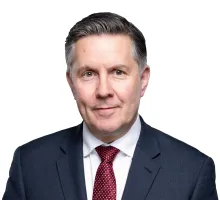
MARK BUTLER, MINISTER FOR HEALTH AND AGEING, MINISTER FOR DISABILITY AND THE NDIS: We've got quite a crew here, so thank you all for coming this morning. I realise that there's a lot of attention today on the unfolding situation in the Middle East, and as you know, the Prime Minister and Penny Wong has already been up here in Adelaide reporting on the Government's position and taking questions.
I'm here today to make an incredibly exciting announcement about the PBS, the Pharmaceutical Benefits Scheme. In the almost four years I've been Health Minister, this is one of the most exciting announcements I've had the privilege of making. It is going to make a huge difference in giving hope and extended lives to literally thousands and thousands of Australians who are battling advanced cancer. I'm joined here by Professor Rachel Roberts-Thomson who is an Oncologist, a clinician working here in the Queen Elizabeth Hospital who will address us after me. Also joined by Christine Cockburn who is a terrific patient advocate at Rare Cancers Australia, she'll talk about why this is such an important listing for Australians who are battling one of the rarer cancers. Owen Smith is the Country President here in Australia for Bristol Myers Squibb, BMS, which is the sponsor company of the drug that we're talking about and importantly, Josh is also going to talk to us about his personal experience having taken this combination immunotherapy that we're extending here today from the 1st of March.
Immunotherapies as I'm sure someone else will say more convincingly than me have become a highly effective treatment for a range of different cancers. They attack the proteins that the cancer is released to try to suppress the body's immune system, which obviously gives the cancer an upper hand. And by doing that, it essentially improves the body's ability to fight the cancer, extends lives, gets rid of tumours, and a whole range of other terrific things. This combination immunotherapy today which is known as Opdivo and Yervoy has been on the PBS now for a number of years, been the subject of a number of different listings for specific cancer types but one of the challenges has been that there are a range of cancers particularly some of the rarer cancers where we think this combination immunotherapy would be highly effective. We're very confident it would be highly effective and extend lives and defeat the tumours. But they're not able to be the subject of a clear, separate application. For some years now, the Government and the Pharmaceutical Benefits Advisory Committee, which is chaired by Professor Robyn Ward, who joins us today, have been working with BMS, the sponsor company to see whether we could get a general listing on the PBS so that all patients with advanced cancers that are not going to be improved by surgery would have access to this life changing drug and I'm delighted to announce that we've been able to achieve that. This I'm assured is a world first. For the first time in the world, there will be a PBS reimbursement for this drug, this highly effective drug for every single cancer type, provided that the relevant clinician, a clinician like Professor Rachel Roberts-Thomson, is satisfied that the patient will respond to it. This is going to benefit, we think, every year, more than 5,000 Australians who today are battling advanced cancer. And without this PBS listing, they would be paying around $100,000 for a course of treatment. From the 1st of March, this will be available at affordable PBS prices, making a huge difference, not just to those thousands of Australians, but to their families, their friends, their work colleagues and their loved ones. This is genuinely a landmark extension to our cherished PBS system, which will give new hope to thousands of Australians.
I'm going to hand now to Rachel, just say a few words from a clinician's perspective.
RACHEL ROBERTS-THOMSON, ONCOLOGIST AT QUEEN ELIZABETH HOSPITAL: Thank you, Minister Butler. Today does really mark a real turning point for the treatment of patients with cancer in Australia. More patients will be able to access immunotherapy, which is a treatment that empowers or emboldens the body's immune system to go and find and hopefully destroy cancer cells. Previously on our Pharmaceutical Benefit Scheme, we needed to prescribe Ipilimumab and Nivolumab based on a patient's cancer type and specifics. But from today, we are able to prescribe not based on the cancer type that the patient has, but more as a tumour agnostic approach for those who we feel will benefit. I can envisage that there will be benefits for patients with advanced melanoma and particularly with the ocular melanoma subtype which is melanoma arising from the eye. I can envisage that there'll be a group of patients with lung cancer who will benefit from this announcement today and also a subset of patients with advanced colorectal cancer who will benefit and be able to access combination treatment. And there'll be other rarer cancers that patients have that previously wouldn't have access to immunotherapy that now do. It really is a very game changer today and we're very pleased about this announcement.
CHRISTINE COCKBURN, CHIEF EXECUTIVE OFFICER OF RARE CANCERS AUSTRLIA: Thanks Minister and thank you doctor for that information. Today really does represent a seismic shift for Australian cancer patients. It particularly represents a terrific beacon of hope and a shift in equity for those diagnosed with rare and less common cancers. At Rare Cancers Australia, we've advocated for many, many years and we congratulate the Minister and all parties who have led us to today to this very exciting listing and we thank everybody for all the long term effort that's gone into this. And I particularly like to acknowledge the people with lived experience, the cancer patients and their families who have worked tirelessly to achieve this listing.
What this means in the real world today is that when a clinician would like to prescribe these immunotherapies to the patient sitting in front of them, they can tell them that they have an immunotherapy that will work in their own systems. They don't have to have the next conversation, which up until today was, “and you'll have to find tens of thousands of dollars to access it, I'm really sorry”.
At Rare Cancer's Australia, we've helped many, many people raise enormous amounts of money to access these medicines. That will no longer be a reality. This listing means there is equity and hope for those with rare cancers. And again, we thank and acknowledge all the effort that's gone into this really world first listing for immunotherapies.
OWEN SMITH, COUNTRY PRESIDENT FOR BRISTOL MEYERS SQUIBB: At Bristol Meyers Squibb our job is to invent, discover, develop important lifesaving medicines like the ones we’re talking about today and to make sure that they’re available for patients. And today is therefore an incredibly proud day for us because it’s come as a culmination of almost 10 years of work across a huge range of stake holders to make these medicines available for patients here in Australia. I’m very proud and exceptionally pleased on behalf of all of our patients that we’re able to do that and I’d like in particular to thank everybody who’s been part of the Coalition to make this possible, in particular, I think our patients and Christine Cockburn who was here a moment ago representing them who’ve been alongside us, representing those patients for a long period of time. PBAC, the committee that’s made the decision, Robyn Ward is with us today and we’d like to thank them for such a progressive and bold and right decision. And in particular, the Minister, Minister Butler for the decision he’s helped make and the benefit he’s going to bring to patients here in Adelaide and right across Australia. It’s a huge effort by a huge number of people and a fantastic result for patients, one of whom we’re going to hear from now.
JOSH GALPIN, CANCER PATIENT: Hi, my name is Josh Galpin and in 2019 I was diagnosed with metastatic melanoma. The diagnosis involved tumours all the way through my stomach, my small intestines, my lungs and the tumours were innumerable. My biggest ones were up to about five centimetres wide and by the time we got to a point of diagnosis we just decided to measure the five biggest tumours. At that time period, there wasn't a huge amount of treatment options available. I could choose to go on chemotherapy which would have a very poor prognosis. I could try inhibitors which were my PBS funded option and I was lucky to be able to have a survival time of around two years on this drug. My third option was to try this new treatment in immunotherapy and it was a very difficult decision to make. You could imagine I had three young kids, I had my wife, I had my family and to go on such a treatment at such an expense is a huge emotional decision. And it ended up that with a conversation with my parents and my parents decided to help try and fund me through this treatment. I had a wonderful community of people around me and this community ended up helping to crowdfund me. My family, my friends, the dental community in which I work for all helped support me through this treatment. And I'm glad to report that over several years of treatment that these tumours have now complete, my immune system's been able to be uncloak them and completely destroy them. I'm at a point now where there is not one detectable tumour in my body from having such an aggressive form of cancer there. Though I think my message to you all is I'd like to thank Minister Butler and I'd like to thank the BMS team for working so hard to get this one going on behind the scenes. I don't think the future patients that will receive this treatment will ever understand the true benefit and not having to deal with the financial strain that comes along with this cancer, that there won't be the finance from toxicity in their decisions. Thank you all.
JOURNALIST: Sorry, before you duck away. Sorry. You spoke then of the financial strain.
GALPIN: Yes.
JOURNALIST: Obviously these treatments, tens of thousands of dollars. Can you just tell us a little bit more about you and your family and how you dealt with that financial toll?
GALPIN: The 12th of July we had the consult. Poor Rachel, we started at nine o'clock in the morning. She had half an hour for me and an hour and a half later I walked out of that office, lots of explaining by Rachel. Poor Rachel was running around for the rest of the day. I do apologise. We went out for coffee with my mum, I took with me to that appointment and I took my wife and we went out for coffee afterwards and running through the treatment options and I think what my mom said was if this treatment is to work you could potentially be back at work within two years. I was back at work within about 13 months. She goes like it would be a small thing in the grand scheme of things and they helped to delay their retirement for it. When I started treatment like I really didn't want to have to be so reliant off of my parents but like the first visit kind of cleaned out my bank accounts, the second visit my parents helped sponsor, my nan even helped out the third and then I had my friends and family and my community around me said that's enough we want to crowdfund you, we want to support you and they did a GoFundMe campaign which paid for the remainder of my treatment and by the time we got to about the 16th cycle I was having lots of side effects in terms of colitis and so we ended up deciding to stop treatment but I can say in that last treatment, I finally got PBS funding for that last infusion.
JOURNALIST: And Josh you mentioned it before but what sort of changes for future patients suffering very cancers what are they going to expect now that it's on the PBS?
GALPIN: I have to say, when you first get this diagnosis, like I was an oral therapist by trade, so I knew like multiple organ systems. I just thought the only option was death. I didn't really think there was going to be available treatment options like this. And I think for people entering this with advanced stage treatment, I think the thing I'd have to say, it's not the end of your story. There is a potential for a durable response. There is the potential that you may live and I think for me coming out of this all these years later, I'm so lucky to be where I am. I think now in life you really appreciate what a problem or a crisis really is. People say they're having a problem or a crisis at work I think now I can really see what's going on with them. It’s been a wonderful opportunity and I'm back doing what I loved teaching students. I work as a lecturer with dental technicians and dental hygienists and I've been so lucky to be able to have these opportunities.
JOURNALIST: Thank you so much, as a clinician, what does it mean for you now to be able to have this option for patients that now comes with not that huge price tag?
ROBERTS-THOMSON: I think with this comes a lot of responsibility because we have this option, we have to prescribe carefully and with our patient's best interest at heart. But it is really gratifying not to have that extra conversation about the cost of treatment, to know that the Pharmaceutical Benefit Scheme will be able to cover that cost for our patients because it really does take away a heavy part of those conversations if that's not the case. It does really make it more streamlined better. We can focus on the things that really matter, really trying to help that patient respond to their treatment, using the literature, evidence to then guide our treatment decisions.
Media event date:
Date published:
Media type:
Transcript
Audience:
General public
Minister: