
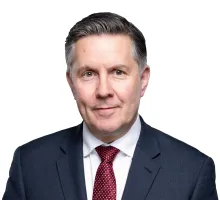
MARK BUTLER, MINISTER FOR HEALTH AND AGEING, MINISTER FOR
DISABILITY AND THE NDIS: Thank you everyone for coming along to the Royal Adelaide Hospital, here on a beautiful first day of winter weather in Adelaide. We've got some very exciting announcements to make about new listings on the Pharmaceutical Benefits Scheme, particularly for the treatment of blood cancer.
I'm joined by Dr Hahn who is a haematologist here at the Royal Adelaide, and also Alona who has been a patient who was signed up to the clinical trial for a drug that I'm about to announce we're listing on the PBS today. And both of you will say a few words about the life-changing, life-saving nature of this drug.
We're very committed to making medicines cheaper. This is, obviously, an important hip-pocket issue for Australian households with a time of real cost of living pressure, but it's also enormously important for their health. We know that the cheaper a medicine is, the more likely a house or a patient is to fill a script that has been given to them by their doctor. And we've seen that already with the five ways of cheaper medicines policies we've put in place over the last several years, saving about $3 billion in the pharmacy counter and, as I said, improving the health of Australians every single day.
At the same time, we've added more than 440 new or amended listings to the PBS, because we know we're living in this extraordinary turbocharged period of discovery right now where every day it seems new products are coming onto the global market products. Products that are providing new ways of treating, in some cases, curing conditions that were thought only a little while ago to be untreatable. And today, we're announcing a few more of those.
Blood cancer kills more Australians than any other cancer except lung cancer. And today we're announcing the listing, effective today, of two new treatments for different types of blood cancer. The first I'll deal with quickly is Blincyto, which is a terrific immunotherapy that's used for a particular type of leukaemia that would otherwise cost about $230,000 for a course of treatment. But from today will be listed on the PBS at affordable PBS prices and that we think will benefit about 110 patients who are really struggling in their battle with blood cancer every single year.
But today, I'm here at the RAH with Dr Hahn and with Aona to announce the listing of Calquence, which is also a terrific new first line treatment for patients with particular types of blood cancer. Immediately upon diagnosis it is available in tablet form to start treating this particular type of blood cancer. This has been a medicine that was the subject of clinical trials, as Dr Hahn and Ilona will say, based here at the Royal Adelaide Hospital as well as a number of other sites around Australia showed enormously promising signs and has now been approved for listing on the PBS, effective today.
This will be an enormous life-changing benefit to we think as many as 1,200 patients every single year with these types of blood cancer and will be available to them at affordable PBS prices. This is another instalment in our ongoing commitment and mission to make available to Australians the world's best medicines, which are often very expensive, at affordable prices for patients. And today's listing is another example of that.
I'm going to hand over to Dr Hahn and then to Alona, then we'll take some questions on these listings. And I'm happy to take, after that, any questions of news of the day. Dr Hahn.
DR UWE HAHN, HAEMATOLOGIST, ROYAL ADELAIDE HOSPITAL: Thank you, Minister. Good morning, everyone. My name is Dr Uwe Hahn, I'm a Haematologist here at the Royal Adelaide Hospital and at the King's Hospital as well. And I have been the principal investigator on the mc5 study that was a study, a randomised study that compared that combination that we are talking about today and a kind of routine or advanced treatment as compared to standard immunochemotherapy. And that has proved to be a very safe and effective treatment that we can now offer to all new patients with blood cancer types.
That is the most recent advance in the development that has seen us move away from more traditional chemotherapy-based regimens, to treatments that use targeted agents and that have been proved very effective. And there was decidedly improvement in the overall survival, and that has now reached 90 per cent in 2020-23, as compared to just over 60 per cent back in 1989.
This treatment, Calquence and Venclexta provides overall survival at a point of three years post treatment of 94 per cent as compared to just over 80 per cent in the chemotherapy arm. The treatment is so very effective, it is also safe, that can be administered to most of our patients and easily as it is in tablet base. That means that patients can spend more time at home and have fewer number of days than in hospital beds and in NHS which is, obviously, a very important improvement of their quality of life. And many can even work during the treatment.
It is also a time limited treatment, just over a year for both these medications. It also means that, once the patient is finished, they can go back to their normal life. And I think it is really a great advantage that it is now available on the PBS as affordable for all Australian patients. Thank you very much.
ALONA ROBINSON, PATIENT: Thank you very much. Hello, my name is Alona. I am a mum of four beautiful children and two amazing grandchildren. I've worked in aged care for 10 years and was diagnosed with CLL seven years ago. I was really tired and short of breath. I thought it's probably nothing, but I'd better go and get it checked. When the doctor told me, I felt numb. I thought, how, why, how am I going to tell my children? That was probably the hardest. After a few appointments I was told about a trial that I might be able to get on, fingers crossed, and luckily I was chosen. It felt like it went fast, it felt like it went very fast. And I started taking the tablets morning and night, did some regular appointments here at the hospital for infusions. And the trial people fantastic, it was home away from home. I'm very grateful for being able to participate on this trial, and I'm even more excited that everyone has the opportunity now to take this, to have this medication.
For people who are about to start this journey or on this journey, try and take the good in each day, try and laugh even though you don't want to. And mostly, what I’ve learned is let your family and friends in, yeah that's the main thing, that they can help. But yeah, it's been a great journey and here I am, five years in remission, feeling the best I've ever felt. Thank you.
JOURNALIST: Thank you for sharing your story. Just wondering if you could tell us a bit more about how much you feel that the treatment you received being on that trial, that’s now available to other Australians, benefited you?
ROBINSON: It changed my life. Back then, I felt like I didn't know what was going to happen. You think the worst straight away. So, yeah, it was 100 per cent success to me.
JOURNALIST: Alona, when you started to go through this, you're obviously very thrown with emotions, feelings. How much is it with financial pressure? How much does that weigh on you?
ROBINSON: Yeah, that's definitely a big thought. I was like, how am I going to pay for this? How much is it? But yeah, I was glad to go on the trial because that was one thing, that I didn't know how I would do it. I was also very happy to go on it because I thought if I could help somebody else down the track, that would be really good as well. Yeah, it wasn't all about that.
BUTLER: Can I just add to what Alona just said. That the full listing under PBS, this medicine would cost about $7,000 per script. It's now obviously available at PBS prices, $25 a script for a general patient or just $7.70 for a concessional payment. Obviously, bringing this extraordinary medicine into the sort of financial possibilities of most Australian households. Happy to take a question.
JOURNALIST: You mentioned before we're kind of in an age of finding fast discoveries. Do you know what's driving that?
BUTLER: Just the pace of technological change. Big data is helping crunch the time for many of these trials, artificial intelligence is going to close that time frame even further. We're just in one of those fortunate periods of history where there's a whole lot of revolutions happening in medical science that mean that new therapies are coming onto the global market at a huge pace. That obviously poses challenges for the system to be able to accommodate that many applications for new listings on the PBS but, frankly, it's a pretty good problem to have. And we're seeing hundreds of new listings, as I've said, since we came to government, and they're providing enormous new opportunities, as Dr Hahn said, for treatments that were thought pretty remote possibilities not too many years ago.
JOURNALIST: If I can ask about Ebola, what's the latest advice you've received on the breakout? And are you considering travel restrictions as cases grow?
BUTLER: We're obviously watching the updates from World Health Organization in particular on the Ebola outbreak in the Democratic Republic of Congo. There have been cases reported in Uganda, but it's quite clear the centre of the outbreak right now is in the DRC. Suspected case numbers and suspected mortalities are climbing very fast. The World Health Organization, over the weekend, issued another update to its report. It obviously is deeply concerned about this outbreak, partly because of its scale but also because it is a variant of Ebola, a relatively rare variant that doesn't have a vaccine or treatment available to it. The response options really are pretty limited and, effectively, are containment.
In Australia, we're monitoring this very closely. We're taking advice from the Centre for Disease Control. We have long-standing biosecurity protocols around listed diseases, particularly Ebola. This is not the first outbreak that we've seen over the last 10 years or so, we had a very big outbreak in 2015 with about almost 30,000 cases so far bigger than the one we've seen so far at least. There are pretty long-standing protocols here, particularly around the border where people are coming back from affected regions, they are watched very closely on the flight, particularly for any symptoms. They are given information about monitoring their own symptoms and what to do in the event that they experience symptoms that would indicate the need to be tested.
JOURNALIST: So you won't be quarantining, at this stage, people coming from those two countries?
BUTLER: I've got no advice to do that at this stage. For example, in that big outbreak in 2015 with tens of thousands of cases, a multiple bigger than the outbreak we're seeing so far, the existing biosecurity protocols I just outlined were followed there as well. But obviously we're taking, and I'm taking, very regular advice about this. This is a deeply concerning outbreak. At the moment, as I said, limited to the DRC, with a few cases over the border in Uganda. But as further advice comes I'll act on that advice. I've done that in relation to the hantavirus outbreak very recently. Because the government's priority is to keep our community safe.
JOURNALIST: Minister, polling today has One Nation ahead of Labor. Do you see them as a threat?
BUTLER: I don't read much into numbers two years out from an election. Those numbers will jump around and there will be, I can't even imagine how many polls between now and the election day for people to pour over. I think what the polls show though, and private research that everyone does is showing, is that people are under real pressure right now. There were pressures in our economy before the war in Iran started, we saw that with the Reserve Bank action earlier this year. And those pressures have only intensified as we've seen the global impacts of the war in Iran and the closure of the Strait of Hormuz. And people expect and demand government, and the Parliament more broadly, to do everything they can to relieve that pressure. You're seeing that through the research.
We're doing everything we can. Today, I've made a number of announcements to give people access to terrific healthcare, but do it on an affordable basis. Cheaper medicines, more free visits to the doctor, everything we're doing in healthcare is obviously designed to promote the health of the nation but also promote affordability and provide that relief in household budgets alongside tax cuts and everything else we're doing.
I'm not surprised that the polls are demonstrating a level of frustration and pressure that households are feeling right now. We've been seeing that for a little while. You're seeing it right across the world. This war cannot end soon enough, obviously, for the people involved in the combat, but for the global economy more broadly. Households are really feeling the pressure of this war.
JOURNALIST: Do you accept that the shift, particularly among the millennials, is a reaction to your budget?
BUTLER: No, I think the budget is obviously one factor of many that households are dealing with right now. I’ve said over the time since the budget this is a complex budget, it is a tough budget, but it is a responsible one that I think sets the country up for the future. Now when you have a tough budget, it takes some time for it to percolate through the community and for government to discharge its responsibility of explaining the measures, and importantly explaining why they are important even when they are tough. This budget, among other things, is really about getting young people into the housing market, giving them the sort of even break that the generations before Australians have taken for granted.
And you are already seeing that in the housing market over the last few weeks, young people being able to bid at auctions more freely without the competition of investors who have the benefit of tax breaks in their pocket as well. And we’ll take some time to really detect any trend, but we’re doing what I think we have the responsibility to do, which is to explain a tough budget, explain the choices that the government has made about the future direction of the country, both in the housing market and areas like the National Disability Insurance Scheme which I'm responsible for, and many others as well. But that will take some time and requires effort of the government, and we're doing that.
JOURNALIST: Does this inspire any sort of change? I mean, you're not going to exactly move everything to be in line with One Nation, but these sentiments have been moving for quite some time in the public. Do you think the Labor Party has to a little bit of soul searching?
BUTLER: I think we need to do what we have been doing now for some time, which is providing relief to Australia's households in a way that doesn't add further fuel to the inflation pressures that the economy has been feeling, particularly since the private economy really started to surge in the second half of last year, but also given the impact of the war in Iran. You see that in this budget through tax cuts. You saw it a couple of months ago with us effectively halving the fuel excise, which provided Australians real relief at the bowser, while fuel and oil prices around the world were skyrocketing because of the war in Iran. We're determined to keep on the path that we're on. We think it's the responsible path that's providing households with as much cost of living relief as we're able to do in a responsible way.
JOURNALIST: And also on a slightly different tack, the government's own numbers showing an increased amount of older Australians waiting for at-home care packages to be increased. Why are there so many now that are waiting up to eight months to get these approved packages?
BUTLER: These latest data which are for the quarter up to the end of March, 31 March, that on every single metric we've improved our position at a time when demand for aged care services is skyrocketing. We're seeing the oldest of the baby boomers enter the aged care age, if you like, into their 80s for the first time, which means that demand for aged care is climbing at a rate we've never seen before in our country. We've added 80,000 people into the system over the last year. Wait times have come down for every single level, the urgent level, the priority, the medium priority, the standard priority, they've come down by a number of months in some cases, and the waitlist has declined as well. Now, I'm not pretending there's not still huge pressure on the government to provide aged care services for older Australians when and where they need it. But these latest data show that at a time of unprecedented demand, all of those metrics have improved.
JOURNALIST: Are you concerned, though, that with an increasing number of older people waiting to get the care at home, they're going to be going to hospitals and GPs, causing blocks there?
BUTLER: Yeah, of course I'm concerned. I see this as one of the highest priorities government has. Certainly one of the highest priorities that my portfolio has is to meet that demand that's growing at unprecedented levels and to meet it at every part of the pipeline of care, if you like. The earliest level of support that older Australians might need, care in the home, residential aged care which we're determined to expand as well, because if any of those sections of the pipeline have constraints, people are pushed further into the hospital system. That's not good for them. It's not good for the hospital system either. We're determined to do everything we can to expand all of those elements of the pipeline. This year, we increased the number of Home Care Packages by 25 per cent. That's an extraordinary increase to a program, the biggest ever that we've seen in the history of the home care aged care program of well over three decades. Frankly, I think the challenge was making sure there were enough workers to deliver an increase of 25 per cent. We've been managing to do that. You're seeing all of the lists come down, all the wait times shorten. But I'm under no illusion about the pressure that governments are going to continue to face for years to come to provide the level of aged care in a timely way that older Australians deserve.
JOURNALIST: Is the workforce why the bottleneck exists in actually delivering them? Because I would have thought the approval process would be the slow part.
BUTLER: I think we've managed to deploy the workforce for this huge increase in package numbers this year so far. I'm hearing a few reports of people being granted funding for a package who aren't able to actually find that package in their region, which is starting to provide some evidence that there might be some workforce constraints on the system. We have very low unemployment in Australia. There are industries that are struggling to find workers, we know that. But really, given a 25 per cent increase in package numbers, I'm surprised there haven't been more of those reports. We've got, as I said, 80,000 new Australians into home care just this year. All of those wait times have come down. Sure, I'd like to see them come down further, but at a time where demand is exploding for aged care, the fact we're getting those numbers down is a very good thing.
JOURNALIST: If I could ask you about the Royal Commission, the government had wanted to keep the Cabinet documents relating to resourcing of counter-terrorism to the Commonwealth secret, but the Royal Commission has ruled against that. What do you make of that decision?
BUTLER: The Royal Commission will obviously make these decisions. We have complete faith in the Royal Commissioner to conduct this Royal Commission in an appropriate way, and those decisions will be considered and acted upon in the usual way by the Attorney General.
JOURNALIST: Why did Cabinet want to keep those documents secret?
BUTLER: Cabinet documents are kept secret usually and have been for a very, very long period of time for good reason. It allows Cabinet to make decisions in the best interest of the country in a confidential way, and that's been a feature of our system of government for many, many years. Now, if the Royal Commissioner thinks that there is a good reason for an exception to be made to that otherwise pretty sensible system about the way in which the Westminster government system operates, then the Attorney General will act on that accordingly. Thanks everyone.
Media event date:
Date published:
Media type:
Transcript
Audience:
General public
Minister: