
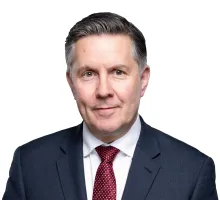
MARK BUTLER, MINISTER FOR HEALTH AND AGEING, MINISTER FOR DISABILITY AND THE NDIS: Thanks for joining us at the Royal Adelaide Hospital this morning. I'm joined by a couple of colleagues from the Prostate Cancer Foundation, Sally and Sophie, who we’ll speak to in due course, as well as the Dr Michael Cilento, an oncologist who practises here at Royal Adelaide. We'll also hear from Charles, who is a patient with prostate cancer, who's going to benefit from this important listing. As Australians know, our Government is very focused on making medicines cheaper and that principally is about getting those script prices down from the 1st of January, those prices have been slashed to no more than $25 a script, which is the same price general patients paid way back in 2004. For concessional patients, pensioners or holders of a healthcare card, their script prices have been frozen for the rest of the decade to just $7.70. But we also know the PBS must be kept up to date. Since we were elected, almost 400 new or amended listings have been made to ensure that Australian patients get access to the best medicines available anywhere on the planet at those affordable PBS prices. And today, we’re delighted to announce a listing that takes effect today on the 1st of February for a particular form of prostate cancer.
Around one in five Australian men will receive a diagnosis of prostate cancer at some point in their lifetime. It’s the most common cancer that we have, not just for men but across the population, about 30,000 new diagnoses every single year. If caught early and if it remains localised, it is a very, very high survival rate for prostate cancer patients, but every year a few thousand struggling men receive a diagnosis of metastatic prostate cancer. In this case we’re talking about today, metastatic prostate cancer that is resistant to castration, surgical castration or more commonly, chemical castration that I’m sure my colleagues will talk about. Now there have been treatments available for this type of metastatic prostate cancer but they’ve been separate, they’ve been difficult to access, requiring multiple scripts, but today I can announce a listing of a new treatment that is a combination therapy that does all of the things that the different medicines to date have done in one single script. Patients like Charles will be able to access but at that previous price of $25 or for concessional patients, $7.70. It’s a combination treatment that not only inhibits the cancer growth but also deals with the symptoms of this type of prostate cancer my colleagues will talk about.
So another opportunity to deliver on the promise made to Australia, not only to safeguard the PBS to ensure that it remains dynamic, putting new medicines in from the rest of the world, but also keeping those script prices down to support household budgets. I’m going to hand over now to Sally Sara from the Prostate Cancer Foundation.
SALLY SARA, DIRECTOR OF NURSING AT THE PROSTATE CANCER FOUNDATION: This is a really sound investment in the health of our community and it’s news that will be really well received by the almost 300,000 men living with prostate cancer in Australia. Living with prostate cancer can be really tough, through the diagnosis, through the treatment and side effects that can take impact patients psychologically, physically, and financially. And that has a ripple effect through partners, families, friends and communities. At the Prostate Cancer Foundation of Australia, we welcome any announcement that aims to relieve some of that burden for men dealing with this disease, whether it’s more streamlined access to treatment, earlier diagnostics or access to support programs such as ours. So, on today’s news, I really commend the Minister and thank him and his team for what they’ve delivered, and we really look forward to working together on our programs that look to improve survivorship, and the lives of those living with these diseases. I’d like to now hand over to Dr Michael Cilento who’s an oncologist here at the Royal Adelaide.
DR MICHAEL CILENTO, ONCOLOGIST AT ROYAL ADELAIDE HOSPITAL: We’ve used these medicines for some time now. We know that they can be an entirely effective treatment for advanced prostate cancer. I suppose now having the opportunity to prescribe this combination of tablets in one box on one script does add some extra convenience and choice for patients and their conditions. And I suppose for those patients who are in a financially vulnerable position, getting your medicine in one script rather than two can ultimately help bring the cost down over time.
JOURNALIST: Just explain how the medicines attack the cells of the cancer. In layman’s terms so we can get an idea and understanding of that?
CILENTO: This medicine basically works to decrease the production of hormones or chemical signals that cause prostate cancer to grow and spread, and by shutting that down it helps improve outcomes. It is combined with a steroid tablet, it is designed to reduce the side effects from that come about form that change in hormones.
JOURNALIST: So the combination of the two medicines in to one streamlines that for patients in terms of ease and comfortability?
CILENTO: Yes it’s certainly, it’s a convenience for the patient having it on one script.
JOURNALIST: Have you come across in circumstances where people have struggled to buy this medication or similar? Like how much would this help?
CILENTO: We see a lot of patients who are financially vulnerable who are often on many medicines, so if we can reduce the number of items that they need to get from their pharmacist then that decreases the costs.
JOURNALIST: Is there a still way to go? Is there other medications you’d like to see on the PBS?
CILENTO: I look forward to hopefully seeing these types of medicines being available for patients who have curable disease or earlier stages. That could be something we’d like to see in the future.
JOURNALIST: The two tablets that are taken are combined here, were those separate tablets also on the PBS before previously?
CILENTO: Yes.
SOPHIE OTTO, PROSTATE CANCER SPECIALIST NURSE: It’s really important for men like Charles, in fact every man diagnosed with prostate cancer, to have the support of a prostate cancer specialist nurse. We provide a language to get information and support to help them navigate the healthcare system, and the side effects of medication which helps their wellbeing and the changes to their physical and emotional wellbeing after treatment. It’s really important that they have access to timely support.
CHARLES, PROSTATE CANCER PATIENT: Hello, my name is Charles Abdilla and I’m 84 years old. 20 years ago I was diagnosed with prostate cancer which was quite a shock to me. At that time my PSA (Prostate-Specific Antigen) was 700 and the doctor told me that it can be treated, it can be managed. So after a course of tablets for about 18 months, my PSA came down to 100. After that, he put me on a course of radiation which brought the PSA down to 40 which I thought this is very good. Then after that, a course of chemotherapy which that brought it down to 7 PSA. And a specialist told that there’s a new drug on the market and he introduced me to Dr Tan here in the RAH and Dr Tan put me on this drug called Zytiga which I’ve been on for 10 years and my PSA now is 0.8 which is very good. At the moment, I’m taking Zytiga separately and prednisolone separately. Now we’re going to bring the two of them and incorporate together into one packet, which is going to make it easier and cheaper for the patients. So that has been my journey for 20 years and I’m still here. And I’ve got to thank the Government as well for getting behind all this to make our life easier and give us better medicine and cheaper medicine to improve our overall life. So I want to thank everybody.
JOURNALIST: Charles, have you ever been in a position where you were presented with a treatment option and you’ve looked at the price and just thought, how am I going to manage that?
CHARLES: Not really as I’m a pensioner so most of the time I’ve been on the PBS so that’s always been a big help to me.
JOURNALIST: Do you think other patients will benefit from this?
CHARLES: I think so. I think the availability of the drug being cheaper is going to help everybody.
JOURNALIST: Charles, can you just explain to us, can you take me into your world for the past 20 years? What’s it like to live with prostate cancer for the past 20 years?
CHARLES: Well, it’s not easy but with all the availability of medicine we have got, cheaper medicines and good medicines that you can take. I have been treated for 20 years and I am still here.
JOURNALIST: Is it difficult some days to get moving and to get up and about?
CHARLES: Of course it is, of course it is. I mean, the thing is there while you all the time. I mean, I am 84 years old.
JOURNALIST: I’d imagine as well, sort of two odd tablets going into one might not seem like a big difference in convenience but when your dealing with cancer there’s probably a lot of things your juggling. How important is having that extra thing- convenience or thing not to have to think about?
CHARLES: Well, anything that improves our lives it’s a benefit, isn’t it? As I said, with all this availability of medicine and cheaper medicine, it makes life easier for everybody.
JOURNALIST: Thank you.
JOURNALIST: You know politics better than most, do you think there will be a Liberal leadership spill this week?
BUTLER: Well, this is has become a shambles. At least Andrew Hastie did the honourable and went to the backbench. Angus Taylor is still pretending to be a shadow minister while plotting against his own leader. We’ve seen the National Party leave the Coalition, the remaining Opposition are just 28 Members of Parliament and they’re split right down the middle. There doesn’t seem to be any way of resolving this within the Liberal Party. I just say though, if the answer is Angus Taylor, the Liberal Party is asking themselves still the wrong question. This guy has a terrible record as an Energy Minister, he undermined Josh Frydenberg’s National Energy Guarantee and then wrecked the energy market. As the shadow treasurer who promised to raise taxes for every Australian and instead, put all of the money that we were seeking to invest in Medicare, into a $600 billion plan for nuclear power.
JOURNALIST: Minister, what do you say to families facing another potential rates rise on Tuesday?
BUTLER: Well, I’m not going to speculate about what the Reserve Bank might or might not do. Obviously the inflation figures we received last week were higher than we would like, but in some respects they weren’t a surprise. They reflected the end of state government energy rebates but also some ongoing price pressures in our economy still going quite strong, particularly in areas like housing. Our Government, as we have been since we got elected, has been focused on getting inflation down, putting downward pressure on costs.
JOURNALIST: Does the Federal Government accept responsibility for the situation we're in at the moment in terms of increasing inflation?
BUTLER: Since the day we got elected, we've been squarely focused on putting downward pressure on inflation. We inherited an inflation rate that was north of six per cent, and in every budget, every budget update, we've put in place savings that put downward pressure on that pressure on the economy. The mid-year budget review in December, only a few weeks ago, we delivered another $20 billion in savings. And the record shows that last year, public demand, so public spending, actually reduced its share of growth in the economy, making room for private sector work. Our economy is going strongly still. There's very strong jobs growth, unemployment is very low. There are still price pressures in parts of the economy like housing, but all of us need to focus on making sure the Australian taxpayers that as our next budget becomes under development in the coming months, we'll be just as focused on getting inflation down as we have in the past.
JOURNALIST: Are there any more levers that you guys, the Federal Government, can pull to try and pull this back a little bit so we don't see more rate hikes as predicted by economists?
BUTLER: We're making sure that measures we put into the economy put downward pressure on prices. The cheaper medicines is just one example. Script prices are the same they were way back in 2004. We're also making sure that public demand is starting to reduce. We saw that last year.
JOURNALIST: So are you acknowledging that the Government does need to do more to work on cost of living pressures?
BUTLER: We've been clear about that from the day we got elected. Jim Chalmers as Treasurer has been clear that that's his most important job. He's also been clear, as we've seen right around the world, that inflation doesn't follow a neat linear path. It zigs and it zags depending on what pressures emerge in the economy. I've mentioned a couple of them in areas like housing that remain strong. But also in the last inflation figures that were released, we saw the impact of those state government energy rebates starting to come off playing with the inflation figures as well.
JOURNALIST: On the delay of the introduction of Thriving Kids, what was the key problem that caused the delay?
BUTLER: Thriving Kids will start to ramp up later this year, which was the announcement I made last year. We'll see that start to be introduced across the country over the coming months. But we decided after discussions with state governments to push back the full implementation by just six months. So instead of the 1st of July 2027, full implementation of the programme will take place on the 1st of January 2028. That was really us hearing some requests from the state government for a little bit more time to introduce this really important program. The key is though that we will finally have a program that parents are able to access very easily if they're concerned about their children hitting or not hitting particular development milestones. They won't have to wait up to years for a diagnosis that might cost them thousands and thousands of dollars. These broad-based services under the Thriving Kids programme will be readily available for parents in those areas and places that they usually go to with their kids.
JOURNALIST: So you've said the state governments’ asked for a bit of a delay there. Were there any reasons to do with your Government that had to do with this delay?
BUTLER: No, this was a request from state governments. We've worked very hard over the last six months since I announced this program. I've had an advisory group working with me and Frank Oberklaid co-chairing a group made up of parents, state government representatives, experts and clinicians to design this model which we've now delivered. We've had a parliamentary inquiry, we've had very strong engagement with state governments bilaterally. So we're very satisfied that this program is going to be ready to go but a delay of a few months is a full implementation. It will just everyone confidence that it's going to be fully ready.
JOURNALIST: What are the consequences of the delay though?
BUTLER: There are no consequences for the delay because we've been very clear that we're not going to start to change the access rules to the NDIS until the program is fully up and running. So as part of that very short six-month delay to the Thriving Kids program starting fully from the 1st of January 2028, governments also agreed that access rules that would be made to the NDIS for those children with more mild to moderate support needs also would be delayed to ensure that families have no risk of falling between two stalls.
JOURNALIST: Can you guarantee that it'll start in October is there still a chance that it could be delayed further?
BUTLER: We'll start to ramp up the program later this year. State governments have made that commitment. The Commonwealth may well start to ramp up its contributions to the program earlier than that, but in the second half 2026, we will start to see that program ramp up. Parents will start to see evidence of that program rolling out across the country. But the full implementation will take place 12 or 15 months after that on the 1st of January.
JOURNALIST: I do have one more question as well. There's reports that Australia won't join Trump's Board of Peace. Can you confirm if that's the case?
BUTLER: No, I will leave that to the Prime Minister and other Ministers.
Media event date:
Date published:
Media type:
Transcript
Audience:
General public
Minister: