
TOM MCILROY, HOST: Hi, I'm Tom McIlroy, the political editor of Guardian Australia. Today, I'm recording remotely from the lands of the Boonwurrung people on Victoria's Mornington Peninsula. When Julia Gillard introduced the NDIS in 2012, she said that people with a disability, their families, and carers would, for the first time, have their needs met in a way that truly supported them to live with choice and dignity.
[Excerpt]
JULIA GILLARD, FORMER PRIME MINISTER: This is a complex bill, yet at its heart is a very simple moral insight. Disability can affect any of us, and therefore, it affects all of us.
[End of excerpt]
MCILROY: On Wednesday, the Albanese Government announced the most significant changes to the NDIS in its nearly 15-year history. Currently, the scheme supports about 760,000 Australians. It's expected that the reforms will mean at least 160,000 participants will no longer be able to access the scheme within the next four years.
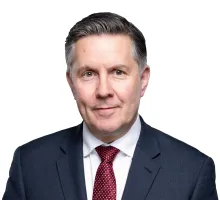
In a special bonus episode for this week, my guest is the man leading the reform push, Mark Butler. The Minister for Disability, Health, and Ageing joins me from our Canberra studio. This is the Australian Politics podcast.
Well, Mark Butler, welcome to the Australian Politics podcast.
MARK BUTLER, MINISTER FOR HEALTH AND AGEING, MINISTER FOR DISABILITY AND THE NDIS: Thanks, Tom.
MCILROY: Thanks for making time. You've got a big job this week selling changes to the NDIS. Let me ask you, a couple of weeks out from the Budget, you've detailed these plans at the Press Club this week. You're aiming to bring the growth rate of the NDIS down from about 10 per cent to about 2 per cent. It means about 160,000 people will be removed from the scheme. Every participant faces a new assessment, and more providers will be required to register with the NDIA. Community participation programs will be cut back. These dramatic changes are necessary, but are they achievable?
BUTLER: The plan I tried to set out yesterday is not just where we want to end up but how we get there. Different elements of the plan require different pieces of work for the deeper reform to the scheme. For example, returning it back to its original purpose of supporting people with significant and permanent disability. There's a lot of work to do with the disability community itself but also with states and territories. And so, I indicated over coming months, we'll be doing that deep reform work, co-design with the support of a technical advisory group. I hope by the end of this year, that work will be completed.
Some other of the work, particularly to deal with some of the cost blowouts, we want passed through the Parliament in this Budget session. We can't continue to see the cost blowouts that time and time again are reported to government. The NDIS Actuary, the person who controls the numbers in the scheme, only a few weeks ago told me that costs had blown out by $13 billion since December, since the December midyear budget update. Now, we can't continue on that path. It's not sustainable for the scheme itself.
And I think you're starting to see community support for the scheme, as it's operating right now, slip away. Participants are telling us that. Providers are telling us that. You see it in the research. People are concerned that this scheme, which used to be a source of real national pride because people understand the degree to which it's transformed hundreds of thousands of lives, is becoming a cause of national concern because people think it's costing too much. They think it's riddled with dodgy providers, and they want a plan to bring it on track that will secure its future for decades.
MCILROY: What is the design flaw that has allowed that situation to develop? We've gone from nothing in NDIS from inception to one of the biggest draws on the budget and a source of community concern in just 15 years.
BUTLER: There are a range of what I think are very real flaws in the design of the scheme or the way in which it was implemented. The first is eligibility, who is in the scheme is the most important rule for any social program, who qualifies. And as I said earlier, the original purpose of the scheme or intent of the scheme was to cover people with significant and permanent disability. To get the scheme up and running, it adopted what are called access lists or diagnosis lists. If you could show the scheme you had a diagnosis of one sort or another, you're in. And that has led people to try and get in to see various specialists, paediatricians, psychiatrists, and the like, often having to wait for many, many months, often having to pay thousands of dollars. And if they get that report, they're in. That was never the intention long term. Long term, the intention was to have a much more objective assessment system that will look at a person's functional capacity, not whether they had a diagnosis of schizophrenia or autism or they had down syndrome. It would look at their functional capacity. And if their functional capacity was substantially reduced, impacting their day-to-day living needs, they'd be on the scheme.
The eligibility hasn't really worked in the way it was intended. We've got hundreds of thousands of people on the scheme who are not intended originally to be on it. That's the first thing. Now, that's a big change. It really is a big change, and I get that people are feeling uneasy about how that change will roll out but it's a necessary change. I wish I could say to people, nothing much needs to change with this scheme, it's working pretty well, but that that wouldn't be the truth. The truth is it does need a major reset and that is the first thing.
The second thing I think is that when it was implemented, it was, there was a free-for-all market really crept up, and it's not well regulated. A lot of people with very few, if any, qualifications or experience in disability services are in the market offering their services and charging for example the same that people with very substantial quality applications and experience charge. And it's very difficult for participants to sort the wheat from the chaff or the sheep from the goats because we don't have good market stewardship. People can operate in this scheme without being registered for digital payments. There's a lot of fraud. They can operate in the scheme, including in areas with very high-risk services like close personal intimate care, like showering and toileting and all the rest, without being registered with an authority, which would just be unthinkable in aged care or childcare or healthcare, but is rampant in this scheme. Again, a flaw in the implementation of a scheme that we intend to fix.
MCILROY: Explain to us how the new evidence-based functional assessments will work. This seems to be one of the biggest changes that you're announcing, and I think it's a point of anxiety for NDIS participants and their family as this news starts to come out.
BUTLER: Yeah, it is, I think, the biggest change I announced yesterday. It is quite a fundamental change to the way in which eligibility or access to the scheme is determined. And that's why we need to work through that so carefully. We'll have a technical advisory group working with us. We'll work closely with the disability community. I'm very much devoted to the idea of ‘Nothing About Us Without Us’. This is a big reform, it's got to be co-designed with people with disability themselves. I'm meeting with those organisations later today to start to discuss how we do that. Obviously, states and territories need to be involved as well. At the end of the day, I can't implement these reforms without their agreement. They have to agree to the new rules around eligibility and access.
But what I want to assure people of is it will be an objective tool. It will be scientific. It will be evidence-based. And it will apply to everyone in the same way. You won't have this lottery about whether you can go in and get a report from a specialist, how long you have to wait, how much you have to pay. It will be far more objective and equitable and return, I hope, the scheme to its original intent, supporting people with significant and permanent disability.
MCILROY: So, the legislation could be introduced in the Budget sittings coming up in May and you'd like them pushed through relatively quickly, but some of the technical work will take longer to implement onto this 2028 timeline?
BUTLER: I want to be clear. The legislation I'll introduce in a couple of weeks’ time is not a about that longer term reform. That will be the subject of separate work. The bill I introduced is really about just good financial controls, so some of the things that the NDIS Actuary told me are driving the cost blowout of $13 billion, there's no real lever for me to pull to get that spending growth under control again. I've got to introduce some laws into the Parliament to give us that ability to do that. It's really just about good financial management. It's not broader scheme reform. it’s not broader scheme design. It's just good financial controls that, frankly, any social program funded by taxpayers should have.
MCILROY: And will individuals have appeal rights on the functional assessments? Once that's introduced, could somebody seek a second opinion if they don't like the assessment they're given?
BUTLER: That really is the work that we have to do. I don't have a firm view about that. Obviously, generally, there is the ability to appeal these sorts of assessments across different social programs. I would understand if the community wanted to come in with that being a key factor they wanted to work through. I don't want to pre-empt that work, that discussion and consultation that we have to make, but I imagine that'll be a big part of those talks.
MCILROY: Community participation spending is another tough cut in the package that you've announced. George Taleporos from the Every Australian Counts campaign calls this, spending that makes it possible for people to leave the house, to build relationships, to participate in the community and live an ordinary life. How can we cut this? It seems so essential to the NDIS.
BUTLER: I agree with that general about the importance of this part of the scheme. It's about a quarter of the total spend about $12 billion this year, which, for your listeners, is the same we spend on the Pharmaceutical Benefit Scheme, our entire medicine system. And it was only $4 billion five years ago, it's been growing very, very fast, projected to grow to $20 billion. This is just the social and community participation support.
And we can't afford that. It's just costing too much. We've got to get that growth under control. Which is why I've said, I want that budget returned to where it was last year in global terms, in general terms. And for individuals, that will mean their budget goes back to where they were back 2023. That's still a lot higher than it was five years ago, it's still a substantial support for them, but I recognise this will have a material impact on some people's plans and their spending.
What I also want to do, though, is improve the quality of this. It is highly variable. We get report after report after report from participants who’ve been taken out, for example, to a food court by a support worker, sat down and brought up to a table, and the support worker then spends their time scrolling on their phone. That's not community participation. Yes, it's getting out of the house, but we want something more than just getting out of the house. We had in mind, I think we all had in mind, certainly participants had in mind, that there would be genuine community participation, often in genuine community settings.
In addition to those changes to try and control the spending growth in this area, we've also announced a $200 million fund to allow community organisations to rebuild their capability to host those sorts of activities. Some of them will be disability organisations, some of them will be mainstream; sporting clubs, arts groups and so on who are willing and keen to take disability participants coming into their settings, their clubhouses and such like. It is a bit about spending growth, but it's also very much about quality.
MCILROY: What is the message to the state governments? As you say, you can't deliver these changes on your own. The scheme is co-administered with state and territories. It's been a controversial point in negotiations all the way through, I think, and particularly most recently on the Thriving Kids programs. Why would the states be interested in helping achieve these cuts, given that there's been criticism of consultation ahead of the announcement?
BUTLER: Two and a half years ago, back in 2023, the National Cabinet, which, as your listeners probably know, are the premiers, the chief ministers and the prime minister they accepted a review of the NDIS that we commissioned, led by Bruce Bonyhady and Lisa Paul, two people very much involved in the development of the scheme. And that review said, among other things, that we need to return the scheme to its original purpose, and we need to rebuild community supports outside of the scheme for people who are not significantly and permanently disabled, have more mild to moderate or lower support needs, and do need some support. Many of them used to exist before the NDIS but they've been dismantled, they’ve been wound back.
And at that meeting back in 2023, the government's allocated $10 billion to that purpose; $5 billion from the Commonwealth, $5 billion collectively from the states. Now, we've allocated $4 billion of that to Thriving Kids, so for kids under nine. There's still $6 billion in the kitty to do that work. In principle, state governments recognise this is work that governments need to do. And in financial terms, we've already allocated very substantial amounts of money, not just for the kids but for older Australians, sort of, older children and adults as well.
I've been around long enough to know that, when it comes to funding, there's always a bit of arm wrestling between jurisdictions about who's paying what, and there probably will be more of that going forward. But I talked with disability ministers yesterday, I've engaged with health minister colleagues. I reckon everyone across all governments understand the importance of getting this thing back on track. There's a great deal of pride about what we've achieved over the last 15 years in Australia, and a determination to secure it for the long term.
Yes, there'll be some political arm wrestling, but I think your listeners will just want governments to get on with it. We’ve been talking about this for two or three years now. We now just have to get on with it.
MCILROY: And about the Opposition and the Greens in the Federal Parliament? There's been some positive signals from the Coalition in the past 24 hours. The Greens say they won't assist any changes that reduce spending on the NDIS. Can you get a deal to get the legislation through? It seems like, at least in the first instance, the financial changes that you want have quite a speedy timeline.
BUTLER: They do. And I think and hope that, certainly when the Opposition have a look through the changes that we'll be providing them with when we can, they'll recognise the good sense of it. I think everyone shares goodwill here to secure the future of the NDIS, and recognise that it is at risk right now. Community support is slipping away for the scheme, not the principle of the scheme, but the way in which it's currently operating, which is why it's so important that we take some of the hard decisions to get it back on track.
At the end of the day, I was a bit disappointed that the Greens have said they're just not interested in doing anything to change the current trajectory. Because I think the current trajectory is bad for the scheme and bad for participants themselves. At the end of the day, I fear for the future of the scheme if we don't change the current course that it's on. At the end of the day, they'll make decisions. If they don't want to be a party to what I think is an important national discussion to secure the future of the scheme, that's a decision they’ll take.
But we are obviously committed to working with our parliamentary colleagues across the aisle to make these necessary changes. And in terms of those financial controls I talked about, make them immediately.
MCILROY: Do you anticipate things like a Senate inquiry? Will you consider good faith amendments from the Coalition if they're put forward?
BUTLER: Look, I don't pretend to speculate about what the Senate might do. I wouldn't be surprised if senators wanted to have a good look at this, but that really is a matter for them, and Penny Wong and Katy Gallagher and Don Farrell and others will obviously engage in that on behalf of the government.
I guess the point I've made is, in my view, we need these laws passed before the end of June. We'll be introducing them into the Parliament in the Budget week in mid-May, there is a bit of time for them to have a look at it. But this thing can't hang around with the, can't continue to have reports from the Actuary about another $13 billion cost blowout, which we've had since last, only in the last few months. Some of those sensible financial controls need to be put in place quickly. Of course, they'll want to have a look at it. They'll want to kick the tyres on the bill, and I want to engage with them in good faith about that.
MCILROY: And you said you're committed to not making changes relevant to people with a disability and their families without proper consultation. Is that the mechanism for the disability community, NDIS participants and organisations to have their say?
BUTLER: Absolutely, and I think that’s pretty well established. There are some good structures in place. We’ve got a reform advisory committee that provided us with some advice relatively recently about the implementation of a new framework planning system that was agreed in principle a while ago by governments. And they said they thought it should be delayed a bit. I announced that it would be delayed partly in response to that advice. It was intending to roll out from 1 July, it will now roll out from 1 April next year.
There are good structures in place for that input, that co-design. I’ll talk to them obviously about whether there’s something more bespoke that they would like for this important work around the eligibility assessment system, the functional capacity assessment system. But I just want to assure people that idea of nothing about us, without us which is so core to the philosophy of this scheme is something I very much support and see as an important part of my job as the Disability Minister.
MCILROY: Okay. Let me ask you a couple of questions that have been put to us by people who rely on the NDIS. Is the government’s focus on fraud and criminal operations infiltrating the NDIS a bit of a cover for some of the other problems? There’s a frustration that there is a focus on a small amount of spending that is not in line with the law or within the goals of NDIS, while very important services are being cut at the same time.
BUTLER: I think fraud and rorts and poor quality in the market is a concern for everyone. Every dollar that is skimmed off a participant’s plan by a dodgy provider is a dollar that doesn’t go to their support or their service. When we talk about cleaning up the rorts and the fraud, that’s not really going to have a material impact on the Commonwealth Budget. It will have a material impact on an individual plan’s budget, because those budgets are set.
The question is, how much of their budget actually gets to them and gets to their support and their services? I guess I’d take it from a slightly different perspective and say cleaning up that fraud and cleaning up those rorts is important to ensure that taxpayers feel they’re getting value for money. And every taxpayer dollar spent on this scheme as far as possible is actually getting to the participant themselves not being skimmed off. It’s important for the reputation of the scheme that I’ve said I think is under pressure right now.
And the market that was frankly put in place over the last 10 years is unlike any other market we have in a social program. Highly unregulated, not a lot of line of sight that the agency has over who is receiving money, what their character is, what their qualifications are to provide disability supports. Progressively we’ve been trying to re-regulate that market, not to impede the choice and control that participants have but to give them and taxpayers confidence, the people who are earning money from this scheme, have the qualifications and the good character to do so.
MCILROY: That must be one of the biggest design flaws, that there’s huge rivers of money going to providers who might, as you said in your speech, might not have any training or qualifications in disability service provision. And equally, as the Criminal Intelligence Commission has told the Parliament, organised crime has a role here.
BUTLER: That’s right. We’ve got a range of different problems, or challenges, really. We’ve got a whole lot of people, you would know, your listeners would know, who were working in other industries, who decided to leave those industries and instead become part of the NDIS, not with any qualifications or background in disability services. They wanted a change in career, so they might have set themselves up as a support coordinator or something like that. We’ve got a high degree of variability within the NDIS market between people who have a lot of experience, a lot of qualifications in disability services, alongside people who frankly don’t have much. And they’re all charging the same. There’s no differentiation between that level of qualification and experience.
Moving on from that, you’ve got some people, some pretty dodgy providers who are skimming money off people’s budgets and we’ve got to clear that up. And right down the other end of the spectrum you’ve got serious organised crime who have, you can sniff out a honeypot. Whatever that honeypot is, they’ll sniff out easy money and they’ll get their mitts into it. They’ll pull that money out and they’ll use that revenue or that money for their more criminal activity, whether that’s drug-trafficking, cyber-crime, sex-trafficking and the like. We see that in other programs as well. It’s a challenge to clamp down on that.
There are obviously different challenges. What I tried to do yesterday was outline a plan to deal with all of them. We want to see more quality, more confidence for participants that when they're engaging a provider to give them some service, that provider has been vetted, that they can be confident they've got the right qualifications, the right character, that the money is going to the right place, right up to the work of the Criminal Intelligence Commission trying to track down the operations of organised crime in skimming money out of this in a way that, frankly, I think makes everyone sick.
MCILROY: Another concern that's been put to us is along the optics of how the government's making these decisions. We're often told that budgets are about choices. Is it a bad look that a week or so ago, the government was announcing $53 billion in new defence spending on top of a very well-funded budget already? And this week at the Press Club, you're talking about savings in the order of $37 billion from some of the most vulnerable people in the community.
BUTLER: I get that there's always a bit of compare and contrast that happens as people look at these choices. But I guess what I will say with responsibility for the biggest portfolio and spending terms in the government across health, across aged care, across disabilities, is that even with the changes I announced yesterday, which I acknowledge are very significant changes, this will still be the biggest social program the government has outside of the age pension, still bigger than Medicare and the PBS combined, and still the centrepiece of the most comprehensive suite of supports people with disability you'll find anywhere in the world. And that's something of which we should be enormously proud. What we have built here has, in a relatively short period of time, completely transformed the lives of hundreds of thousands of people.
I was working in disabilities in the early 1990s when the big institutions were still open, visiting those institutions where hundreds of people lived, where people were housed from very, very early age, often until they died. And the transformation from that experience to what we now have is beyond profound. Yes, we're making significant changes, but this is still a very big social program that is going to continue to provide, if we can secure its future, terrific support to people with disability, and I think we should be proud of that.
MCILROY: And Mark Butler, would you have preferred that Labor had made changes earlier? I mean, you talked about the growth just in the past six months or so, billions and billions of dollars. There was an effort by the Morrison government to implement systemic changes to the NDIS. Looking back with 2020 vision, would that have been a better opportunity, should we have moved quicker here?
BUTLER: Look, that wasn't what we're proposing today. That wasn't well thought through. It wasn't informed by the sort of deep review of the NDIS that's really, frankly, grounded everything we've done over the last three or four years. It wasn't something that followed two or three years of work with state and territory governments, which is what we've done since that National Cabinet decision back in 2023. And it wasn't something that had been worked through with the disability community, which is why there was such strong opposition from disability advocates. I get the superficial comparison, but it doesn't last much analysis. They really, that was a very different proposal than the one that I outlined yesterday.
I understand that this direction of traffic that I outlined yesterday is going to require a lot of work, a lot of co-design with people with disability and their advocates over coming months. As to whether we've done the work, I tried to say yesterday, the work that Bill Shorten and Amanda Rishworth did in our first term was really important work. It really started to build those better quality controls. It started to introduce a new framework planning system that I think will be more certain and more equitable for participants. But there are still some flaws in the scheme's design which I outlined yesterday and we're committed to starting to manage including with the legislation I’ll introduce in a couple of weeks.
MCILROY: Well, Mark Butler, I think we’re going to be talking about these changes for some time. We really appreciate you finding space in your program to speak to the podcast this week.
BUTLER: My great pleasure, thanks very much.
MCILROY: Talk to you soon.
Media event date:
Date published:
Media type:
Transcript
Audience:
General public
Minister: