
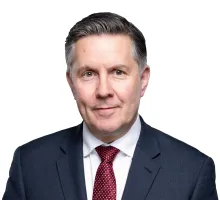
MARK BUTLER, MINISTER FOR HEALTH AND AGEING, MINISTER FOR DISABILITY AND THE NDIS: Thanks for coming to the Royal Adelaide Hospital on a beautiful day for a very exciting announcement about our wonderful Pharmaceutical Benefits Scheme. I’m joined by a few members of a broader collection from the brain cancer community here in Adelaide who are very excited about this particular PBS announcement. I'm going to ask in time to hear from the different people I’m with today, I’ll ask them to introduce themselves.
As everyone knows, the Pharmaceutical Benefits Scheme for 80 years now has been built on the idea that we try to bring as many of the best medicines from around the world to Australia and make them available to Australian patients at affordable prices. And today we're making a number of new listings on the PBS that will take effect this week and one of them is a truly exciting new medicine called Voranigo, which is the first new therapy for a particular rare form of brain cancer caused by genetic mutation, on the PBS for more twenty years. This medicine will, we think, benefit about 135 patients every year. It’s been available to some people, like Leah, who will tell her story of being on this medicine through compassionate access. Without the listing on the PBS, it costs as much as $28,000 a month. Obviously, well beyond the means of most ordinary Australian households. From this week though, it's available on the PBS at affordable PBS prices, which are no more than $25 a script. This is truly going to give great new hope to this group of patients dealing with this highly debilitating form of brain cancer, one that usually hits Australians and people elsewhere in the world in their early adulthood, in the 20s, in their 30s, and maybe their early 40s. So a genuinely a life-changing source of great new hope and new tool to do with this deeply debilitating version of brain cancer. Before I hand to my colleagues, I also want to say a few things about some of the other listings. We’ve got new listings this month for medullary thyroid cancer. Retevmo has been the subject of a lot of public commentary over recent months. I'm delighted that it’s been listed this week along with a Medicare listing of the genetic test which otherwise would cost people about $2,000. So $8,500 a month for Retevmo as a medicine, $2,000 for the genetic test. Now available on Medicare for the test and affordable PBS prices for the medicine, benefiting about 130 patients every year. We're also listing a new drug for a form of blood cancer, follicular lymphoma, which is going to benefit hundreds of patients every year, again a terrific new treatment that would cost thousands of dollars a month. And I'm also very excited that we're excited expanding Humira, a very well-known, highly effective treatment for Crohn’s disease, a version of inflammatory bowel disease. This will be available for kids for the first time and benefit hundreds and hundreds of them. Their parents otherwise would have been paying more than $500 every month for this medicine. Again, it will now be available at PBS prices. But we're here to talk about Voranigo and this exciting new treatment, the first in more than 20 years for this particular form of brain cancer and I'll hand over to Jim now to talk about the clinical aspects of this medicine.
ASSOCIATE PROFESSOR JIM WHITTLE, MEDICAL ONCOLOGIST AND NEURO-ONCOLOGY CLINICAL AND RESEARCH LEAD, PETER MACCALLUM CANCER CENTRE: Thank you, Minister. It's a great pleasure to be here this week. Today's an important day for Australians with an IDH-mutated grade 2 glioma because it represents PBS funded reimbursement for eligible Australians to receive the first targeted therapy for this disease. So, IDH-mutated grade 2 gliomas often affect young people in their 20s, in their 30s, and their 40s. And whilst it might be slow growing, it's certainly not benign. This is a cancer which is characterised by diffuse infiltration into the healthy brain. And this means that despite surgery, patients live with an understanding of almost inevitable progression. And that requires years of monitoring and treatment decisions. And up until now, the only treatment after surgery that's been available has been radiotherapy and chemotherapy. And this hasn't changed in 20 years. That's what makes today's PBS so significant. It's not only the first targeted therapy, but it's also the first new therapy in two decades. Importantly, it's not going to replace radiotherapy and chemotherapy, but it represents another tool in the toolbox. Another option for eligible Australian patients to potentially defer their radiotherapy and chemotherapy in consultation with their treating team. Ultimately today is about access for eligible Australians to receive this PBS funded medication. Importantly, it's also a reminder that there's a lot of work to still be done. Brain cancer is a hard problem to solve and we need to have ongoing research and funding to continue to lead to better treatments and outcomes for patients and their families.
LEAH FERGUSON, PATIENT LIVING WITH GRADE 2 IDH-MUTANT ASTROCYTOMA: Okay. My name is Leah Ferguson. This is my first time doing something like this, and actually I feel very grateful to be here as we announce the new listing. The first MRI that I had after experiencing vertigo during my pregnancy was when my daughter was three months old. And for anyone that's ever had a baby before, I was actually quite looking forward to the MRI because I had, a few moments to myself, and I did fall asleep. So as I came out of the MRI machine and the radiologist walked in and said, you need to go immediately to hospital, I was pretty disoriented because it felt like I had just woken up, this was just a little check. And I immediately went to the emergency room. Following that I had those things that you normally think about when you're being a mum. Is my baby still awake, how is she going? But I was instead thinking about my own mortality, and the decisions I had to make about being diagnosed with a brain lesion. I had to think about, should I have brain surgery before the wedding with my husband or after. Or would it be when I go back to work, when I was meant to be returning to work after having my baby? I did delay the surgery until my daughter was nine months old, and I did this so I could spend that time with her. But during that time, I was constantly on edge. I was thinking about all the uncertainties that come with having brain surgery and what happens after that. I was told that I couldn't drive, but I especially, I couldn't be alone with my daughter while giving her a bath. And it felt like this was meant to be the time that was so precious, spending time with my baby. But I just had this constant anxiety around what was to come next. After brain surgery, I had a chance to get back into that new normal. And as comes with new motherhood, I had so many decisions to make. Decisions to make on the treatment that I was to have in light of the diagnosis that it was a grade 2 astrocytoma, and what comes next in terms of treating that diagnosis. Radiation therapy meant that I would have had to travel over a hundred kilometres daily. Being driven now. Which meant that would be time away from my daughter Lulu. Or move my family from Torquay to Melbourne whilst I have radiation therapy. And then also the option of having chemotherapy. So when I was given the option to access the compassionate access programme of Voracidanib it felt like I could make a decision that was the best for me and our family. My doctor had to leave a small bit brain tumour in my brain after surgery, and that was because the risk was too high should he have taken all of that brain tumour out. And so it meant that I have this constant uncertainty knowing that I have a slow growing brain tumour in my brain. So I wanted to be able to choose an option to treat the leftover bit. And when the option Voracidanib and the access programme came in, that it felt like something finally going right, when my world had been turned completely upside down. And when you’re constantly looking at something incurable, I was really just searching for two things. One was more time with my daughter. And the other was quality of that time as well. So being able to go onto Voracidanib meant that I had a tangible option really helped me lead my life and to be able to spend time with my family. There is the constant uncertainty. And it happens just in those really small moments sometimes when I'm playing with my daughter, Lulu. And the thought creeps in that I have incurable brain cancer. Or sometimes when it's making plans with my husband, Josh. And even the other day, the unexpected things like, will I be around for Lulu’s high school, what school might she go to, where would we move? Thinking about the long term just has that edge of uncertainty all the time. And now, thanks to the amazing work of all the brain cancer advocates, and the work to be able to be on Vorasidenib, which wouldn't have been an option to continue on it in terms of the costs, and I actually get to just spend time with my daughter and make a life with my family. Thank you for having me and allowing me to share my story today
CRAIG CARDINAL, CHAIR, AUSTRALIAN BRAIN TUMOUR COLLABORATIVE: Good morning. Thanks very much for your courage. It's very important to hear those stories. I'm the chair of the Brain Tumour Alliance Australia, the Australian Brain Tumour Collaborative. And as the Minister and everyone is saying, this is such a significant announcement. We've known for a long time just how devastating the impact of this IDH-mutant glioma is to patients and families. It costs them by virtue of impacts physically, cognitively, financially, and to society as a whole. So it's a really important announcement and as the minister said, two decades is too long for us. We need to keep going. I think the other part about today's announcement is demonstrating the government the minister's commitment that he made at the Brain Tumour Alliance’s Head to the Hill event at parliament house, where he demonstrated he clearly understood the impact and that the government was committed to do more. So for us these 11 national foundations we unite together to continue to work with government. We're extreme excited about the Australian Cancer Research Program and what it means for us. It's an opportunity that we come together and continue on because two decades is too long for the next announcement. So, we're very grateful for the government and we're very grateful for the advocates, the strong advocacy that went into the feedback process. That's extremely important. People like Leah and their courage is- without that we have nothing. So, we're looking working with the government and thank you again.
QUESTION: Why do we think it's taken two decades?
CARDINAL: It's a complex disease. You've got some of the best researchers in the world, literally, and we just have to try something different. You know, the collaborative is a way of bringing the best researchers, clinicians, everybody together to work with government to hopefully co-design Australian brain cancer roadmap and ensure we have some sort of team Australia approach to brain we think by doing that there's going to be far better opportunities but it remains an extremely complex disease.
QUESTION: And do you think with these super rare diseases as well- I guess you know, with the ones that have thousands of people diagnosed each year researchers are probably so busy focusing on that. Do you think these more rare ones get left behind?
CARDINAL: They do get left behind. I mean at the end of the day it's about funding to invest in the research. It's about pharmaceutical capacity to make viable to do. We are a less common form of cancer, but it doesn't mean that it's got as impactful or devastating, if not more so, than a lot of other cancers that are more common.
QUESTION: Do we know how much was spent to make this pill?
WHITTLE: Yeah. In terms of, what's happening in the brain cancer space now and I guess the time that it takes to develop new therapies in this space. We know that brain cancer is a hard problem to solve and the thing that will solve this is time, people and funding. And I think what today shows is a collective of Australian research organizations who want to come together and work together to drive new research and better outcomes for patients and their families.
QUESTION: How important is the PBS for this? I mean, I don't think anyone could afford a $28,000 script per month.
WHITTLE: Yeah, absolutely. I think today's announcement that Australians living with an IDH-mutated glioma is really significant because it represents the first targeted therapy for eligible patients and you know also the first in treatment for two decades.
QUESTION: Just on Voranigo. Can you give us an idea of what the progression of this particular type of tumour looks like with this- without this drug compared to being able to access it and administer it?
In terms of what the outcomes look like for patients with/without.
WHITTLE: So Voranigo has been rigorously tested in large clinical trials and it's also been through the rigorous environment in Australia through the therapeutic goods association and the PBS leading to its listing on the PBS today and you know I think the significant impact here is for eligible Australians they might be able to defer their radiotherapy and chemotherapy, and that's really a significant outcome for patients.
QUESTION: What about the difference in quality of life? I guess obviously taking a pill is completely different than going through radiation.
WHITTLE: Yeah. I think quality of life is something which is central to our patients. And hearing Leah's story, I think will echo with many members of our brain cancer community, impacts people at really critical stages of their lives. It impacts their families, their children, and their loved ones. And so, the quality of life implications for treatment not just, how long I might be able to be on this treatment for are essential to understanding the benefit for treatment.
QUESTION: But how much will the drug slow down the process?
WHITTLE: Yeah. So I think- you know, every patient is different and I think these are going to be individualized decisions and discussions with patients’ treating teams in the context of the other treatments available to them. I think it's really significant to have another tool in the toolbox, another treatment available for patients.
QUESTION: Might just ask you a couple of questions, Leah, before we go to the minister if that's okay. So where are you from?
FERGUSON: I live in Torquay.
QUESTION: And how long would it take you to get to a hospital for treatment?
FERGUSON: To get to the Alfred was about an hour and a half depending. Don't go on a Thursday morning.
QUESTION: And when you were first diagnosed, what were the treatment options that were given to you? And I guess before this pill was a thing, what way were you thinking of going?
FERGUSON: So the options were radiotherapy or chemotherapy and as you said before they're more, can I say invasive? More invasive in terms of the fact that yeah whilst it's so good to be able to have a treatment that's something that may have cognitive effects further on, and I’m not super young but 38, that to be able to still be able to work and do those things. So that that would have been my treatment option to do.
QUESTION: And I guess radiation or chemotherapy, they both sound pretty scary. And as a new mum wanting to spend time with your child, I could imagine that would have been really difficult.
FERGUSON: Absolutely. That's why it felt like I was in an upside down world. Like, this when you’re just enjoying spending time with my daughter to have to have an think about what's going to prolong my life so that I can spend that with her and I would love to be a grandma one day.
QUESTION: And when you first found out about this pill, what was your reaction to it? And I guess the price tag as well?
FERGUSON: My surgeon- my neurosurgeon, he is a very direct person and we spent a lot of time talking through all the ins and outs and there were some really heavy conversations. At one point I said, could you just tell me something good about what's happening? And then that's when he told me that there is this drug. At that time there wasn't the compassionate access program, but in terms of something that was a bit of a light, something to hope for when we were talking about different options of treatment as well. And so, when we found out about it and the compassion and access program, how much it would have costed without that. Then we start to think, oh, we can't buy a house, we can't do this. Do we loan money from our parents? Do they have to sell their house? But there was just so many decisions and so many options that we had to just start looking for the short term. So, what might happen? And obviously have the hope that it's listed on the PBS.
QUESTION: how grateful are you for that?
FERGUSON: I'm so grateful. I'm so grateful to be here to be able to talk on behalf of the other people that live with something like this because it's so uncertain and so I'm so very grateful to be able to be on this drug.
QUESTION: Just lastly, obviously it's a very difficult thing to talk about alone in front of a bunch of cameras. What made you want to share your story?
FERGUSON: It's really important, the other day someone contacted me. It was a person I used to work with, hairdresser, and she has just been diagnosed with the same sort of thing as me. She's got a brain lesion. It's suspected to be a grade 2 glioma. And to be able to share my story with her, she sent me a text after that said, thank you for giving me hope, like, thank you for knowing that things can be okay. She has a young son as well. I think he's three months old. And so just to feel that I can share my story to say that there is some hope and that things will be all right for right now which and to be able to spend time with your family like that just means everything to me and so I really thought it was important to be able to speak on behalf of those people that aren't here.
QUESTION: Just a question. Do you have do you have a price breakdown for those drugs once they do enter the PBS
BUTLER: For this particular drug or the others that's been listed as well for or the others as well?
QUESTION: For all the drugs actually.
BUTLER: These drugs now they're listed on the PBS will be available at PBS script price which is $25 a month or $7.70 if you're on a concession card.
QUESTION: Oh just quickly, just to do with the PBS. I guess, like we were saying before this is obviously quite a rare cancer. How does the government go about choosing what actually gets to have the reduction in costs?
BUTLER: What we're seeing now is many more medicines coming onto the market that are more targeted to smaller groups. As Craig and Jim have said, obviously some of the rarer cancers have not historically received the same attention that the cancers with large population cohorts might have, but that's changing. And pharmaceutical companies are bringing medicines very regularly to not just the Australian market but the global market that have more focused patient cohorts like this one which will only be about 130 patients a year. But the other medicines we're listing have similar patient cohort size measured in the hundreds but highly effective medicines. And so it's a matter really for the companies to bring those medicines to our market. Sometimes when we hear of them existing in other parts of the world, Europe or North America, we will reach out and encourage them to come to Australia, but ultimately it's their decision to bring it to the market and their decision to take it to the Pharmaceutical Benefits Advisory Committee which is the committee of experts that's been overseeing our PBS now for many decades and that they then go through a very rigorous process as Jim said to assess the clinical and cost effectiveness of those therapies and if they're satisfied on both counts they recommend them to government and we move as quickly as possible to list them.
QUESTION: And when did this medicine hit the market? I know it's new.
WHITTLE: So, I think the clinical trials for Voranigo finished in 2023, was when this was first announced and started to become available in other jurisdictions internationally. And so I think you know today's announcement for Australians living with this disease is really significant and brings hope as indicated.
QUESTION: So when did it hit the market in Australia?
WHITTLE: In terms of the compassionate access program, I'd have to defer to the company exactly when they started. But patients have had access for nearly two years now through that program.
QUESTION: Just got a couple on a different topic. So the parents of Daniel Morcombe have written to the PM calling for a national registry of child abusers. Is that something the government supports?
BUTLER: Well, we're obviously acting in in a range of very significant ways to deal with this awful set of stories that have shocked so many Australians. Can I say, the Morcombe family are well known in Canberra. They've channelled their awful grief and trauma of the loss of their son Daniel into relentless advocacy for better protections to keep our children safe. The Attorneys General of the country met late last week to progress work on making sure we have nationally consistent working with children checks that jurisdictions are notified of any offense or any concern about someone who would be working with children in another jurisdiction. That builds on the sweeping work that we've been undertaking since many of these stories came to light over the last 12 months or so. Removing phones from child care centres, trials of CCTVs, mandatory child safety training, and removing funding from childcare centres that are not meeting standards. In terms of the report I've read this morning though, I think the letter was only sent on Thursday, so the media have picked it up very, very quickly. We'll have a look at all good suggestions obviously to keep our children safe, but it's a very recent letter. We haven't had a chance to do that yet.
QUESTION: And just on another topic as well, we push for changes to federal laws around telehealth so voluntary assisted dying can be conducted through the phone. And if so, when do you want that to happen by?
BUTLER: As people know, I think the National Conference of the Labor Party, which took place recently here in Adelaide, made a decision around this, but also recognized that that would be firstly a matter for Government to enact on a time frame decided by Government and that it would also be a conscience vote within the parliament.
QUESTION: Minister, just with the suspected bird flu cases that were reported in the southeast overnight, if that is confirmed to be H5 strain, does that government operations as handling bird flu at a federal level?
BUTLER: Well, I'm not going to speculate about those tests. I think they'll be expected sometime in the coming little while and I know the Chief Veterinary Officer here in South Australia has had a bit to say about that over the last 24 hours as well. I will say though, that that our Government along with all State and Territory Governments have been preparing for frankly this inevitability for quite some time. We are the last continent now to experience this H5N1 version of the bird flu. Every other continent has been impacted by it to one degree or another and we've been preparing for this including with very significant investment. On Friday, the Agriculture and Environment Ministers all met. They were briefed by officials who have decided to enact the national management plan that has been prepared over the recent time and that the enactment of that plan essentially reflects their advice that the chance of eradicating this virus from Australia have gone. That, the virus is here and it's now a question of managing it. So we're as prepared as we possibly could be. We've had the benefit of watching the impact of this virus in other continents and learning from that. I'm not going to preempt what that test might say, that I think all South Australians are aware of. We're obviously concerned about this But I think we are very well prepared to manage the impact as best we possibly can.
QUESTION: Should it reach the poultry sector. Are there any talks in the way about any sort of financial assistance or any other supports for poultry farms?
BUTLER: Well, there are obviously very significant talks with the poultry industry, with the agricultural industry more broadly, but particularly the poultry industry and they've been taking place for a very long time because the Australian poultry industry has watched the impact that H5N1 has had on poultry industries across the world in every other continent. And obviously we've been engaging with them and we'll continue to do that.
QUESTION: I take it's still too early to make, I guess, a call. Financial assistance is still kind of moving target?
BUTLER: This is obviously a relatively recent developing situation but I'll leave the Agriculture Minister to talk further about that.
QUESTION: Just on the fuel excise. Obviously driving in you’d see that, at least [unintelligible], $1 per litre, $1.90, $2. Do you have any message to Australians, particularly about panic buying and will the excise card be revisited in the future if the price of oil continues to climb?
BUTLER: Well, there's a few questions there. The Prime Minister and the Treasurer have always indicated that that we maintain a constant outlook on ways in which we can assist households and businesses with budget pressure, their household budget pressures, their business budget pressures. And you will have seen petrol prices rise over the last couple of weeks by about 30 cents a litre across the country not because of anything that the Government has done but because of the increase in conflict around the Strait of Hormuz and also more recently in the Red Sea. So I think this just goes to reinforce that this conflict can't end soon enough. Obviously for humanity in the region itself that's been impacted by the war, but it's reverberating right through the global economy and it has been felt over the last couple of weeks at the bowser by Australian motorists as well. We were always clear that the relief by removing the fuel excise and then only returning half of the excise at the beginning of July, was temporary. This is a very big investment from our budget but one we thought at the time was important to provide that relief to households.
QUESTION: There's been an expansion to the national household energy rating system. Is the idea that Austral move towards a standardised energy rate for rentals and new builds?
BUTLER: I'm not aware of that report so I'll leave that to the Energy Minister. Thanks.
Media event date:
Date published:
Media type:
Transcript
Audience:
General public
Minister: