
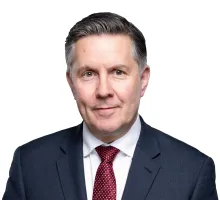
MARK BUTLER, MINISTER FOR HEALTH AND AGEING, MINISTER FOR DISABILITY AND THE NDIS: Thank you for coming out this good Friday morning. Overnight, the Trump Administration has issued another declaration about the possible imposition of tariffs on pharmaceutical exports, including from Australia. This is one of several different announcements we've heard over the last 12 months about the possibility of tariffs on pharmaceutical exports but this latest one, as with earlier ones, is deeply disappointing and deeply concerning, and is not the act of a friend. A friend that has shared, for more than 20 years, free and fair trade including pharmaceutical exports going from both different directions to the benefit, not just of our mutual economies, but to the benefit of patients here in Australia and patients over in America.
We're going to work through the details of this latest announcement, work with companies that might be impacted here in Australia who have tradition of exporting pharmaceuticals to America. We're obviously very concerned about their businesses and the jobs of the people that they employ.
I want to be clear though that this will have no impact on medicine prices at Australian pharmacy counters. They are protected by the PBS and, indeed, they've become cheaper as we've focused on dropping the price of medicines.
JOURNALIST: Do you believe CSL will largely be shielded from these new tariffs given they do have plants in America?
BUTLER: They are obviously a very big exporter to America of plasma products that are fractionated at a plant in Melbourne employing hundreds of people. We're very concerned to protect the security of those jobs and a great Australian business. I know that they are and have been engaging with the US Administration for some time. I don't want to speculate about that. I know that they've indicated, over the course of this morning, that they don't expect a material impact on their business, at least this year, from this latest announcement.
We'll be engaging with the US administration, not only on behalf of CSL but other Australian companies that export pharmaceuticals to America as well. We think this is the wrong decision. This is the wrong decision by a partner of a successful pre-trade agreement that has endured for more than 20 years. We want the US administration to think again and to reverse this decision.
JOURNALIST: Are there smaller Australian manufacturers that could take a hit?
BUTLER: There are a number of other smaller manufacturers. America is obviously an attractive market for small and medium enterprises who are starting up new products. If you can get into America, you can get approval by the FDA, that's a great platform for spreading to the rest of the world.
This will cause a great deal of concern to them. We're engaging with them because, as I said, this is not the first time President Trump has made an announcement about tariffs on pharmaceutical imports to the United States. But we take this seriously. Even though there have been several before, we do take this seriously. We're going to engage with the administration and engage with Australian companies who do export to America.
JOURNALIST: What's your guarantee to Australians around the future of the PBS?
BUTLER: Our PBS and good affordable medicine prices are protected by Australian law. They will not change because of any decision taken by the US Administration.
JOURNALIST: The US Administration says some countries such as the UK, Japan, Switzerland, are getting a lower tariff rate on pharmaceuticals. So why has Australia not managed to reach a deal?
BUTLER: We'll work through these details with the US Administration. There have been several announcements about potential tariffs on pharmaceuticals since President Trump was inaugurated, this is just the latest one. We take it seriously, but we'll engage with the administration and engage with Australian companies.
JOURNALIST: Are you confident that you'll be able to negotiate a deal though?
BUTLER: This has been, to say the least, a moveable feast of trade policy over the past 12 months. Our Trade Minister, our trade officials, our embassy in Washington have done a terrific job pushing the case for a continuation of free and fair trade between two countries that have enjoyed the benefits, the mutual benefits of a free trade agreement for more than 20 years.
This is the latest announcement. We'll have to deal with it, as we have every other tariff or trade announcement that the administration has made in the past 12 months - there's been a number of them. We'll continue to press our case.
JOURNALIST: Do these decisions frustrate you, not just pharmaceutical but the other decisions made by the administration?
BUTLER: We want to see our exporters continue to thrive. They export great materials to the US, not just CSL, with really important plasma and plasma products that save lives in America. It's great for jobs here, but it's great for patients in America. Lifting the price of health products is pretty self-defeating and we've made that case to the United States. That's why we came to such a successful free trade agreement 20 years ago and we don't want to see that rolled back.
JOURNALIST: Can you clarify, what is captured by these tariffs? Is it just medicines or is also things like cochlear implants?
BUTLER: We'll be working through that detail. We've only seen it overnight, a media announcement, so we're going to work through that detail. In the past, there's been some question over whether previous announcements of this nature have covered medical devices, have covered things like blood and plasma products, or just are focused on traditional medicines.
JOURNALIST: The US doesn't like our PBS. I mean, what sort of discussions has Australia had with the White House regarding the PBS?
BUTLER: Well more to the point, American drug companies don't like our PBS. They would like drug prices to be more expensive in Australia. They'd like drug prices to be more expensive in other countries that have good medicines policies as well.
But whenever that issue has been raised with the administration or by the administration, or by the pharmaceutical industry for that matter, we've made it very clear the PBS is not up for negotiation here in Australia. It is a much cherished institution that has served this country well for 80 years, bringing the world's best medicines to Australia, making them available to Australian patients and keeping prices low. Indeed, we've been making them even lower.
JOURNALIST: What's our relationship like with America at the moment? Is it fractured with this decision and also what's happening over in the Middle East?
BUTLER: They're two separate issues. On trade, I think it's no secret that Australia and many other countries across the world have worked hard to press the case with this administration about the benefits of free trade across the globe. It's good for American consumers, whether they're consumers of healthcare products or other consumer products, and it's good for jobs of friendly partners like Australia.
That's why we struck a free trade agreement with the US more than 20 years ago, and since then, it's been to both of our benefits. Indeed, for most of that period, almost all of that period, American exports to Australia have outstripped Australian exports to America. So they've done better from this deal than Australian businesses have.
Why they would try to roll that back and impose tariffs on a relationship that has done so well from free and fair trade is something we just disagree with, something we do not see as a friendly act, and something we've taken up to them right through the course of these last 12 months as we've dealt with announcement after announcement.
JOURNALIST: Just on the Middle East, there have been some reports out this morning that Australia has sent some SAS troops to the Middle East. Why, and does it risk Australia getting involved in the war?
BUTLER: The first thing I'd say is it's very long-standing policy of Government not to comment on the location or deployment details of ADF personnel, and I'm not going to depart from that long-standing convention. It is there for good reason - to protect our ADF personnel. So I'm not going to comment on the specifics of that report.
What I will say is that we've been very, very clear that Australia's involvement in this area is purely defensive. The deployment of the Wedgetail aircraft, the deployment of the air-to-air missiles, are there only for defensive purposes, particularly to defend the Gulf countries with whom we have a strong and growing relationship and where many thousands of Australian expats are situated as well.
JOURNALIST: So still not looking to get involved?
BUTLER: No, this is not a war that we've been involved with. This war between Trump's Administration, Iran, and Israel is their war. It's obviously hitting households here in Australia hard, and if it goes on for much longer it will continue to hit Australian households hard, as it is right through the global economy.
JOURNALIST: Are you looking forward to December 2028?
BUTLER: You’d have to be a bit more specific.
JOURNALIST: Well, the new administration coming.
BUTLER: This has been a strong relationship between Australia and America for many, many decades. They're our most important security partner. We have had a really good exchange of trade that's been to the benefit of workers on both sides of the Pacific. We obviously enjoy a lot of common cultural connections.
That relationship has endured through presidents and prime ministers of very different political complexions. Often, different political complexions, as I say, on the other side of the Pacific, and I'm sure that relationship will remain strong whatever happens in American elections or Australian elections.
JOURNALIST: Just one more on tariffs, what sort of concessions would Australia be willing to make in order to get the tariff down? For example, would we be willing to pay a higher price for new medicines from the US?
BUTLER: I've made it clear this will not impact drug prices for Australian consumers. The PBS is protected by Australian law, and the Australian Parliament will not change the way in which the PBS works. Indeed, the only changes we've made to these laws is to make medicines even cheaper by cutting script prices, by introducing 60-day scripts for common medicines for more chronic conditions. There will be no negotiation around the PBS under an Albanese Government.
JOURNALIST: You've said this action isn't exactly friendly. Is there anything the Government is looking at to try and improve the relationship?
BUTLER: On trade, this is not just an issue between the US and Australia. It's an issue between the US and most of the rest of the world. There's just a fundamental point of disagreement. We just don't think it's to the benefit of our relationship or, frankly, to the benefit of American consumers, to make the price of medicines being imported into America or other consumer products simply more expensive for American consumers. We will continue to make that case. It’s not in their interest, certainly not in the interest of Australian jobs.
Media event date:
Date published:
Media type:
Transcript
Audience:
General public
Minister: