
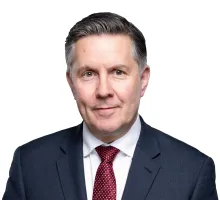
MARK BUTLER, MINISTER FOR HEALTH AND AGEING, MINISTER FOR DISABILITY AND THE NDIS: Before I say a few words about the meeting we just had, I want to address some reports out in the last few hours that one of the social media giants Reddit has launched legal action to challenge the social media reforms that took effect this week. Let's be clear that shouldn't come as a surprise. Across our history, when our governments have taken strong action to protect citizens against highly addictive, highly damaging products, they've usually been challenged in the courts by the companies that profit most from them, but the idea that this is some action by Reddit to protect the political freedoms of young people is a complete croc. What it is, is action taken to protect the profits that they make at the expense of the mental health of young people, and we will fight this action every step of the way.
It's action we saw time and time again by Big Tobacco against tobacco control, and we're seeing it now by some social media or big tech giants taken against these world leading social media reforms that are going to do so much to improve the social skills, the learning skills, and, importantly, the mental health of young Australians.
Now, on the meeting we've just conducted, it's been a really productive, constructive meeting. I think we came in with realistic expectations. I think all of us that we didn't have the authority to strike the sort of deal that all of us would want to see struck for the next five years, covering hospitals funding, but also, importantly, disability reform.
Our job as health ministers has been to narrow the points of disagreement down to a manageable list that our bosses, the Prime Minister, premiers and chief ministers, can hopefully come together before the end of the year and crunch through and finalise an agreement on before Christmas. And that's really the hope of the Commonwealth. I think I heard from state and territory health ministers, it's the hope of those jurisdictions as well.
We've made real progress, great, constructive work at officials level, but also work between ministers to narrow that list of non-agreed items down to a few issues that ultimately, first ministers are going to have to agree. Happy to take questions.
JOURNALIST: Just on the Reddit, while we're on that topic, if that's okay, I just want to ask if you think other social media companies are going to jump in on this? Do you think Reddit will be the last to make this sort of legal action?
BUTLER: We don't know frankly. As I said, we've done this sort of thing before. As an Australian Government, we've sought to intervene where we know that our citizens are suffering harm at the hands of a highly addictive, highly damaging product usually promoted by big multinational, multi-billion dollar corporations, and every time we've done this that sought to protect the profits that they make against the interests, the long term health interests of Australian citizens. Whether Reddit is a stalking horse for others, or whether we'll see other big tech companies join legal action, we don't know. But at the end of the day, we will fight all of these legal challenges every step of the way, because we know just how important it is for young Australians. We also know how closely other governments and other communities around the world are watching this. They want it to be a success, and if it is a success, I'm very confident they'll follow seat and take the same sorts of actions to protect their young citizens as well.
JOURNALIST: The minister just agreed here today that it's frustrating that the outcomes of the 2023 National Cabinet haven't come to fruition. Do you feel the same way? Do you share those frustrations?
BUTLER: You've got to be clear about what the agreement in 2023 set out. It did set an ambition to get to a certain share of hospital funding from the Commonwealth, but it was always clear that those funding increases every year would be capped. In the same way that the state contributions to the National Disability Insurance Scheme have been capped at no more than 4 per cent growth for the entire life of the scheme. That's why the Commonwealth funds about three quarters of National Disability Insurance Scheme, because we've had to bear pretty much all of the fiscal expansion of that very fast growing scheme.
I don't think anyone pretends that the National Cabinet agreement of 2023 was that simple, that it was simply about a target of 42.5 per cent. It was always clear, and frankly, has always been clear, that Commonwealth contributions would be capped on a single year basis, and we expanded those growth caps very considerably. Without the offer that we made at National Cabinet in 2023 states would have got about an extra $12 billion in this next five years compared to what they got under the last five year agreement, we've upped that by $21 billion. They’ll receive a $33 billion increase from the offer that is currently on the table. In addition to which there is $2 billion extra on the table to address what I know is a very significant issue of longer stay older patients in the hospital system. This is a very generous offer, and we're very confident that premiers and chief ministers will want to come together with the Prime Minister over the next several days to crunch a final agreement before Christmas.
JOURNALIST: Minister, it was pretty clear before this meeting, though, that the states and territories weren't pleased with the offer that was already on the table from the federal government. Why wasn't an alternate offer given today to try and progress this before Christmas?
BUTLER: A further offer, as the Queensland Minister revealed yesterday in the Parliament, a further offer was communicated to premiers by our Prime Minister only over the last couple of days. I know that that's the case. We haven't received a response from premiers yet. We've had a good discussion in the ministerial meeting today. I didn't expect them to come and convey agreement on the spot. I expect there to be a discussion at first minister level. I hope there will be a meeting between now and Christmas that premiers and chief ministers attend with the Prime Minister to crunch this through.
But look, one of the truisms of Australian politics, particularly in the health sector, has been that states want more money from the Commonwealth. I'm not surprised that that was a position that health ministers put again today. But ultimately, this deal has to be landed. We have to get certainty. This is a very generous offer, but we need to move forward not just on hospitals funding, but some of the important disability reform issues that are covered by this complex negotiation as well.
JOURNALIST: Is the federal government serious about redirecting the $23 billion elsewhere if states don't agree? And if so, what's the deadline?
BUTLER: We'd like to see an agreement by Christmas. An effective deadline, really is when South Australia goes into caretaker, which is in late February. If we haven't struck a deal by then, it becomes very difficult to put in place new hospital funding arrangements before the first of July. All of us, all jurisdictions are highs wide open that the runway is getting shorter and shorter for this deal. The Prime Minister made clear in his letter, and has made it clear in his public commentary. But of course, we are planning fall back options in the event that we can't strike a deal. I imagine the state governments are doing exactly the same. That's what a responsible government would do.
JOURNALIST: So that money could go to priorities for the federal government, including those Medicare clinics or whatnot?
BUTLER: Well, there's always other things that the Commonwealth could valuably spend its money on in the health and social care system, across disabilities, across aged care, as well as across health. I don't want to get to that position. The Prime Minister doesn't want to get to that position. But of course, responsibly, we are planning for the possibility we don't strike an agreement with states and territories. I don't think that's likely. I think we will get there. I think premiers and the Prime Minister and chief ministers will get there. But of course, we're planning a fall back.
JOURNALIST: Is the federal government considering a deal that would offer states a one-off payment to increase the share of funding and then increase the caps moving forward to get to that 42 per cent figure?
BUTLER: That's not on the table, no.
JOURNALIST: Do you reckon you've broken any promises that were made at that National Cabinet?
BUTLER: No, I think if you go back and have a look at the record it was very clear, and has always been clear, as states have been negotiating these agreements with the Commonwealth, that the Commonwealth increases in funding have always been capped. As I said, the state's contributions to the NDIS have always been capped. That is just a basic part of each level of government protecting their fiscal exposure to a scheme that's essentially operated by another level of government. That was very clear. State and territories understood it that there were essentially two sides to the coin, the ambition to get to a certain contribution rate but that that ambition was always circumscribed by growth caps.
JOURNALIST: Is there going to be another meeting between the Prime Minister, premiers and chief ministers before Christmas to get that deal struck before Christmas, like you said this morning?
BUTLER: I very much hope so. And that's the invitation the Prime Minister put to premiers and chief ministers earlier this week.
JOURNALIST: And the health ministers spoke about the 3,000 long stay patients, and that that number increasing by 630 in the last three months alone. How concerning are those numbers to you?
BUTLER: I'm not in a position to verify those numbers. States put those numbers to the media. I've read the reports, but frankly, whether the number is a little bit less than 3,000 or whether it's 3,000 I've been very frank, I know that there is very real pressure on the hospital system, as there is right across the health and social care system, presented by the ageing of the population.
We're right in the middle, or at the beginning of, a very big surge in demand for aged care because the oldest of the Baby Boomers have turned 80 this year, my dad included, like there were a lot of babies born in 1945 and 46 and 47 and we will see surging demand for aged care. That's frankly why so much more should have been done by the former government to prepare the aged care system for that demand. We knew it was coming, and frankly, nothing was done in that last decade of the former government. We've tried to catch up. We've compressed a lot of reform into aged care within just three or four years. But we know we need aged care providers building more facilities and building them very quickly.
I've been very open in acknowledging the pressure this is creating on hospitals as much as other parts of the healthcare system. We've put investments in place a couple of years ago to try and ameliorate that for state hospital systems, and in the letter the Prime Minister put to premiers and chief ministers earlier this week, another $2 billion was put on the table to increase that support and find other ways to smooth the path of older people through the hospital system.
JOURNALIST: Do you believe those long stay patient numbers they've given?
BUTLER: I just haven't had a chance to look at them and verify them. I know it is a growing challenge for the hospital system. I've been very frank about that.
JOURNALIST: Do you have any reason to believe that the states would lie about those numbers or exaggerate them to get more money out of the federal government?
BUTLER: No, but I think it is responsible for the Commonwealth to be able to have a look at the numbers and verify them. There are a range of reasons why people are stuck in hospitals or really about where they are prevented from going. Some of them would be able to go to Home Care Packages, some to residential aged care. But the thing I've consistently asked the state governments for is better data about what the particular needs of some of those patients are. It's important for the Commonwealth, for example, if we're able to plan a response to this, to understand how many of those patients would be ready to go into a standard aged care facility. It's really a question of finding one of the standard beds, and how many I know might have much higher level dementia needs that need a more targeted response. We've consistently asked for more granular data about these numbers. Whether it's 3,000 or 2,900, or 3,100, for that matter, I've acknowledged this is a very substantial pressure on hospitals that we recognise we have a responsibility to help work through with state governments while we're in the process of, frankly, trying to get the aged care sector to build more beds more quickly.
JOURNALIST: Is the federal government willing to stump up any more cash? Is this the last and final offer? Could we see more cash from the federal government?
BUTLER: What we've been able to see is that, is that gap, that dollars gap, if you like, between states and the Commonwealth get narrower and narrower. Ultimately, I think it's only really in the power of the Prime Minister and premiers to find a landing point. Really in the scheme of the level of funding that is put into hospitals and disabilities over the course of five years, that gap sounds like a lot, $7 billion, but it's in the context of hundreds of billions that together we are putting into these really important social programmes for Australians. It's a very real prospect that if premiers and Chief Ministers and the Prime Minister are able to come together, we can find a way to close those final three or four issues that are outstanding and move forward with a long term, five year agreement.
JOURNALIST: The Queensland Health Minister, likened the federal government, to the Grinch yesterday, but he said, in keeping with Christmas spirit, he refrained from doing that today. Does that give you any optimism that a deal could come?
BUTLER: Did he actually withdraw the earlier comment or did he simply not repeat it?
JOURNALIST: No.
BUTLER: As I said, look, these things always have a bit of political colour around them, and language and rhetoric that's in the nature of federal politics. But what I think the meeting we've just finished reflects is a real sense of shared commitment to get to this agreement, recognising the extent of our jobs, which is to narrow those points of disagreement so that our bosses can really land a deal if we can before Christmas.
I want to pay tribute to the officials as well. Many of the jurisdictions have been represented by heads of cabinet, heads of premiers, departments and heads of Treasury. This is not just being a health officials negotiation. All levels of government have really gone all in on this and committed the resources that are necessary to land, was a very consequential but also very complex deal. It's not just a hospital funding deal. It has some very technical, challenging issues associated with the future of the NDIS in the deal as well. And I think everyone's really doing their darndest, spite of the political rhetoric, doing their darndest to come to an agreement as quickly as we can.
JOURNALIST: Ministers also brought up their own concerns and thoughts on Thriving Kids and the NDIS, what did you make of those discussions today?
BUTLER: They were really positive. This is moving quite fast. I don't think really went anywhere for a couple of years as a point of discussion between states and the Commonwealth. I tried to, frankly, give it a big nudge along at the Press Club several months ago, and I think since then, since the Commonwealth indicated our willingness to lean in on this, that was one of the complaints that states were making, that the Commonwealth was being a bit too hands off in the development of this really important programme for kids under the age of nine who are experiencing more mild to moderate developmental and other issues.
We've done a power of work between us and states. We've had a Thriving Kids Advisory Group that has state representation on it that I co-chair had a full day meeting earlier this week. It's close to finalising its work at a Parliamentary inquiry that's that will be delivering its report next week. And we've had these bilateral discussions going on between the Commonwealth and individual state governments. I think we're making enormous progress. And again, there are a couple of elements that we'd like to see the Prime Minister and premiers agree to just understand the sort of architecture of it from a funding point of view, but I think we're in a really good position to move forward, and that'll be great for parents and for children.
JOURNALIST: On the PBS, is the federal government considering the listing of Ozempic on the PBS? Is that still for serious consideration?
BUTLER: The sponsors bring forward applications. The big drug companies that own these products bring forward applications to the Pharmaceutical Benefits Advisory Committee for listings. Ozempic is obviously listed for type two diabetes patients. I'm not going to get into particular brands, because there are different brands of essentially the same class of drugs, the GLP-1s. One of them is currently before the advisory committee with an application for PBS listing for obesity combined with established cardiovascular risk. We'll see what the advice is, and depending on the advice, we'll look at progress on that.
I said this morning, there's also been some general advice I've sought from that advisory committee about ways in which we can ensure that this pretty incredible class of drugs that is doing a lot, frankly, around the world, is able to be rolled out in an appropriate way across Australia in time with good equity behind it. Because what we're finding right now is that access to it really depends on the ability to find $4,000 or $5,000 a year. If we're going to roll it out through a more equitable scheme that's also situated in some good general care for weight loss, diet, exercise and things like that, we might need to consider a slightly different approach than we might with more traditional types of medicine. I've asked for that advice as well.
JOURNALIST: Just back on the Grinch, do you think that was a fair comparison?
BUTLER: Of course, I don't. Of course I don't. But I think it's also part of the contest between jurisdictions as we strike these really important deals. Thanks very much.
Media event date:
Date published:
Media type:
Transcript
Audience:
General public
Minister: