
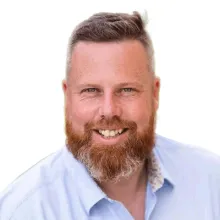
JESSICA ONG, HOST: Blokes, the stereotypes you are trying to shake off or overcome. We do receive questionable advice sometimes from people who think they’re trying to help you, but maybe not always in the right way. I’m not raising boys. I’ve got two girls who I’m raising and trying to leave a legacy with. So you can educate me this morning, because it’s a world I don’t know too much about. The stereotypes you’re trying to shake off, the advice you’re trying to leave behind, how are you trying to change things for the young men and boys in your life? Well, Dan Repacholi is the Special Envoy for Men’s Health. Good morning to you.
DAN REPACHOLI MP, SPECIAL ENVOY FOR MENS’S HEALTH: Good morning, Jess, and good morning, listeners. It’s a pleasure to be here up in the NT.
ONG: Yes, well, welcome to the heat. And look, there’s been a lot of stuff in the news, Dan. Over the last couple of weeks, we’ve heard about Russell Brand. He’s been jailed for over 10 years this week. Comedian, actor and children’s author David Walliams is also in the spotlight over allegations involving teenage girls. Here in the Northern Territory, in the Top End, we had drink-spiking incidents in Darwin just last week, and then recently members of the Northern Territory Police Force allegedly shared a deepfake pornographic video of a female colleague. We’re constantly seeing examples of men acting in dangerous ways towards women. So clearly something’s not working. How do we change course? Is that even possible?
REPACHOLI: And that’s why this role is so important as Special Envoy for Men’s Health, and to be up here for the next week or so with Luke Gosling, being out here chatting to blokes, talking to all these different organisations and seeing what the pinch points are, where we can genuinely make a difference in this space. Because, as you’ve just said, there are some terrible things happening right around the world with blokes right now. We need to make sure we get the good blokes out there having the conversations, making sure that we’re doing what’s best so that the next generation can be better. All we want is good, healthy men, good, healthy women, and if we have both of those, we’re going to have good, healthy communities along the way. And a lot of those things that you just spoke about will be a thing of the past, and hopefully we won’t have to keep bringing them up into the future.
ONG: It sounds really simple, doesn’t it? Good men, good women, off we go, have a great time. What makes it so hard to reach that point, though? Where are we going wrong?
REPACHOLI: Stereotypes. A lot of it comes down to stereotypes, and things like consent. Obviously, with some of the things you spoke about earlier, consent is a big thing, and making sure that you ask for consent and have those conversations. But just making sure we’re good people. Treat people the way you want to be treated and, in general, you will get that back. That’s in all life that we do. But we need to make sure we’re using good blokes as role models, making sure they’re out there having these conversations, but also calling the crap out as well, Jess. Because if you see one of your mates doing the wrong thing, have the conversation with them. Go, 'Do you think that’s acceptable? Would you want your daughters to be treated like that? Would you want your sons to be treated like that? Or would you like to be treated like that?'
ONG: I find it interesting that we have to think about it through the lens of if we had sons or daughters, don’t you think? To think, 'Oh, would we accept that or not?' Is that part of the problem as well?
REPACHOLI: A little bit, Jess. But it’s a way of putting a personal touch on something, of thinking about it a different way. That’s why I frame it that way, because that’s the way you pull on the heartstrings. Because no matter who your family is, you never want anything bad to happen to somebody in your family. So that’s why I always speak about it that way.
ONG: How do you reckon we put respect for women front and centre when it comes to these conversations? Because the examples I’ve given, obviously that hasn’t happened. So who’s responsible for that?
REPACHOLI: We all are. We’re all responsible, Jess, and especially us as blokes. And calling it out, as I said earlier. The amount of domestic violence happening in this country from men towards women is huge, and that is where the majority of the domestic violence is coming from. So we know in our friendship groups, just by where the numbers are, somebody in our friendship groups is doing this. So if we see it out in public, if we have conversations with our mates where there are signs of financial control and things like that, have the conversation. Because if we do not call it out, it will not stop.
ONG: Speaking of conversation, your friendship circles, there’s new research that came out from the Australian Institute of Criminology just yesterday. It found that young men are significantly overrepresented among Australians who subject others to online hate. This research says these people were also more likely to spend less time connecting in person. How have the connection points dropped away for men? Where’s that struggle?
REPACHOLI: Well, life has changed. Technology has changed. And that’s why us bringing in the social media age restrictions for young people was so important. For under-16s, not being able to get on there, that is one of the most important changes we’ve made. But also what we’re doing with the new Digital Duty of Care Bill that we’ve put in, and My Feed, My Way, so we can choose what algorithms we see and what we want to see, rather than what we’re being forced and shoved down our throats to listen to and view. They’re extremely important things, and this will help with that social cohesion as well. We want to see more young blokes out there playing footy. I get to go to the footy this weekend, get to see the Darwin Buffaloes play, have a conversation with those guys and see what they’re doing to bring community together. I’ve also got the Man Walk on with Jimmy Burris and a couple of other little events over the weekend where we’re getting some physical activity in. It’s just getting out there and being part of the community. That’s what we need to push for young blokes and older blokes as well who are struggling, because there are a lot of older blokes struggling with loneliness, struggling with having conversations with just anybody. It’s about getting them up off the couch and not always being a keyboard warrior behind the scenes. In general, a lot of people say things on social media that you would never, ever say down the street when you’re walking past somebody. If it’s not acceptable to say out loud down the street, how come it’s acceptable to say on social?
ONG: With everything that you’ve talked about, Dan, and your role as Special Envoy for Men’s Health, given everything we’ve touched on, where do you find the light?
REPACHOLI: There are many lights here. It’s about getting out there and having conversations with all these different community groups, but also just genuine men and women on the ground. That’s what I’m looking forward to most doing with Luke Gosling over the next five days or so, getting out there, getting on the ground and talking to blokes, hearing them go through their struggles and their stories of what’s happened to them. I’m really looking forward to spending some time with Luke up here and making sure we’re genuinely trying to make a difference. Because we need to hear what is happening in the Territory. The Territory is different to where I am in the Hunter, different to Sydney, different to Brisbane, Melbourne, WA. It is very different. We need to make sure that whatever we do for men’s health, and to make sure men are being better people, we do Australia-wide, not just thinking on the east coast or in the major cities. We actually need to involve rural and regional communities as well. Because if we can get it right in rural and regional communities, the cities will just follow on.
ONG: Yeah, that hopefully is the plan. Fingers crossed. One thing I was saying, you’ve made it your mission to reverse some of the bad advice that Australian men have been given. Are you trying to reverse any advice yourself, Dan?
REPACHOLI: Always, always trying to reverse some advice, especially around my eating patterns. Sometimes I get a little bit excited when I see certain foods. And myself, I’ve gone through my own journey. I’m down 37 and a half kilos over the last two years. I was a big unit. I’m six foot eight already, and I was weighing 152 kilos. So I was a massive guy, but I had to do something about that. I was just a step away from having diabetes. I was a step away from a heart attack or a stroke. And I’ve got two beautiful young daughters, 13 and 11, and I want to be around for them for a long time into the future. So I had to do something with my health. It’s about having those rough conversations with blokes and talking about all the things that are uncomfortable, like peptide use. So many blokes out there, and women as well for that matter, are talking about peptides and using peptides because they’re shoved to us through our social media networks and things like that. But just having conversations about how we’re going through it personally. I can’t expect somebody to open up to me if I can’t have the conversation with them first. So it’s really about getting out there, listening. My job is listening to start with in this men’s health role. Because if we knew how to fix this problem, previous governments already would have done it. So it really is about listening and then seeing what we can put forward to genuinely make a difference to the health of Aussie blokes in this country and, in general, the whole community.
ONG: Before I let you go, you mentioned that you’re in the federal seat of Hunter. I think you had a bit of a challenge from the One Nation candidate at the last election. Obviously One Nation are really stamping their presence in different parts of Australia. How are you feeling in relation to your seat, given the challenge you had last time?
REPACHOLI: So we’re the only seat in the country that’s two-party preferred with One Nation. And for me, it’s getting out there and working hard, talking to your local community, being part of your local community and actually listening to your local community, making sure you don’t get left behind. And at the end of the day, right, polls are polls. If I went off polls, I’ve lost two terms in a row, if you go off polls. So the biggest poll for me is what somebody tells me on the door, what somebody tells me on the phone or what somebody tells me when I’m sitting down having a beer at the pub. That’s the biggest poll for me.
ONG: Good to talk to you this morning, Dan. Thank you.
REPACHOLI: Thank you, Jess, and thank you, listeners.
ONG: That’s Dan Repacholi. He is the Special Envoy for Men’s Health. He’s here in Darwin for the next few days, doing a few different things. If you’re out and about and you happen to be a bloke, have a chat to Dan.