
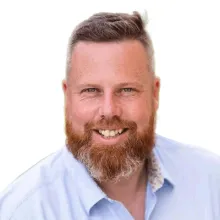
ANDRE LESLIE, PRESENTER:
Men account for nearly 76% of all suicides in Australia according to recent statistics. To talk more about men’s health, I’m joined by the Special Envoy for Men’s Health, Dan Repacholi. He’s a Federal Member of Parliament from New South Wales and joins us here in the Launceston studio while touring Tasmania.
Hello, Dan.
DAN REPACHOLI MP, FEDERAL MEMBER FOR HUNTER: G’day, and g’day listeners.
ANDRE LESLIE: Great to have you with us. Who have you been meeting with over the last few days around Tassie?
DAN REPACHOLI: Look, it’s been an absolute pleasure to be here. This is our fourth day in Tasmania, we’ve been here since Sunday and we’ve had a lot going on.
We’ve met with Business Northwest Tasmania, the Burnie Health Hub, Burnie Men’s Shed, Penguin and Ulverstone Complete Care Pharmacy, the Ross Men’s Shed, the Boyer Paper Mill, Relationships Tasmania, Lifeline, Men’s Resources Tasmania, the Tasmanian Men’s Shed Association, Rosny Park Complete Care Pharmacy and Men’s Health Down Under.
We’ve also visited the Launceston Men’s Shed and South Launceston Football Club, and we’ve got plenty more meetings lined up as well.
ANDRE LESLIE: That’s a serious list of very active organisations. What’s the general tenor of what you’re hearing from people?
DAN REPACHOLI: The big thing in this space is that we’ve never had anyone focused specifically on men’s health in government before at any level, state, federal or territory.
So it’s about getting out of Canberra and talking to organisations, both large and small, and also to everyday dads and mums, brothers and sisters on the ground. Hearing what their issues are, what we can do better as a government, what we might be doing well already, and where we can really make some big changes to address some of those awful statistics.
As you mentioned, men account for around 76% of suicide deaths in this country. The largest killer of young men aged between 15 and 44 is suicide and that’s a scary figure.
Unfortunately, most of those men hadn’t seen a health professional in the 12 months prior. So if we can get more blokes to see their GP and have regular check-ups, even just once a year, we can save thousands of lives.
ANDRE LESLIE: Politicians love the word consultation, and that’s important. But action matters too. Where does this lead? What are we actually going to see?
DAN REPACHOLI: Action is absolutely the biggest thing we need to deliver, but first, we need to listen.
If we already knew how to fix this, previous governments would have done it and my role wouldn’t exist.
Being out there having these tough but important conversations is critical. For example, we were at the Ross Men’s Shed talking with blokes aged between 70 and 85 about how their lives have changed after prostate cancer treatment.
These are real conversations about confidence, relationships and physical health.
Over the first 18 months to two years, it’s about getting out there, listening and working out what kind of package we can bring forward that will create generational change — not just something designed in Canberra that might miss the mark in regional Australia.
ANDRE LESLIE: Let’s take it back to the individual level. Why do you think some men are still reluctant to see a GP or talk to someone?
DAN REPACHOLI: There are some big differences in how men and women approach health.
Women often grow up attending regular appointments with their mums and develop that habit early. For many blokes, we only ever went to the GP when something was seriously wrong, usually dragged there by mum when we were kids.
If we can normalise regular health check-ups for young boys from an early age, whether that’s with a GP, nurse practitioner or another health professional, they’re more likely to continue that habit throughout life.
Around 60% of men wait at least a week before booking in to see a GP when they’re sick. Another 34% wait more than four weeks, and some don’t go at all.
We need to make it normal to talk about our health and seek help early.
ANDRE LESLIE: Do you think Australian men are becoming more willing to show vulnerability?
DAN REPACHOLI: We’re definitely getting better.
My dad would never have spoken about some of the things I talk about now regarding my own health journey. But younger generations are more open to these conversations, and that’s a really positive thing.
For blokes in our age group, it can still be tough. But even having a chat with a mate, over a coffee, at the footy club, cricket club or even at the pub, can be the first step in getting both your mental and physical health back on track.
ANDRE LESLIE: What’s next for you?
DAN REPACHOLI: I’ll head back to Canberra for a couple of weeks after spending a few days with my family and then continue travelling around the country.
We need to make sure any programs we develop support blokes everywhere, in cities, regional communities, and rural and remote areas, not just on the East Coast.
ANDRE LESLIE: Dan Repacholi, thanks for joining us.
DAN REPACHOLI: Absolute pleasure. Thank you.