
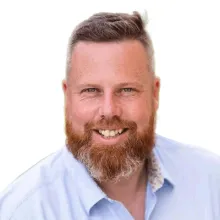
CUPPITT, HOST: Time to talk about men here at 97.3 ABC Illawarra and ABC New South Wales. Coming up later on today out of Dapto, we've got the Healthy Men Community Conversation and a couple of special guests are in the studio with me. The Special Envoy for Men's Health is Dan Repacholi. G'day Dan, how are you going?
DAN REPACHOLI MP, SPECIAL ENVOY FOR MEN'S HEALTH: G'day, good thanks. Pleasure to be here. G'day listeners.
CUPPITT: Very good to meet you. And the local member, Carol Berry, our Member for Whitlam. Morning to you. How are you?
CAROL BERRY MP, FEDERAL MEMBER FOR WHITLAM: Really well, thank you.
CUPPITT: Tell me about this interesting job of yours as the Special Envoy. What's the brief?
REPACHOLI: The brief of my role is to get around the country, talking to men, talking to women and all the different organisations that are out there, hearing what their pinch points are with government to try and get men's health better. The easiest statistic to talk to is that on average men are dying just under 5 years earlier than women in city areas, but if we move out into rural and regional Australia, that's up to 13 years younger that we are passing away. Your eyebrows just went up there, and that's what most people's eyebrows do because they're shocked by this. It shows the health literacy that is different from men to women, and this is something that we do need to fix in this country. I'm extremely proud of the Albanese Labor Government. It doesn't matter what side of politics you're on, this is the first time this has ever happened in this country that we've had somebody specifically out there talking about men's health and men's issues. This is an amazing start to what we hope will go a lot further in seeing those terrible statistics get cut right back.
CUPPITT: Now, I deliberately played Macho Man, apart from giving us all a smile, because you mentioned that men are very likely to lend a hand to a mate, to do something physical, to do something difficult, but it doesn't necessarily translate into asking for help themselves. How are you trying to change that conversation?
REPACHOLI: That's right. Men aren't as open as Carol and her female friends at having the conversations like they do. We do a lot of good work shoulder to shoulder, where we're walking, watching the footy, kicking the ball around, working on cars or working on our homes. That's where we get our best conversations in, or quite often around the pub having a beer as well. Women are so much better at talking face to face, looking at each other and opening up about what issues they're going through. This is about making sure that we have the ability to open up, and when we do open up, actually being there to listen. We don't have to fix the problem, you just have to be there to listen to the problem. That's what a lot of blokes just want to do. They just want to get it off their chest, have that conversation and have an ear to listen, and then a shoulder to cry on if that is where it ends up going. It is okay for blokes to cry. It is okay for blokes to show emotions. Gone are the days where you get told to have a teaspoon of cement and harden up. Those days are over. We need to make sure that we have these conversations, because a good strong male is somebody that can talk about their issues, that can talk about their feelings, that can open up about the things that matter to them and their family, and they don't bottle it up until it gets too big and too much, and sadly, some people reach crisis point before they get the support they need.
CUPPITT: How are you expecting things to go with this conversation today, Carol, from your point of view?
BERRY: We really want to reach as many men as we can in the community, so it's such a great opportunity to have Dan down in the Illawarra today. We've got him in back-to-back meetings with lots of different community organisations here in the Illawarra today, and we've got our community conversation tonight in Dapto as well. The more we can reach men with this message, and Dan articulates it so beautifully, the better. It's such a great opportunity to have him down today.
CUPPITT: I don't know about you, but I'm predicting most of the audience to be women, turning up and having these conversations on behalf of men. I wonder, Dan, whether you think that we need a new definition of what courage is, because a lot of blokes have the courage to go and join the army or do something difficult, but not the courage to have hard conversations.
REPACHOLI: That shows exactly what courage is, being able to have these hard conversations. I say this regularly: you can be courageous on the footy field or go and represent your country in some of the worst battles that we have and fight for your country, but it's still okay to have the conversations with your mate, your family or a health professional that you're not going okay. That is big courage. It's okay on the footy field, you can smash each other and do everything you want, and then walk off and have a beer with that person later and have a conversation and really open up to them. That is no issue whatsoever, and that's what we need to see more blokes doing. With what you said earlier, that you think there will be more women tonight at the event: sometimes there is, sometimes there isn't, but women play a major role in this. Women play a huge role, and a lot of ladies go to me, especially older ladies, and say, I'm sick of nagging my husband or partner. It's not nagging, it is positive reinforcement. To all the ladies listening out there, you're never nagging your partners, it is positive reinforcement, and keep doing it. To the daughters out there, they have a different way of communicating with their dads that can get them to do things that quite often their mums can't convince them to do. So to all the daughters out there, have the conversation with your dads, your uncles and your brothers. Get them to see a GP. If we can get just 10 per cent more Aussie blokes in this country in to see a GP every 12 months and get a blood test, we'll save thousands and thousands of lives in this country.
CUPPITT: You're talking to the whole of New South Wales at the moment. We're broadcasting to every corner, and you mentioned that regional Australian men particularly suffer. Are you reaching out with these kind of conversations to other areas around New South Wales?
BERRY: I know that Dan is certainly travelling the nation as we speak with this particular message, so Dan is in a great position to talk about the outreach work.
REPACHOLI: We are travelling the country, and for me what is important is that we get around the country. We get to all the major cities, but we get to the rural and regional areas too, because that 13-year gap of when we pass away on average compared to our female friends is phenomenal and scary, and that's what we need to change. If we can make this work in regional Australia and rural Australia, we will be perfectly fine in the cities, because it is always harder in rural and regional Australia. I'm from a rural and regional area, and we need to make sure that what works there can be utilised elsewhere as well, because not everywhere works the same. We need to make sure that we're adaptive to the different areas, and also the different states and territories. They have different ways of going about their healthcare all around the country. Ultimately, it's about men's health and getting more men to see a GP and actually talk about what is going on, rather than just going into the GP and saying, I've got this rash on my leg, when you've been complaining to your wife or partner for the last three years about something. A lot of doctors call it the doorknob question. They touch the doorknob and go, oh yeah, my wife said I should talk to you about this. Half the time that gets spoken about, and the other half of the time it doesn't. So we need blokes to go in there and have the proper conversation.
CUPPITT: Why have you taken this on as a special interest, Carol?
BERRY: I have men in my life that I love, and so many women really are concerned about these issues. We want to make a difference. We really love our men. We want our men to live as long as we do, and here in the Illawarra and across my electorate I have people talking to me about men's health. People are concerned about it. We want to see a difference being made. When I knew I had the opportunity to get Dan down here, I really jumped at it.
CUPPITT: For some of us, we might be old and stubborn and far too late. I'd be more worried about young boys and where they feel they can be useful men, and what the definition of a man is. All of us who have raised a boy, me included, as soon as that boy is born, think we have to teach him how to be a man, but don't even know what that is yet. How are we reaching out to young boys?
REPACHOLI: We're reaching out to all age groups, to be perfectly honest, and for older men it's definitely not too late for them. That's why men's sheds are so important. We're going to Koonawarra Men's Shed shortly. Men's sheds play a huge role in this, but then you look at grassroots sport as well, like AFL and NRL. They're doing great work in this space with educating young men and young women as well around what the right levels of respect on the footy field are, and that falls into life as well. Anything where we can engage with people and show people what respect is, that is a big thing, and that is something we need to make sure we are working with in this world.
CUPPITT: Tonight, in particular, it's in Dapto between 6 pm and 7:30 pm. Can people just turn up and put their hand up?
BERRY: Our books are pretty full at this point in time, actually. We've had a good response. If people do want to come along, please call my office. We've probably got literally about 10 spots available. It's really important that people RSVP, but we're going to record that conversation so it will be available to people afterwards. We really want to reach as many people as possible with this message.
CUPPITT: That's excellent. I'm glad you're almost full, that's fantastic. Call Carol Berry's office if you really want to go along on 4296 2285. Thank you to Jake for putting that together, and thank you so much for coming in. A pleasure to meet the both of you, and have a great evening tonight.
REPACHOLI: Thank you very much. It will be a very unique conversation.
BERRY: Thank you.
CUPPITT: Special Envoy for Men's Health, Dan Repacholi, alongside Member for Whitlam, Carol Berry. You are with Nick Cuppitt on ABC Illawarra and ABC New South Wales.