
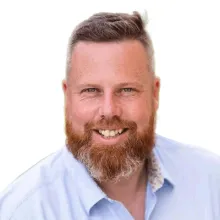
STEPHEN AUSTIN, HOST: Dan Repacholi, why do you have this role when you're already a federal member? Why do we need a special envoy for men's health?
DAN REPACHOLI MP, SPECIAL ENVOY FOR MEN’S HEALTH: I like the way you said “envoy”, people pronounce it differently all the time. Ultimately, it’s about giving blokes faith that we genuinely care about them and that we’re out here trying to make a difference.
Unfortunately, some of the statistics around men’s health in this country are pretty grim. The easiest one to point to is life expectancy. In metropolitan areas, men pass away, on average, more than four-and-a-half years earlier than women. If you go into rural and regional Australia, that gap can grow to as much as 13 years.
That really tells the story about health literacy between men and women. Women generally look after themselves better and tend to take fewer risks than many men do. We need to make sure men are getting the health checks they need, seeing their GP, and having conversations about their health.
AUSTIN: Why is there such a difference between men’s life expectancy in the city and in rural areas?
REPACHOLI: Rural and regional Australia is always harder, Stephen. People don’t have the same access to services, and they often have to travel long distances.
Blokes also tend to tough things out. They think they should harden up and get on with the job instead of worrying about the sore back, the sore leg, the constant cough, or changes in bowel movements. They think that’s just normal life, when really they should be getting checked out.
Some men haven’t seen a GP in more than 20 years.
AUSTIN: So your role as envoy is really about physical health rather than broader questions around masculinity and psychology?
REPACHOLI: It honestly covers all aspects of men’s health. But bringing awareness to both the physical and mental health of men is a major part of the role.
We need men out there having conversations, seeing a GP, and getting blood tests. We service our tractors, trucks and cars regularly, but we don’t always service ourselves.
If we can get even 10 per cent more Australian men seeing a GP and getting a blood test every 12 months, we’ll save thousands and thousands of lives.
AUSTIN: What is a man?
What is a male?
If you’re responsible for men’s health, how do you define a man?
REPACHOLI: A man is someone who cares. A man is someone who wants to provide for their family. Most men do an outstanding job at that.
But while they’re trying to provide for everyone else, they often forget about their own needs. They put everybody ahead of themselves.
And if we can’t look after ourselves, how can we be there for the people we love?
AUSTIN: You’re here today, among other reasons, to visit a men’s shed. Why are men’s sheds important enough for the federal government’s envoy for men’s health to attend?
REPACHOLI: I’ve now visited more than 100 men’s sheds around the country, and what they do is absolutely amazing.
They create a space where men can work with their hands, talk to each other, and have conversations naturally.
They’re not always exclusively for men either. Some include women, some alternate days, and there are women’s sheds as well.
But men often communicate better side-by-side rather than face-to-face. The way we’re standing here now, Stephen , a lot of blokes don’t naturally sit down and stare each other in the eye for deep conversations.
Where they really do well is while working on something together, solving a problem, or sitting around having a chat. Those conversations happen more naturally in a men’s shed, a footy club, a cricket club, or similar places.
AUSTIN: Someone once said women share feelings face-to-face, while men do it side-by-side. Does that resonate with you?
REPACHOLI: It absolutely resonates with me. Personally, I’m much more comfortable talking while doing something rather than sitting directly opposite someone.
We just need to work with blokes differently.
AUSTIN: This is 612 ABC Brisbane. Dan Repacholi is my guest. He’s the federal member for Hunter and the federal government’s special envoy for men’s health.
Wasn’t the idea of a men’s envoy originally something Pauline Hanson talked about years ago?
REPACHOLI: Honestly, Stephen, I’ve only been in government since 2022, so I’m not too sure what Pauline Hanson was talking about 20 years ago. I would have been about 25 then, so it wasn’t really on my radar.
AUSTIN: One of the defining features of our time, sadly, seems to be fatherless families. Have you formed a view about absentee fathers and family breakdown?
REPACHOLI: In some families, that’s certainly the case. There’s a lot of work happening around family law and support systems at both state and federal levels.
There are some really good men out there, and some really good women. There are also some very bad men and very bad women.
What matters is creating a system that’s fair, where mums and dads can both maintain relationships with their children where appropriate.
Every family situation is different.
AUSTIN: In this town there’s a real concern about youth crime. Social workers and police often point to absentee fathers as a contributing factor, especially for young boys.
Have you formed any views about the connection between fatherless families and youth crime?
REPACHOLI: I definitely haven’t formed a final view yet, and that’s exactly why we’re travelling around the country speaking with organisations, health groups, and everyday Australians.
We’re talking to older men, younger men, middle-aged men , and women as well , to understand where systems are letting people down and where outcomes can be improved.
At the end of the day, everybody needs good mentors in life. That might be a father figure, a carer, a football coach, a cricket coach, or even a neighbour.
There are lots of good men out there doing that work.
AUSTIN: I recently watched Louis Theroux’s documentary on the “manosphere”. We’ve also heard about the so-called “looksmaxxing” movement among young men.
How do you see those trends?
REPACHOLI: I’ve seen the documentary too, and honestly I found parts of it pretty terrifying.
What surprised me most was seeing young women idolising some of those blokes and thinking that behaviour was acceptable.
I’ve got two daughters, one nearly 13 and one nearly 11, and they certainly wouldn’t think that behaviour was okay.
At the end of the day, it comes down to respect. People should treat others the way they’d want to be treated.
AUSTIN: How do people treat you, Dan Repacholi?
REPACHOLI: Sometimes well, Stephen, and sometimes not so well.
But this role has actually been warmly welcomed. Nobody expected it to generate as much interest as it has.
AUSTIN: When my producer told me I was interviewing the envoy for men, I rolled my eyes and thought: “What do we need an envoy for men for? I can look after myself.”
REPACHOLI: When was the last time you went to the doctor, Stephen?
AUSTIN: Last year sometime.
REPACHOLI: Did you get the full blood tests and checks done?
AUSTIN: I get a regular service every year.
REPACHOLI: Excellent. That’s exactly what this role is about, talking openly about the issues facing men.
The issues affecting men and women are often different. Men don’t always put themselves forward to have these conversations.
For generations, blokes have been told to “have a teaspoon of concrete and harden up.”
AUSTIN: If men are unique, why did Julia Gillard’s government remove references to male and female from legislation?
REPACHOLI: That was well before my time, Stephen, so I can’t really comment on it.
AUSTIN: So you’re mainly concerned about men’s physical and mental wellbeing and encouraging regular check-ups?
REPACHOLI: Exactly. Physical wellbeing, mental wellbeing, and getting men comfortable having conversations about health.
AUSTIN: When was the last time you shed a tear?
REPACHOLI: Probably during a speech I gave in Parliament about suicide. Certain things affect me emotionally and certain things don’t.
I’m a big bloke, six foot eight and probably a little overweight, but I still get emotional sometimes.
AUSTIN: Is being six foot eight a disadvantage? Did you struggle getting dates?
REPACHOLI: Well, I married a beautiful wife and we’ve got two kids, so I don’t need to worry about dating anymore.
But finding pants and shirts long enough was definitely sometimes a challenge.
Those are the tough things in life, Stephen.
AUSTIN: Thanks for your time.
REPACHOLI: Cheers.