
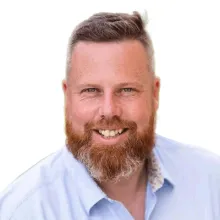
DAVID TAPP, HOST: On the line now is Dan Repacholi MP, who has been an integral part of Men's Health Week. He's also the Federal Member for Hunter and a passionate advocate for men's health. Very good morning to you, Dan.
DAN REPACHOLI MP, SPECIAL ENVOY FOR MEN'S HEALTH: Good morning, David, and good morning to your listeners. On this final day of Men's Health Week, it's a pleasure to be here chatting with you all about men's health.
TAPP: Jeremy Clarkson, obviously a very high-profile figure, revealed this week that he had been treated for prostate cancer and offered some good advice.
REPACHOLI: Some very good advice from Jeremy Clarkson. We need to make sure blokes are out there getting that blood test done because prostate cancer unfortunately took just under 4,000 Australian lives last year. It's one of the most treatable cancers we get as blokes if we can get on top of it early enough.
That's the biggest thing here, David. We need to make sure we're detecting it early. As Jeremy said, there's no longer that uncomfortable examination people always talk about. It starts with a simple blood test. We need people to know that and have the conversation with their GP.
TAPP: I've seen the ramifications firsthand. A very good friend of mine had no clue he had prostate cancer. He went for a routine blood test, it was discovered, and he was gone six months later. He was only in his 40s.
REPACHOLI: That's exactly right, David. If you have a history of prostate cancer in your family, this is a conversation you need to have with your GP. It has taken too many blokes too early because they think they don't need to get tested when they absolutely do.
TAPP: Why do men do this? Why are we so bad at looking after ourselves despite greater awareness?
REPACHOLI: Unfortunately, for a lot of us blokes and I'll include myself in this, we haven't always put our health front and centre. We've always put everything else first because we think, "She'll be right. It'll get better in a week or so."
Then it never gets better. When we finally go and get checked, sometimes it's too late.
The statistics are alarming. In our cities, men are dying more than four years younger than women. In rural and regional Australia, that gap can be up to 13 years. If that doesn't tell us we need to take our health more seriously, I don't know what will.
TAPP: That's interesting. The difference is even bigger in regional Australia.
REPACHOLI: It certainly is. Some of that is access to services, but a lot of it is people simply getting on with the job and saying, "She'll be right." They keep going and keep going until it's too late.
TAPP: As a man, you're expected to be tough and endure everything life throws at you.
REPACHOLI: That's right. We can be tough, but we can also be smart. We can book in with our GP and get a blood test. If we can get just 10 per cent more Aussie blokes having a health check every year, we will literally save thousands of lives.
TAPP: Mental health awareness seems to be improving among men.
REPACHOLI: It certainly is, and that's a good thing. We need more men talking about these issues because when it becomes normal to talk about them, it becomes normal to seek help.
Whether it's talking with a mate at the pub, at the footy, over a coffee or going for a walk shoulder-to-shoulder, those conversations matter. I'm proud of the blokes who are putting their hands up and saying they're struggling, but there's still a lot of men who aren't ready to have those conversations. We need to make sure support is there when they are.
TAPP: Am I wrong in thinking younger men are becoming more proactive about their health?
REPACHOLI: Younger men are generally more comfortable talking about their issues than previous generations, and that's a positive change. There's still plenty of work to do, but we're seeing progress and I hope we continue to see more of it.
TAPP: You've been heavily involved in raising awareness around men's health. What stories have had the biggest impact on you personally?
REPACHOLI: The ones that hit me hardest are the stories of blokes who knew something wasn't quite right, but kept putting off going to the doctor until it was too late.
The other ones are the stories around suicide. Often they're the people everyone thought were doing okay. They were the happiest person in the room, the life of the party, and nobody knew they were struggling.
That's why it's so important that people know help is available and that it's okay to reach out.
TAPP: The role that family members, friends and colleagues play must be significant.
REPACHOLI: It certainly is. We spend a lot of time with our workmates and they're often the first people to notice when something isn't right.
If you notice something is off with one of your mates, check in on them. Have a conversation. If they say they're okay but you still have concerns, let them know you're there if they ever want to talk.
The same goes for family members. Let people know you're there to listen. We don't have to be the fixer. Sometimes just listening is the most important first step.
TAPP: I'm about 60 seconds away from the news. If there was one health check every Australian man should book this year, what would it be?
REPACHOLI: A simple blood test every 12 months. Jump online, book an appointment with your GP and get a full health check and blood test. It could save your life.
And when that bowel screening kit arrives in the mail every two years, don't throw it in the bin. Do the test and send it back. It's the only time you can send a bit of crap back to the government and it might just save your life.
TAPP: Or book in for a colonoscopy.
REPACHOLI: That's right. But start with your GP first.
TAPP: Great to talk to you, Dan. Thank you.
REPACHOLI: Thanks, David, and thanks to your listeners. Enjoy the rest of your weekend.