
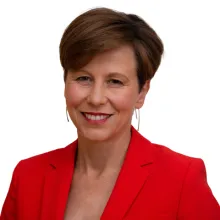
PATRICIA KARVELAS: Minister, welcome to the program.
JENNY MCALLISTER: Thank you.
PATRICIA KARVELAS: Huge changes announced today, much bigger than anyone expected. Access to the scheme will move to assessments of a person's functional capacity rather than relying on a diagnosis alone. Level with our viewers, does that mean people with only a profound disability are the ones that will stay on this scheme?
JENNY MCALLISTER: Thanks, Patricia. Can I simply say at the outset that Labor is incredibly proud of the NDIS and I think Australians are too. This is a key human rights achievement fought and won by the disability community and implemented initially by Labor Government. But we do think that this scheme is now off track. We want it to be here for the long term, and we know that there are changes that we're going to need to make working with the disability community and with the States and Territories to return this scheme to something that is sustainable and aligned with its original purpose. You ask about new approaches to assessing eligibility. This is a key recommendation from the Independent Review that we commissioned when we first came to Government and we received that advice back in 2023. Essentially the advice to us was we should no longer rely just on diagnoses, we should assess someone's functional capacity and that's the best way for us to assess whether or not a person has a significant and permanent disability with the kind of support needs that mean that they need access to a scheme of this kind. That's the approach that we're seeking to build. We'll obviously draw on specialist advice. We'll work with States and Territories…
PATRICIA KARVELAS: But it brings me to the functional capacity question and profound disability. So just if you could just answer that part of the question, is this going to become a scheme for people with profound disabilities alone?
JENNY MCALLISTER: It's a scheme for people with permanent and significant disability. And to be honest...
PATRICIA KARVELAS: Significant is another word for profound, isn't it?
JENNY MCALLISTER: Well, I don't use the word profound actually because it has some particular meanings and some particular history. But what I would say is that the definition of permanent and significant has never really been defined. And it's seen the number of people on the scheme become much larger than what was originally envisaged by the Productivity Commission, on track for there to be 900,000 people on the scheme by 2030 if left unchecked.
PATRICIA KARVELAS: Yeah, that's right. But you say it hasn't been defined. How will you define it?
JENNY MCALLISTER: We are working, we will work with a Technical Advisory Group. This is a key part of the announcement that Minister Butler made today. We want to seek advice from experts. We want to seek advice from the disability community and we want to implement this recommendation from the Independent Review in the spirit it was offered, which is to ensure that this scheme is returned to its original purpose and provides support to people with significant and permanent disability.
PATRICIA KARVELAS: But when the Coalition tried to introduce independent reviews, your side of politics opposed it so strongly. Was that a mistake with the benefit of hindsight?
JENNY MCALLISTER: Our approach is very different to the approach that was adopted by the Coalition. The Coalition did not have the benefit of the review that was undertaken by Bruce Bonyhady and Lisa Paul. That review consulted incredibly widely with thousands of people with disability, their family, providers. It was a very wide-ranging consultation and it brought this recommendation to us and it said that this ought to be developed in partnership with the disability community. Minister Butler today, as I said, has announced an approach that we'll take to doing that and we'll need to work with the states and territories as well.
PATRICIA KARVELAS: So if you can quantify that 160,000 people will be kicked off or not have access to the scheme, which is a big number, that means you have some idea of the sorts of things or the sorts of conditions people have that will no longer have access. How do you arrive at that figure? Who are the people that are going to lose out?
JENNY MCALLISTER: Those are really preliminary numbers but as Minister Butler said today, we really think it's important to level with the Australian public and to level with the disability community. The NDIS was never intended to provide supports for all people with disability. It was really clearly set out to be a scheme for people with permanent and significant disability and over time the supports elsewhere in the community have withered away. That's a problem. It means that people with disability, of course seek access to the scheme, but it's not necessarily the most appropriate way to provide support to those people. It's also simply not sustainable. The scheme was growing at 22% per year when we came to government. It continues to grow at around 10% per year. We've been really clear that we need to moderate that growth so we have a sustainable program that is here for the long term.
PATRICIA KARVELAS: Well you're actually saying over the next four years it will be moderated to 2%. Now that's incredibly low and dramatically different to what currently the trajectory is. That means that very, very hard days will be experienced by people with disability. That's inevitable, isn't it Minister?
JENNY MCALLISTER: These changes will impact on some people with disability, Patricia, and we wish to be upfront about that. But we do think it's possible to reform this scheme in line with its original intent and remaining true to the values of the disability activists that created it. We want people with disability to have the opportunity to live independent, dignified lives and the NDIS is critical to that. But we want this scheme to be here for the long term. It is scary to face any prospect of change, I know that. But what would be more scary would be a loss of community trust in this scheme and it's that which motivates us. We want this scheme to be here for the long term and we know that there are changes that we need to make to ensure that the public continues to provide support.
PATRICIA KARVELAS: And everyone will be reassessed. That's what was announced today. Everyone on that scheme. So right now, people will be watching who are on the scheme. They are very unsure if they'll stay on the scheme. You can't give them a guarantee?
JENNY MCALLISTER: We are going to work with the disability community and receive technical advice, expert advice about the approach that we need to take to make sure that this scheme offers support to the people it was originally intended for. And as I say, we don't take these decisions lightly. We know that change will be difficult for the disability community, but we think we can do this. We really believe we can do this in a way that supports people with disability, both in the scheme and outside the scheme. And that's governed our approach so far and it will continue to govern our approach going forward.
PATRICIA KARVELAS: You say there will be savings of $15 billion a year. Won't that depend on what support is given to the hundreds of thousands of people who will no longer be on the scheme in four years? You don't just save, you have to then spend, presumably still, on other offers. It's not like these people have zero issues, they need support.
JENNY MCALLISTER: Patricia, we've been really clear over a long time that we do think we need to build up the service system outside the scheme and we've also made it really clear that the Commonwealth is willing to invest in that. In 2023, First Ministers and the Prime Minister agreed that we would set aside $10 billion to build up this support system outside of the scheme. We've allocated $4 billion of that to Thriving Kids, but there's work to do now to build up other service systems and we have allocated resources that we're willing to use to do that. We think this is in the public interest. We know Australians are proud of this. Australians want people with disability to have a fair go and to lead good lives but they also want this scheme to be sustainable and to work well and we think this needs to be delivered. We know that reform of this kind can be challenging and you could kick it down the road but it's not the responsible thing to do. In ten years time, if a little boy or a little girl is born with a significant disability, I want that child and their family to have the opportunity to receive the benefit of a scheme of this kind.
PATRICIA KARVELAS: So this announcement is clearly much bigger than a lot of people expected. It will have dramatic ramifications for many people, but you still can't even get the States on board when it comes to the Thriving Kids program. Are you going to start making some significant threats to the States around other funding they've received if they don't come on board?
JENNY MCALLISTER: The community expects us to work with the States and Territories. That's the starting point. The community wants the States and Territories to deliver strong and effective hospital systems and they also want the disability system to work well. That was the basis of the negotiation we entered into with the States and Territories and we've been really pleased at the work that has occurred since the finalisation of those discussions. We've got states and territories across the country getting ready to start up Thriving Kids. That's exciting. It's a new service system. It offers the opportunity to provide appropriate supports for children with mild to moderate support needs. This is a really exciting part in developing services for children and young people in our country and I'm actually feeling very optimistic about it.
PATRICIA KARVELAS: Minister, you said the 160,000 people who will be kicked off is just a preliminary number, so could it be higher?
JENNY MCALLISTER: Patricia, I'm providing the information that we have and we're trying to be really upfront with the community about it. We're going to seek advice, we're going to work with the States and Territories, we'll work with the disability community, but we have to start somewhere. And the starting point is speaking today in an honest way with the Australian public about the work that's ahead of us. We're really committed to doing that in a consultative way, but we are also determined to get this scheme back on track and serving the purpose it was designed for.
PATRICIA KARVELAS: Yeah, but the number could be higher. That's also part of levelling with people, isn't it?
JENNY MCALLISTER: Patricia, our best estimate is the one that we've provided.
PATRICIA KARVELAS: Okay, but that's just an estimate at this stage. Final question. Today, you've also, in another portfolio, reneged or changed some of the rules around aged care, particularly being able to have Government-funded assistance for showering, for instance, in continence. That's because you clearly went too far with those reforms. Could we be in the same situation with this, that you've gone too far?
JENNY MCALLISTER: Patricia, we've thought really carefully about the approach to this scheme. We came to government and in our first term took a series of steps to start to get the scheme back on track and we were able to bring the growth rate down from 22 per cent per year to 10 per cent. But there's more to do. In the work that Mark and I have done together and of course Minister Gallagher and many of the other ministers around the ERC table, we've been able to draw on the advice provided to us by the Independent Review. We've been able to draw on advice provided to us by the Disability Royal Commission and the Worker Provider Taskforce. We want a scheme that is safe, that operates with integrity, that delivers quality services, that offer value to people with disability and we want the scheme to be sustainable. Yes, it's a big challenge.
PATRICIA KARVELAS: Minister, thanks for joining us. It certainly is going to be a rough couple of months for some people.
JENNY MCALLISTER: Thank you so much.