
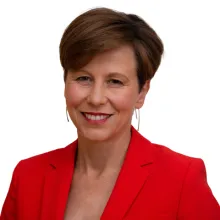
OLIVER PETERSON: 160,000 people are set to be cut from the National Disability Insurance Scheme as the Federal Government seeks to overhaul the NDIS to ensure its long-term sustainability. And that big reduction in participant numbers is just one of a raft of reforms announced by the Federal Health Minister today. So how will the government decide who is in and who is out? The Minister for the NDIS is Senator Jenny McAllister, who joins me now. Welcome to Drive.
JENNY MCALLISTER: Thank you, Ollie.
OLIVER PETERSON: We currently have 760,000 participants in the NDIS How did this goal of only 600,000 by the end of the decade? Why that number?
JENNY MCALLISTER: We know that this is a Scheme that Australians are immensely proud of, and they should be. It is an incredible human rights achievement, and there is no other comparable scheme of this kind in the OECD, but we also know that it needs to be sustainable. The NDIS when we came to office, was growing at 22 percent a year. It's now growing at 10 percent. We've made some important reforms, but that is not sustainable for a social program and we want the NDIS to be financially sustainable, but we also want it to operate in a way that is safe and delivers really good quality outcomes for people. Some of the reforms we announced today do go to who is eligible to be in the Scheme. It was originally designed for people with permanent and significant disability, but over time that's drifted and the definition of who can be on the Scheme has expanded and expanded. We think that it's important that the Scheme be returned to its original purpose and this was a key recommendation of the Independent Review that we commissioned when we came to office and that reported to us in 2023.
OLIVER PETERSON: Alright, so how are you going to determine who's in, who's out?
JENNY MCALLISTER: Today we announced that we'll be setting up a technical reference group. We want to work with we want to work with people with disability, we want to work with the States and Territories to finally establish a proper definition of significant and permanent disability so that there's clarity about who is on the Scheme and who is not. We know it's work we have to do with the disability community. The Independent Review was clear about that and we're setting up the pathway to do so today.
OLIVER PETERSON: So all 760,000 participants will have to be reassessed?
JENNY MCALLISTER: We'll work through the implementation arrangements as part of this work that we'll do with the disability community but yes we do expect that this is a new definition for new entrants to the Scheme, but will also over time apply to existing participants as well.
OLIVER PETERSON: So what will the new eligibility criteria be to remain in the Scheme?
JENNY MCALLISTER: Look, this is something that we will work through with the disability community and with experts. The definition of significant and permanent capacity was never intended to be linked simply to a diagnosis. There's been a lot of talk, obviously, about autism diagnoses, but there's plenty of other examples that look like that. The recommendation to us is that we actually look more closely at a person's functional capacity. To what extent do their circumstances prevent them from participating in a full and independent life, and what kind of support do they need to fill that gap? The Scheme was always intended for people whose needs were really significant and this definition will help us do that.
OLIVER PETERSON: So participants will be assessed based on their needs rather than their diagnosis to determine if they will remain on the Scheme.
JENNY MCALLISTER: That's a rough description of how it might occur, but it obviously involves some complexity. Every person with a disability is different. We want our assessment model to reflect the diversity of experiences within the disability community, and it's one of the reasons why we'll work so closely with the community as we roll this out.
OLIVER PETERSON: When do you anticipate that the new tightened eligibility rules will be able to be made public?
JENNY MCALLISTER: I think that Minister Butler has indicated today that he imagines this work would take place over the next 18 months. But we're going to get on with it fairly quickly. This is a Scheme that Australians consider important. We do need to get it back on track and we don't consider that that there's any time to waste. This is work we wish to commence.
OLIVER PETERSON: What will happen to those being transitioned out of the Scheme and how much notice will they get?
JENNY MCALLISTER: One of the observations that is frequently made and was certainly made to us in the Independent Review was that this Scheme was never intended to meet all of the needs of all people with disability and that in fact we need a wider service system around the Scheme. You've seen in the work we've done over the last year on Thriving Kids that we've sought to work with the States and Territories to stand up some of those services that your listeners might be familiar with, you know, community level services that people used to be able to access. There's more work to do there. The States and Territories in 2023 agreed to collectively imply $10 billion to standing up these kinds of supports. We've allocated some of that money to Thriving Kids, but there's more we can do there. And I think the Commonwealth has shown its bona fides in our willingness to co-invest with the States to restore these kinds of service systems.
OLIVER PETERSON: Jenny McAllister is my guest on 102.5 ABC Perth Drive with Oliver Peterson, 1300 221025 if you want to have your say. As you've just mentioned Thriving Kids, are the bulk of those 160,000 people being moved off the NDIS those kids with the mild developmental delays, ADHD or autism, essentially the cohort you plan to move to, thriving kids, or do these numbers not include them? Is this an extra 160,000 adults?
JENNY MCALLISTER: These numbers speak to Scheme totals, and so it will include some of those children who might otherwise have been in the Scheme under previous arrangements. But we want to be honest with people. This is a significant reform.
We know that it will have impacts on people with disability. We're determined to do this in a way that respects the origins of the Scheme. Its origin is something people with disability campaigned for and we'll be working closely with the disability community as we implement these changes.
OLIVER PETERSON: So what sort of support, if any, will the Federal Government be providing to those 160,000 people moving forward, Senator? Or will you be asking the States to pick up that slack?
JENNY MCALLISTER: Well, I talked a little bit about that $10 billion that First Ministers have already agreed to apply to setting up these different supports. They're sometimes talked about as foundational supports. We've already allocated $4 billion of that to Thriving Kids. That means that there's $6 billion there pre-agreed between the States and the Commonwealth that we do want to spend on improving the service systems. Exactly what that spend looks like is something that we must do with the States and Territories. We shouldn't determine that alone, but it's a conversation we're keen to have.
OLIVER PETERSON: The news today has caused a lot of angst and distress in parts of the community. What do to those NDIS families who are now anxious about their future or their loved one's future?
JENNY MCALLISTER: You know, in 10 years' time, there is going to be a little boy or a little girl who is born with a very significant disability. And what I want is for her or his family to have the confidence that this Scheme will be there. We need the Scheme to be there for the long term and the changes we're making are really to ensure that this Scheme retains its social licence. Change is frightening, I know that, but what is more frightening is the prospect of a collapse in community trust. We want this Scheme to be here for the long term. We want it to be safe. We want it to be value for money. And we're really confident that we can reform this in a way that honours the original intention of the Scheme and is consistent with Labor values.
OLIVER PETERSON: You also propose reducing the cost of social and community support from an average of $31,000 per person down to $26,000 per person within two years. How are you going to do that?
JENNY MCALLISTER: This is a part of the Scheme that has really grown significantly over the last four or five years. It presently costs the Commonwealth $12 billion a year. That's the same order of magnitude as we spend on the PBS each year. We really don't think this is sustainable. What we'll start to do is apply reductions to individual plans as people's plans come up from assessment. We'll start doing that later this year.
OLIVER PETERSON: Grown significantly or is it fair to say that up until now too many NDIS providers have been routing the system and taking taxpayers for a ride?
JENNY MCALLISTER: My key concern in relation to social and community participation is that it really just has grown very significantly and the amount that is being allocated to participants' budgets has grown. There are separate and really important issues about quality and integrity in this scheme. One of the announcements that we've made today is a very significant expansion of mandatory registration and that'll be complemented by an enrolment requirement. Every provider who provides services into the NDIS will need to enrol with the NDIA so that we actually have visibility on where this money is going. This Scheme was set up under the Liberals without these key integrity mechanisms and it's a problem. I want people who work in the NDIS who participate in it to feel proud that they're part of something that is offering great value and genuinely serving the community. The limited number of people who seek to rip off people with disability undermine that goal and I don't think that can be tolerated.
OLIVER PETERSON: So that will tighten the control on the providers and ensure the service is appropriate up to scratch, fairly priced, because you also want to reduce spending on third parties managing the NDIS plans by 30%. How will you do that?
JENNY MCALLISTER: These intermediaries, the plan managers in particular, play a really important integrity function in the Scheme. At the moment, they're the gatekeepers. They support participants to manage their plans and they govern the payment to other service providers in the system. Right now, I can't be certain that every single one of those plan managers is doing the right thing. Many do but got plenty of evidence that suggests that there are an unacceptable number who don't. We are going to make changes to the way this is organised and what we're proposing is commissioning it. Government will select a range of plan managers and participants will be able to choose from that range. But those plan managers will be high quality providers and they'll have a range of integrity obligations that will support the overall integrity of the scheme.
OLIVER PETERSON: A lot of work to be done, particularly in the next two years. We'll keep in contact with you, NDIS Minister Jenny McAllister. Thanks for your time.
JENNY MCALLISTER: Yeah, thanks for having me on, Ollie. I really appreciate it.