
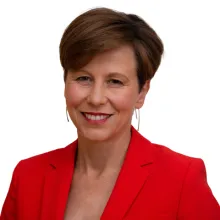
ALI MOORE: Well, Jenny McAllister is the Minister for Disability and the National Disability Insurance Scheme Jenny McAllister, welcome to Drive.
JENNY MCALLISTER: Oh, thank you so much, Ali.
ALI MOORE: There's a lot to this plan to get the NDIS back on track, a lot of detail still to be worked through and a lot of detail that's not there. I'll get to that in a tick, but what do you think is going to be the biggest challenge in trying to get to your stated goal?
JENNY MCALLISTER: Well, let's start with the reasoning for it, Ali. I mean, this is one of the most significant initiatives to support human rights in Australia's history, and it's something that we ought to be incredibly proud of and I think Australians are proud of it but it isn't on track and as a Government we consider it absolutely essential that we take the steps that are necessary to get this system back on track. These are complex reforms and when we work on disability questions, our Government’s commitment is to work closely with the disability community. We also need to work closely with States and Territories who are our key partners.
ALI MOORE: Well, just on that, Jenny McAllister, both the State Government here in Victoria and, as we just heard there, from Disability Australia, neither of them have been consulted at all on what was announced today.
JENNY MCALLISTER: Well, these reforms build on very extensive consultation that has essentially been ongoing since we came to Government. We came to Government, commissioned the Independent Review of the NDIS which canvassed many of the issues that the Government is now addressing. This is a big reform. We came to government and the Scheme was growing at 22% per year. That isn't sustainable and we commissioned in our first term advice, which drew heavily on deep consultation with the disability community. We've since worked to make reforms, including establishing the Thriving Kids arrangements, improving some of the ways that we deal with fraud and poor practice in the Scheme. But there is a lot more to do. And today is an opportunity to set out a very wide-ranging agenda that will involve close work with the disability community and the States and Territories to implement it.
ALI MOORE: Well, I guess the big question that people have is what is going to happen to the 160,000 people that are not going to be on the scheme in the future on your own projections under these changes?
JENNY MCALLISTER: This Scheme was set up to provide support for people with significant and permanent disability. And it's appropriate that people who face very challenging circumstances do receive support of this kind. It was never intended to replace all of the other mechanisms within communities that offer support for people with less intensive support needs. One of the things we've talked about today is the need to work with the States and Territories to start building that service system up again.
ALI MOORE: That’s the issue, Jenny McAllister, start building that system up again. That system has disintegrated and yet we're talking about changes that are going to come into place. Well, you need them to come into place pretty quickly. So are the States ready?
JENNY MCALLISTER: We'll work really closely with the States and Territories.
ALI MOORE: But that's not what I'm asking you, whether you'll work with them. I'm asking you, is it your assessment that they are going to be ready and are they going to be able to pick up where the NDIS leaves off?
JENNY MCALLISTER: A couple of things. There are service systems still in each State and Territory and they are in the process of standing up the service systems that will sit around Thriving Kids. There's more to do…
ALI MOORE: But the Thriving Kids is only for kids though, isn't it? That's very much only for the younger kids.
JENNY MCALLISTER: We do have models to build on in building the service system that will be necessary to support a wider range of adults and older children. But we've created the time to do this and we'll work with States and Territories on the timeline. We'll also work with States and Territories on any changes to eligibility. And you heard Minister Butler talk about attempting to get that work done by 2028.
ALI MOORE: I guess, I mean, you look at that 2028 and then you look at the projection of the numbers and you wonder how it's going to match up. But let’s have a look at that, standardised evidence-based assessment of a person's functional capacity. Minister, how different is that going to be to the eligibility requirements that are in place today?
JENNY MCALLISTER: Well, this was a key recommendation of the Independent Review into the NDIS and it says this essentially, your need for support doesn't correlate exactly to a diagnosis and the Independent Review recommended that we set up a system of assessing functional capacity. They recommended that we do it with the disability community and that's what we intend to do. But, at the moment, for example, there were a set of lists put in place where if you had a certain kind of diagnosis, you are essentially admitted to the Scheme. We don't think that they operate as a particularly good proxy about people's support needs. We want the Scheme to work for people with significant and permanent disability and the functional capacity assessments are a way of making sure that the Scheme is providing support to the people it was designed for.
ALI MOORE: And so will that be sort of a one-on-one individual assessment by a trained expert? I guess, you know, we've looked, for example, at what's happened with algorithms in aged care and there's going to be a great deal of interest to know exactly how that functional capacity is going to be measured.
JENNY MCALLISTER: That's why the Minister has indicated today that we'll be setting up a Technical Advisory Group to actually work through these questions. We don't pretend to have all the answers but we do know that there's a wealth of technical capability out there. We also know that we want to work with the disability community. That's part of the recommendation that was put to us by the Independent Review. They said introduce these kinds of assessments, but make sure you do it with the disability community. And that's the pathway that Minister Butler set out today.
ALI MOORE: Can I just clarify for people who might be unclear, is it your plan that those who currently have a plan under the NDS will keep that plan? They're not going to have to be reassessed until it is time for their plan to be renewed. Is that correct?
JENNY MCALLISTER: Minister Butler talked about this today. We don't expect this work to be done in the very short term. For the time being, people will continue to use their plans in the NDIS as they do now. But we want to be really upfront and transparent with people. This is a change. We do intend to work with the disability community and with the States and Territories to finally make clear who the Scheme is intended for and how we're going to make an assessment about that. We know that these are complex conversations. We want to draw on expert advice. We want to work with the disability community on it. But we think it is critical. When the Productivity Commission originally set out their projections for this Scheme, they never imagined that there would be 760,000 people on the Scheme. That’s the number now.
ALI MOORE: Sure, no, and I think that's been well established, but that didn't answer my question. Once everything is in place, will everyone on the Scheme have to reapply or will you only be reassessed at the end of your plan?
JENNY MCALLISTER: We'll work through the implementation arrangements. Initially, of course, the functional capacity assessment would apply to people who are seeking access for the first time, but we do intend that over time it would also be applied to existing participants.
ALI MOORE: But over time only when plans are reassessed or you will go through a process of, you know, as quickly as you can reassessing everyone in the scheme?
JENNY MCALLISTER: I think that we need to work through the implementation arrangements. We've sought advice. As we've said, we'll seek advice from a Technical Advisory Group. I don't want to get ahead of this. We want to work with the disability community. We want to work with States and Territories. This is work we'll do together.
ALI MOORE: Just a final question. The other big part of this is, in the words of the Health Minister, getting rid of the dodgy providers in the system, tightening up the claims process, expanding the registration system, all those sorts of things that you're trying to do. Can you make a scheme like this foolproof?
JENNY MCALLISTER: I think we can make it easy for people to comply and we can make it hard for people to do the wrong thing. And that is what the reforms announced today seek to do. They are really important interventions to clean up the plan management market, those intermediaries who play such a key role in the integrity of the Scheme, and to establish registration requirements for the businesses that are offering services in the most significant and sensitive categories. When the reforms have been rolled out, we can expect that 90% of the value of payments made through the Scheme are being made to registered providers. I think that's important. People with disability should know that when they're purchasing services for sensitive activities, that the person providing those services has the skills and the capacity and the governance arrangements to be able to deliver that in a way that offers value but is also safe.
ALI MOORE: You're listening to the Minister for the NDIS Jenny McAllister. I'll get to your calls in just a tick, but just before I do let you go, Minister, can you understand why people like Jeremy Hope, who we just spoke to from People with Disabilities Australia, are frightened?
JENNY MCALLISTER: We know that all change is challenging and it's particularly so for a community that at different times has experienced very difficult exposure to Government processes. Our commitment is really clear. We want to work with the disability community on these reforms and my experience is that people with disability understand the importance of this Scheme being here for the long term. They know that it needs to be sustainable. They know that it needs to be safe. They know it needs to deliver quality services and it is not on track to do that at the moment. We do have to make change. We'll do it with the community and our goal should always be to make sure that it is here in the future, not just next week, but in 10 years' time for the people who really need it.
ALI MOORE: Minister, thank you so much for joining Drive.
JENNY MCALLISTER: Thank you, Ali.